Charlton Park is due to get an all-weather cricket pitch
Charlton Park is getting a new cricket pitch, and you’ll be able to find out more about the plans at the Friends of Charlton Park’s regular Zoom meeting this Tuesday.
Stephanie Turner from Greenwich Council will be outlining plans for the non-turf pitch at the western end of the park and answering any questions from users. To find out how to join, visit the Friends of Charlton Park website.
There are also limited places for a bat walk in Charlton Park at 8pm on Friday night led by bat expert Les Clark. More details are on the Friends website.
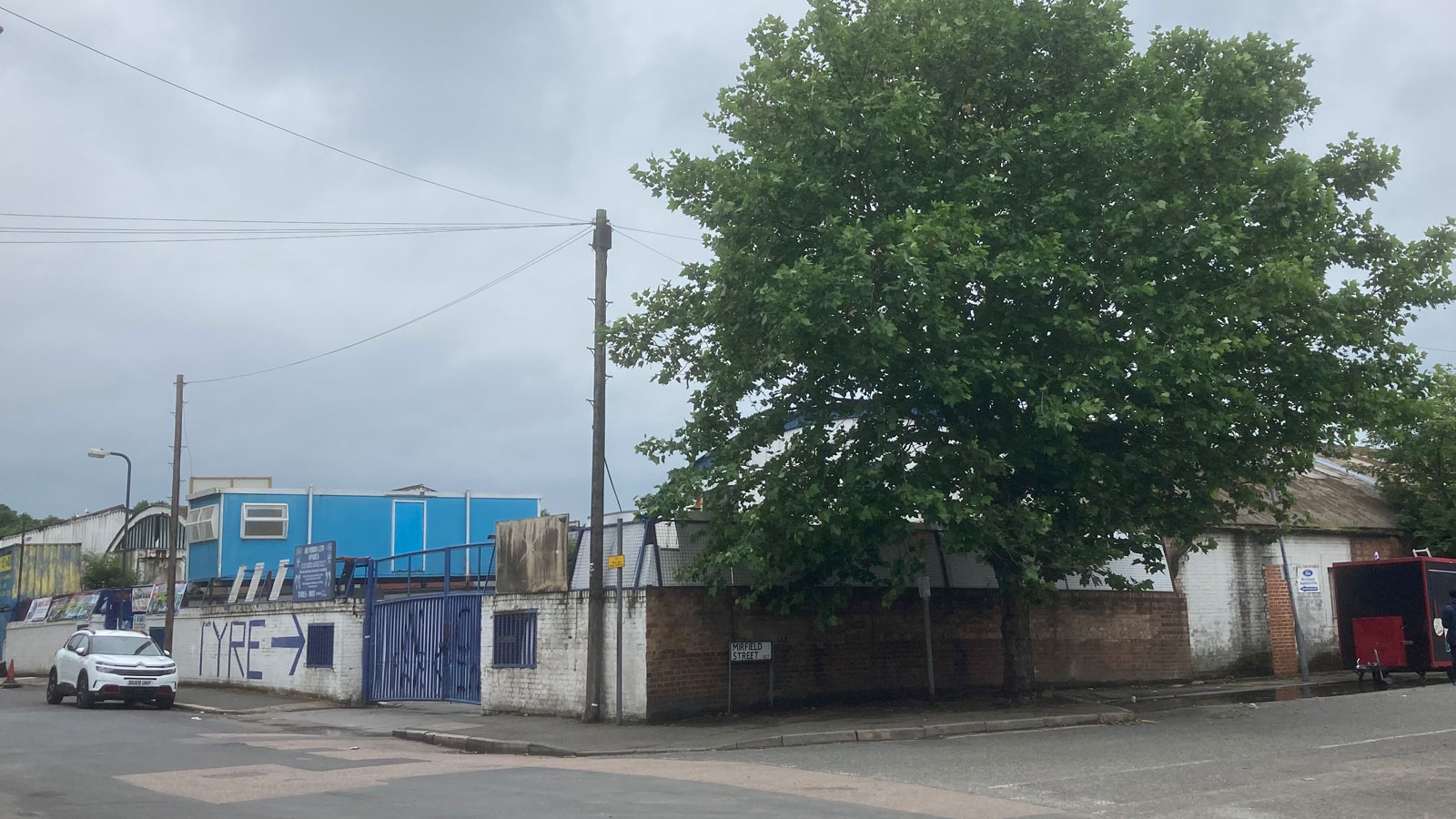
The Aitch development site as it is now, viewed from Eastmoor Sreet
Greenwich councillors dealt a blow to their own town hall’s plans to redevelop the Charlton Riverside after they rejected a second housing scheme for a site near the Thames Barrier.
The developer Aitch Group had hoped to build 188 homes land behind the derelict Victoria pub, between Eastmoor Street and Westmoor Street, along with shops, workspace and a new green space. But Labour and Conservative councillors objected to the height of the development on Coopers Yard, which had been recommended for approval by their own planning officers.
A three-year-old masterplan for the Charlton Riverside – which both Greenwich Council and City Hall have long earmarked for thousands of new homes – suggests a maximum height of ten storeys for buildings, with guidelines of three to five storeys in that particular area.
But Aitch wanted to build up to nine storeys – insisting that the masterplan provided guidance, not strict rules – enraging local lobby groups, including the Charlton Society and the Charlton Central Residents Association, who believe this breaks the terms of a masterplan they were closely involved in writing.
The situation is complicated by the Environment Agency objecting to ground-floor housing close to the Thames Barrier because of the risk of flooding – an objection which calls parts of the masterplan into question.
Aitch wants to build 188 homes close to the Thames Barrier
Labour and Conservative councillors sided with the lobby groups for the second time in three weeks, rejecting Aitch’s plans – leaving Aitch to decide whether to appeal to a planning inspector or try to rework the proposal with council officers.
Tuesday’s vote saw the rejection of another 40 homes for London Affordable Rent that would have been included in the Aitch development along with 10 shared-ownership homes, making 30 per cent “affordable” housing.
The two refusals now plunge the Labour council into a high-stakes gamble on the future of its own masterplan – successful appeals from Aitch or Optivo would take much of the decision-making out of the hands of local officials and could result in less money being spent on local infrastructure to support the new developments and their neighbours.
With other developers waiting to present their plans for the riverside to councillors – some much bigger than Aitch’s scheme, like the Faraday Works project on the old Siemens factory site, the decision is a significant setback for the Charlton riverside’s transformation into a new neighbourhood.
The meeting was split into two parts because of Covid-19 restrictions – Woolwich Town Hall’s only meeting space fitted with cameras is its cramped council chamber – with the first meeting two weeks ago seeing planning chair Stephen Brain clash with local lobby groups.
Tuesday night saw Aitch’s associate planning director, Luke Cadman, tell councillors that the scheme would be of a “human scale and very much in contrast to Greenwich Peninsula and Woolwich town centre”, adding that there would be a net increase in jobs and that existing businesses would be given help leaving. Feedback from residents had resulted in changes to the scheme including a reduction in height, he said.
Referring to his company’s own proposals, Optivo’s scheme and others in the pipeline, he warned: “These proposals, many developed over years of discussion, could result in 5,000 new homes and 1,500 jobs. By not supporting [your] officers’ recommendation tonight, and reiterating an absolute test of heights and density, this potentially jeopardises the delivery of the [masterplan] vision, and thousands of new homes and jobs.”
Failing to permit development could see “pressure for housing development shift to other more sensitive parts of the borough”, he added.
Pointing out that Greenwich Council itself is the largest landowner on the riverside, with its he said that refusal would have “far-reaching ramifications for the council and its redevelopment aspirations, and for the ability to deliver new homes and jobs”.
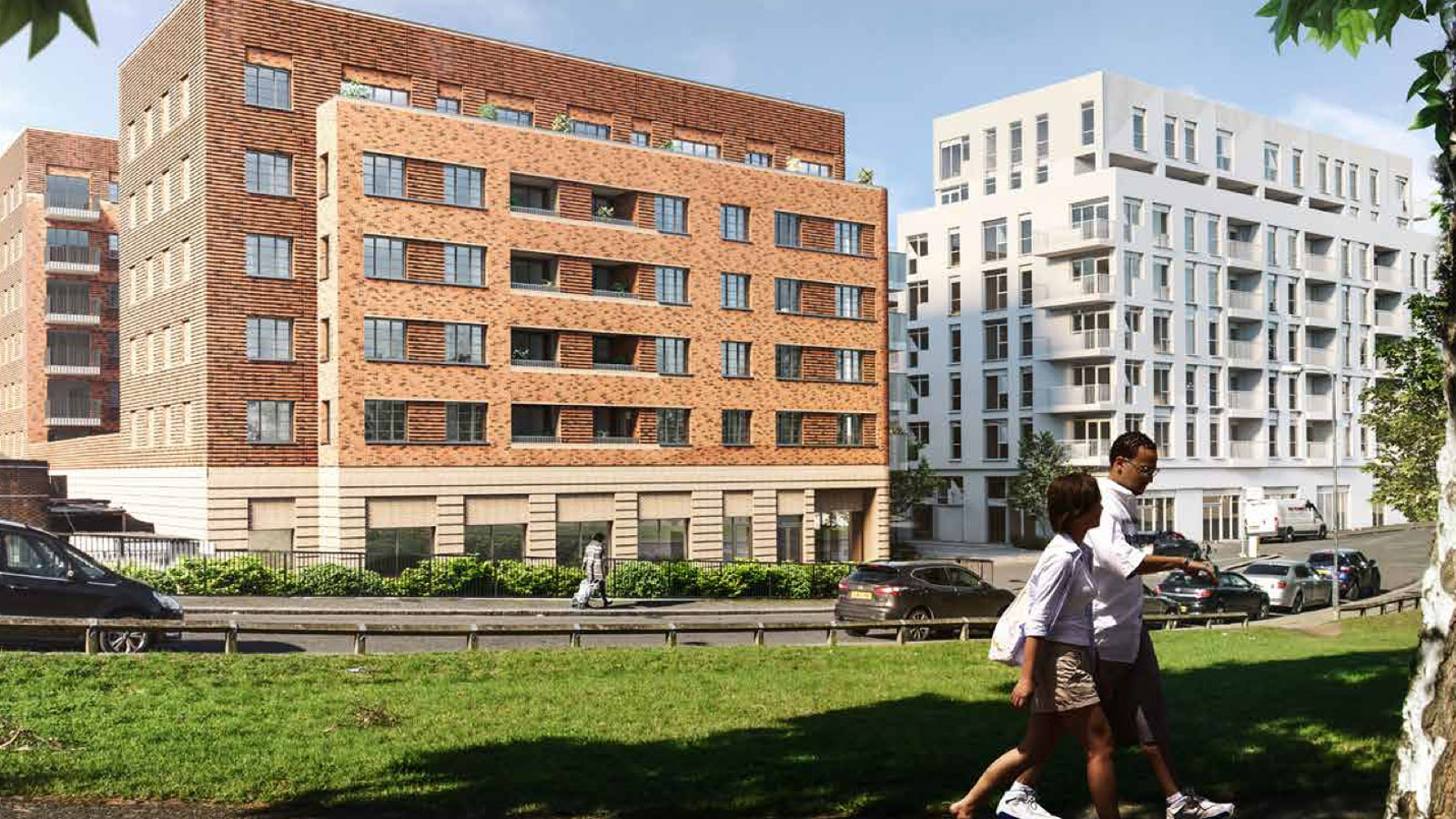
Optivo’s plans for Eastmoor Street, with the Aitch scheme in white next door to it. Both plans have been rejected
Challenged on this by Abbey Wood Labour councillor Clive Mardner, Cadman said: “There are a lot of developers that are seeking planning approvals to deliver on the [masterplan] vision – I’ll just leave it there. It’s not really what anyone wants to see.”
Mardner – who chairs the council’s housing scrutiny panel, so may have been expected to know the answer already – also asked who would be eligible for the London Affordable Rent homes, which charge half market rates and are for people on the council’s waiting list. The rent level is an initiative of Labour mayor Sadiq Khan.
Optivo’s site as it is now with the Aitch site to the right. Both proposals have been rejected. The cash and carry warehouse to the left is not part of any scheme
Charlton councillor Gary Dillon said he was “disappointed that height and density is not important to the project”.
“If every developer walks into this room and says the same thing, we’re going to get 20,000 dwellings in an area earmarked for 8,000, and that throws the transport and infrastructure out,” he said. “Every part of the [masterplan] has been calculated. To dismiss it is pretty disappointing.”
Cadman insisted that Aitch had not ignored the masterplan, saying that there was more to it than height and density, and that the scheme fitted Sadiq Khan’s London planning policy. “When you weigh it all up, on balance, as your officers have done… we’ve done a huge amount to meet its aspirations and we haven’t just ignored the height, the heights and density have all been a consideration in what we’ve done.”
Dillon sits on the committee of the Charlton Society, one of the groups that objected. He declared at the start of the meeting that he was a society member and had not taken part in its discussions on the proposals.
Woolwich Riverside councillor John Fahy, whose ward includes the development site, repeated a question his two Labour colleagues had put to Cadman, asking if Aitch had “had any regard for the masterplan” when drawing up its proposals, accusing the company of ignoring residents’ views.
“I’ve answered that a few times, the masterplan required a few things,” Cadman said, pointing out that the plan also allowed for a new road and green space which were set out in the plans. He added that the company had spent two years consulting local people and had recently made changes as a result of local lobby groups’ feedback.
Conservative Nigel Fletcher said that it was clear that the masterplan had divided the riverside into plots, and the maximum for that plot was five storeys.
Simon Camp, from Alan Camp Architects, said that the masterplan did not take into account the risk of flooding and that homes had to be above a certain height. “The town houses in the masterplan are impossible due to the constraints,” he said.
“We’ve taken that on by maximising the commercial and maker spaces, and the community facilities, we’ve expanded the green link [open space] – so we’ve taken into account other aspirations in the [masterplan] and then we’ve looked at the height.”
The masterplan showing lower-height buildings around Eastmoor Street, the white gap to the east. (Click to enlarge)
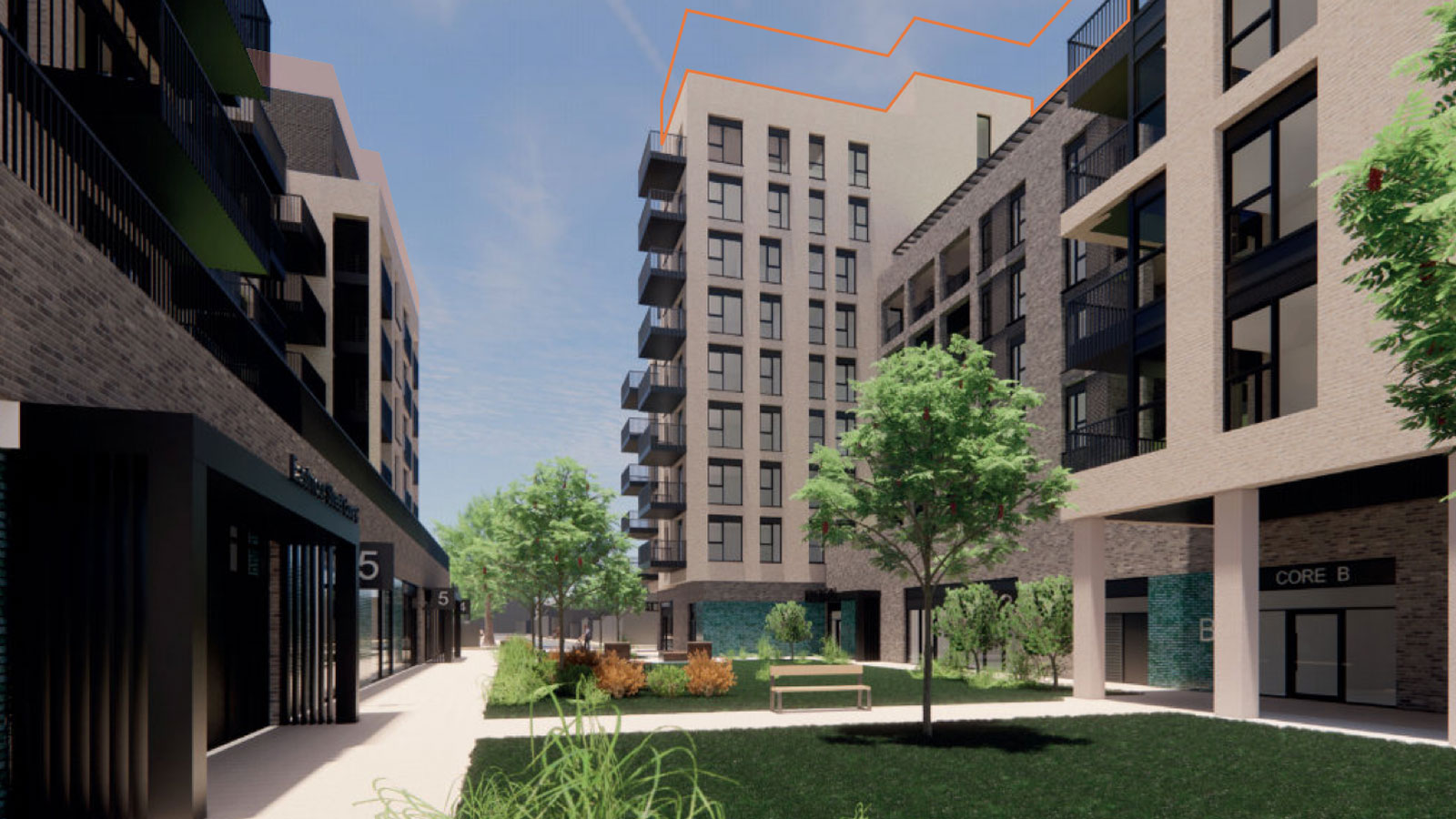
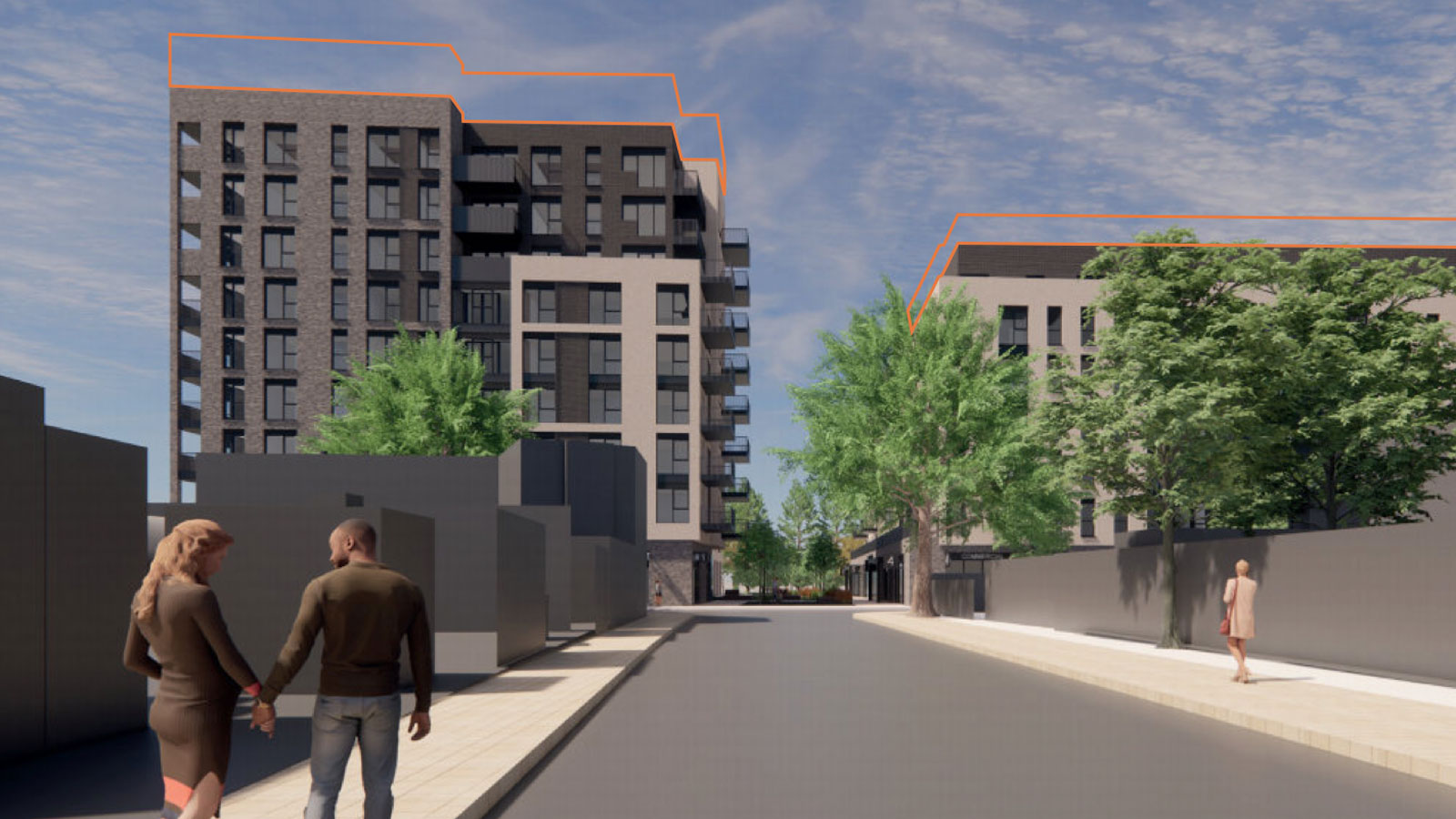
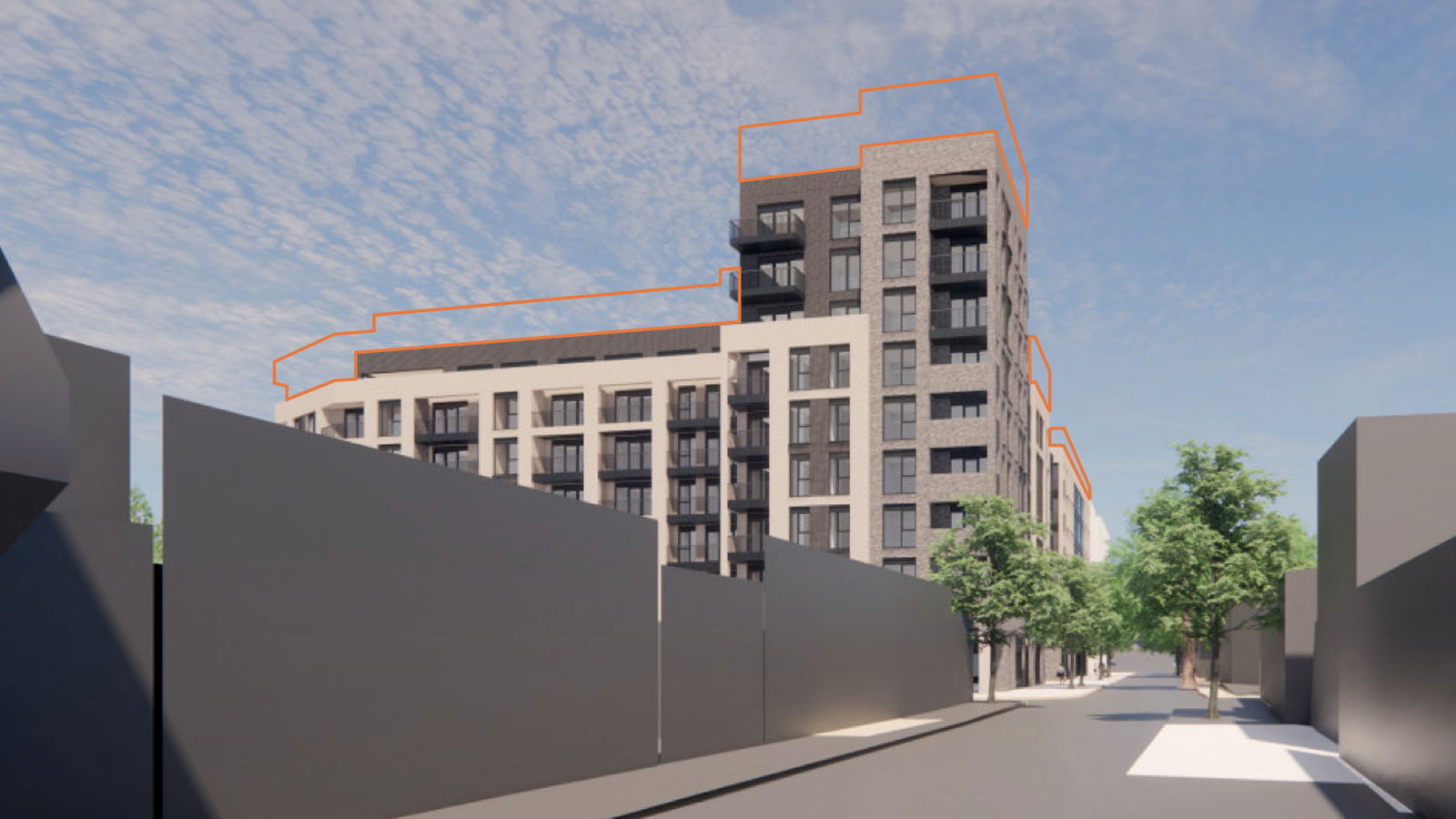
A view from the Barrier vets’ clinic. Red lines represent storeys lopped off the scheme after lobby groups’ objections
Fahy complained that the riverside, where land ownership is split, was “being developed piecemeal” and that the planning board had a duty to ensure that developments there reflected the area’s heritage.
Allowing the Aitch scheme would allow other developers to build tall buildings, he said, adding: “If that’s the case, we might as well chuck the masterplan in the bin and allow developers to carry on regardless. The applicants were well aware of the requirements to meet the masterplan. It’s not something you pluck out of the air – it’s a legal document and we have to have some principles that guide us in our decision making.
“They say they got the green light from our officers – I find that hard to believe.”
Fletcher said he did not believe it was a straightforward refusal, but said the developer had not justified why it wanted to build higher than suggested in the masterplan.
“We see this masterplan as being very important. We think it’s important, the heights and density are important,” he said. “We have a different reading of [the masterplan] than the applicant and it should be something we are prepared to defend.”
A view of the Aitch scheme looking east from Penhall Road
But planning chair Stephen Brain spoke up for the proposal, criticising “emotive terms” made by local lobby groups at the last meeting. He said it was possible to be flexible with the masterplan “if a balance is achieved across the area”.
“It has 30 per cent ‘affordable’ homes, which we need for Londoners, it has designated play space – there’s very little in the area. I do know the area – I’ve had my car serviced down there for 32 years, I’ve walked around that site a lot,” he said.
“One speaker said that children could cause noise – it’s what children do. It provides green space, and retail – the area desperately needs retail, the only thing you can buy down there is a burger from a dodgy van and you wouldn’t be wise to do such a thing.
“It’s an area where people work but don’t live. You can see from all the Range Rovers down there – they drive down there and go back to Kent in the evening.”
Referencing the Environment Agency’s objection to ground floor homes, Brain referred to last week’s flood disaster in western Germany, which left scores dead, saying it had brought the issue into “sharp relief”.
“One of the main German newspapers said all of the people living on habitable spaces on the ground floor were dead. That’s why the Environment Agency makes these guidelines, it’s in a flood plain and the heights may have to be higher.”
Brain mocked the notion put forward by one of the local lobby groups, who spoke of “protecting Charlton from the river to the slopes and into the village – they didn’t say how far it went, does it go beyond the village to Charlton [sic], or to Bexley? I couldn’t understand that at all.”
“I can’t see what turning this application would do for the area. It’s an area that is industrially blighted and I can’t see many bungalows being built down there.”
But the vote was lost and the plans rejected on grounds of height and massing – leaving the immediate future of the Charlton riverside up in the air, and possibly out of the hands of local people.
More than 20,000 people have had Covid-19 jabs at Charlton House
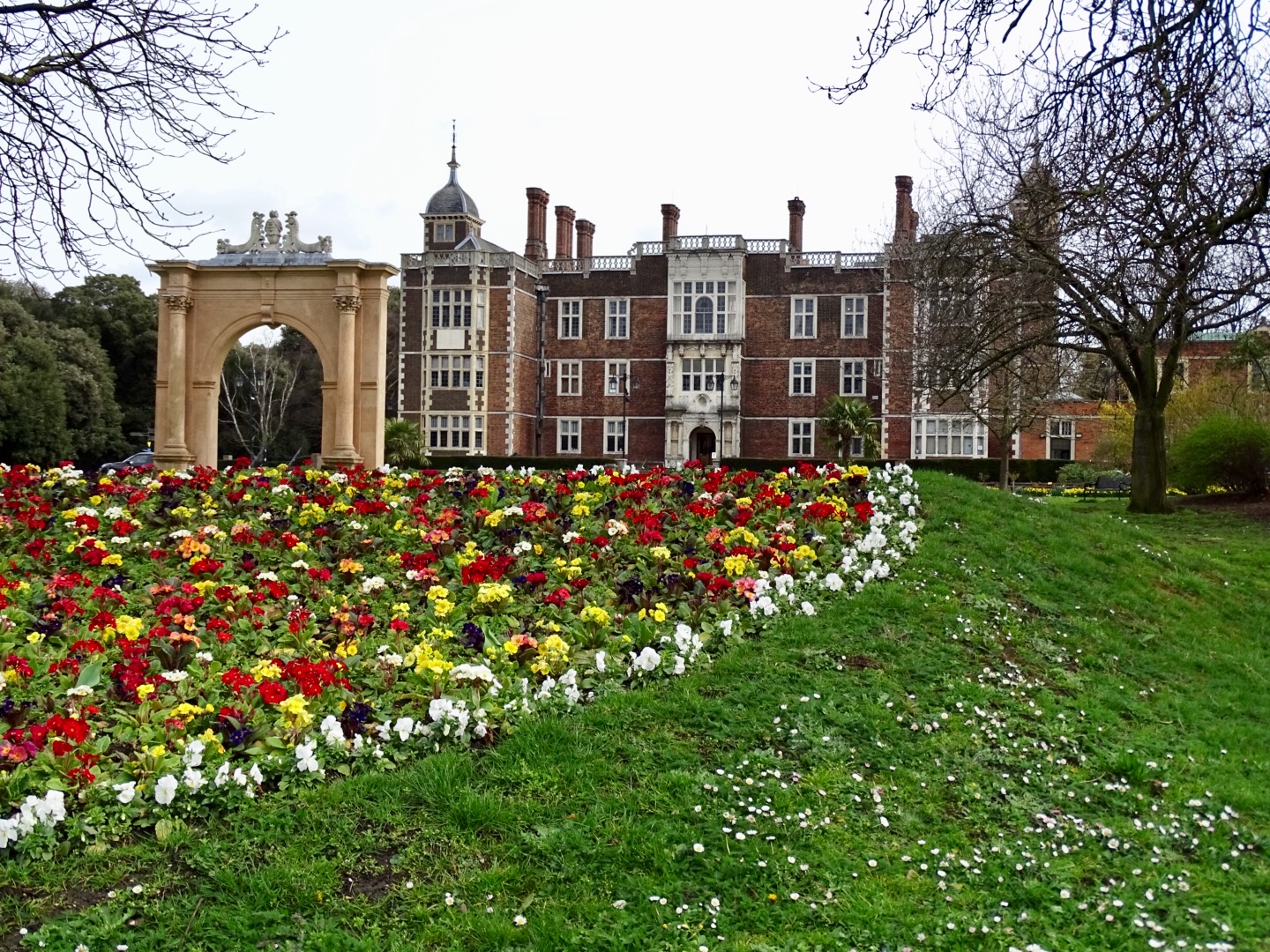
Charlton House needs £1.2 million to fix its leaking roof, the chief executive of the trust that runs the Jacobean mansion has told Greenwich councillors.
Tracy Stringfellow, the chief executive of the Royal Greenwich Heritage Trust, said that she would soon be launching a fundraising appeal to mend the roof, and that the issue had delayed wider plans for a £25 million refurbishment of the house.
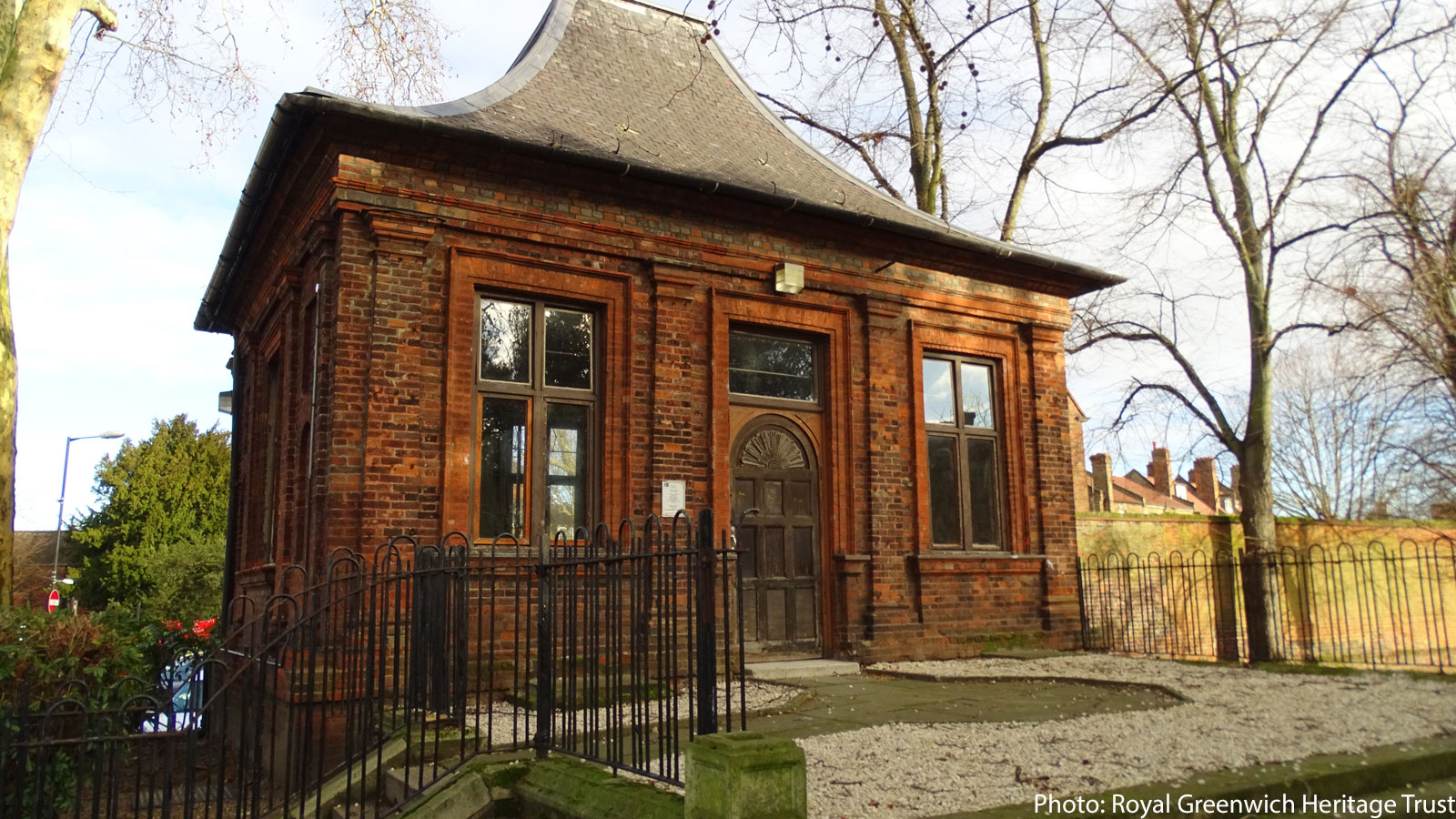
She also told councillors that local groups would be able to use its summer house after the end of the current phase of refurbishment works.
While over 20,000 people have visited the house for coronavirus vaccines since the start of the year, some have spotted the damage caused by water getting into its old library, she said.
Councillors on the regeneration scrutiny panel were told last night that Historic England had funded a detailed survey of the roof to examine the damage.
“The assessment of complete and replacement works has come back at about £1.2 million,” Stringfellow said.
“We will be carrying out some work over the next few months to identify how we will raise the funds, and we will be launching an appeal with the Big Give campaign, giving local people the opportunity to support the roof works as well.
“There was some significant water ingress during the lockdown period which runs the risk of damaging some of the most significant spaces on the second floor.”
Charlton House’s summer house is being restored
Asked by Woolwich Common councillor David Gardner about the broader future of Charlton House, Stringfellow said that a plan had been produced in 2018 that envisaged a £25m million refurbishment of the Grade I-listed building.
Stringfellow said that the plan had been to approach the National Lottery Heritage Fund for money to begin work, beginning with the ground floor, but the pandemic had forced a rethink, as the fund had changed its priorities.
“We will be looking at that strategy again,” she said. “We now need to prioritise the roof repairs and the rooms on the second floor as urgent. Those of you who have had your jabs in the old library might have noticed damage to the ceiling because of the water ingress – I’ve had lots of emails from people asking about the hole in the roof.”
The second phase of works to restore the summer house was coming to an end, Stringfellow added, with some of the original panelling being restored, ahead of a final phase where the ceiling would be restored.
Stringellow said that the trust would be interested in community groups using the summer house for exhibitions or other uses before the final phase of works started.
“If there are any local organisations who might want to come and have a look at that – a commercial hire might be at a later stage but for exhibitions or programming, we would be open to approaches from the local community,” she said.
A special dance project is coming to Charlton, and the people behind it would like you to share your thoughts, memories, pictures and more. BEATRICE, CORNELIS and ORLEY from THE COLLECTORS are here to explain more.
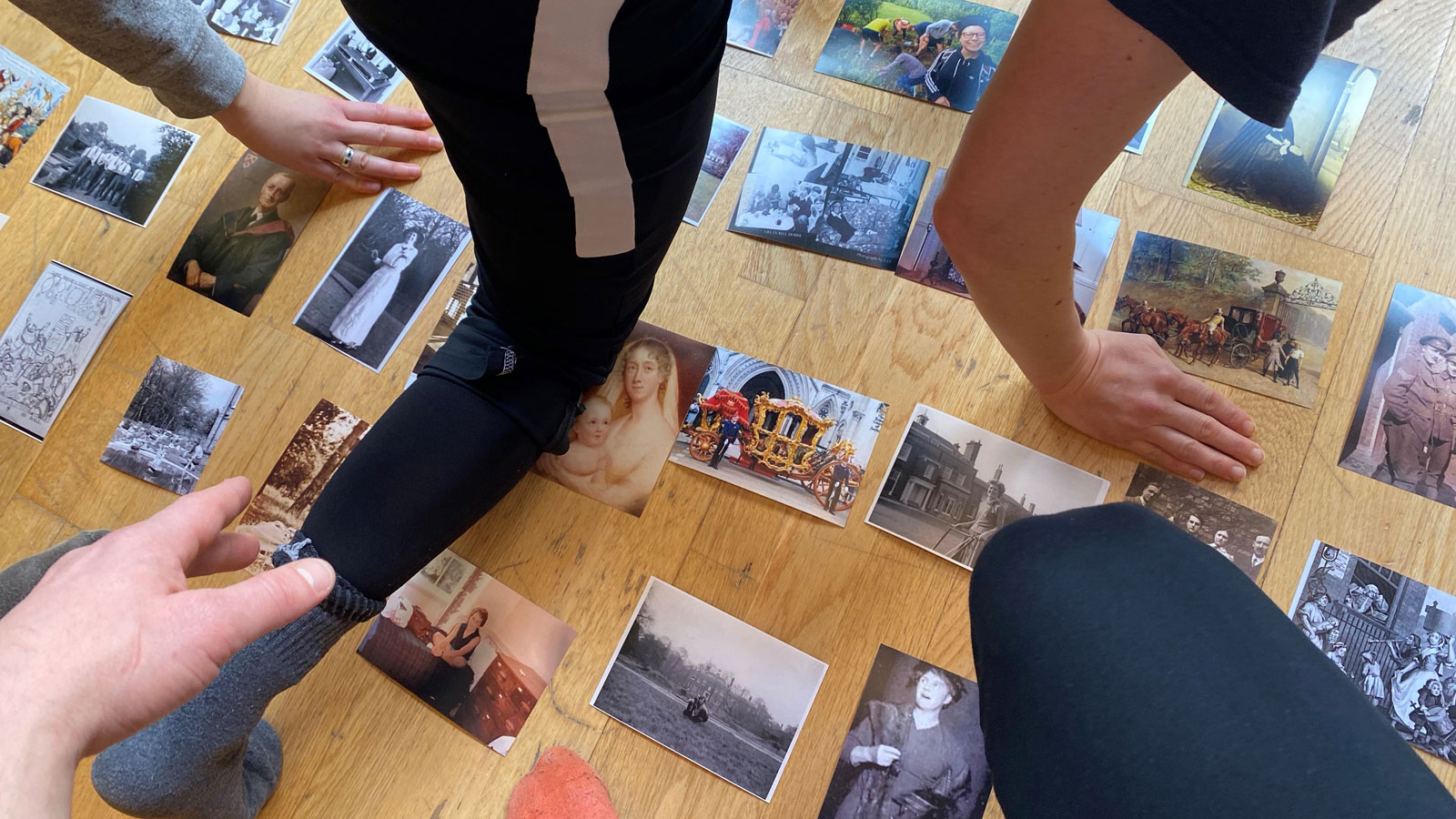
The Collectors are coming to Charlton and would like to invite residents to provide images and text significant to Charlton to help create a performance, called Picture Me There, that is specific to the area.
How can you get involved? There are three ways.
Anyone in Charlton of any age can share photos, images, text, maps, memories or anything else involving residents and drawing from the present or past. These items will shape our show. You can drop them here onto our Google Drive.
We’re looking for ten to 15 Charlton residents to work with us more closely. They would meet us for a first catch-up and material sharing on Sunday 1 August. They will then take part in a workshop on the Sunday 19 September as well as helping us decide where to perform. All ages welcome. We would like to have an intergenerational group. Venue and times to be confirmed.
Anyone can watch and enjoy the free performances on Sunday 26 September.
For more information and to register for the meeting and workshop, email us at thecollectorsprojects[at]gmail.com.
If you do not have do not have internet access and would like to participate or share anything, contact Greenwich Dance at Charlton House (020 8293 9741).
Charlton’s Big Red Bus Club has been busy branching out recently – its latest venture is into summer sessions to help 11 to 13-year-olds rebuild their confidence through music and fun after a shattering 16 months. The club’s ANNIE DREWRY explains more…
March 16, 2020 was, for many children, simply the day the music died. For those kids that didn’t already have instruments at home or access to private online lessons, music simply disappeared.
In Charlton, like the rest of the country, music education not only came to an abrupt halt. Not just the lessons ending, but the community music programmes such as the after-school drumming clubs or choirs that were as much about friendship as they were the performances that resulted from them.
For your average 11-year-old, the summer is full of music. It’s when you head down to Primark to pick up your outfit for your final primary school disco, or the nervous excitement waiting to find out if you’ve got a song in your final school play. It’s endless practising for your final year assemblies, and the sharing of playlists among friends – the friends that you will leave as a memory of your childhood as you move to secondary school and make the friends that will see you become an adult.
The Big Red Bus Club has always believed in the power of the arts to build our community in Charlton, whether it be two toddlers sharing finger-painting or the mums in our Baby Blues Choir raising awareness of maternal mental health through performance. We know friendships are built when we create together.
So this summer, we are putting on two free programmes for Charlton’s 11-13 year olds.
Pump it Up, a week-long series of music workshops culminating in kids creating their own track and recording it, and Power Up, a whole week of activities ranging from pottery to engineering activities specifically for girls.
Last year was hard. At the Big Red Bus Club we want to bring the music back into kids’ lives, help them make local friends and to hang out and just be kids again.
You can help by letting local kids know that we are here.
Pump It Up: Monday 26 to Friday 30 July, 11-4pm, music workshops including singing, percussion and composition with a whole range of local artists.
Power Up (girls only): Monday 2 to Friday 6 August, 10-3pm, wellbeing workshops including pottery, yoga, engineering and a day trip.
Aitch wants to build 188 homes close to the Thames Barrier
Greenwich’s chair of planning was ticked off by a former council leader on Tuesday night after he clashed with residents over what new buildings on the Charlton Riverside should look like.
Labour councillor Stephen Brain challenged members of local lobby groups who are insisting that a masterplan drawn up to redevelop the area, involving building thousands of homes but keeping tall buildings to a minimum, should be followed closely.
But Dave Picton, who led Greenwich Council for two years in the late 1980s, said he was “surprised” that Brain was not following a ruling made last year which defined 10 storeys as “high rise” for the area.
The exchanges took place as councillors on the planning board met to decide whether 188 homes in blocks of up to nine storeys should be built by the developer Aitch on land behind the derelict Victoria pub, close to the Thames Barrier.
Those same residents returned to the town hall last night to object to Aitch’s plans, which only include 40 affordable-rent homes and 10 for shared ownership – five percentage points short of the council’s target of 35 per cent “affordable” homes.
But in a meeting disrupted by Covid restrictions – the government has banned councils from holding their most important meetings online, despite the continuing pandemic – Brain and the residents started to fall out.
The masterplan suggests a maximum height of 10 storeys in the area to differentiate it from the Greenwich Peninsula and Woolwich’s Royal Arsenal, and to complement the low-rise nature of the wider Charlton area. But in the area where Aitch wants to build the new homes, the guidelines suggests three to six storeys. A further complication is that ground-floor housing is not allowed because of the risk of flooding around the Thames Barrier.
Roden Richardson, speaking for the Charlton Society, said that allowing a nine-storey block would be a “major departure” from the masterplan.
The “unacceptable heights” would set an “extremely worrying precedent” for the rest of the riverside area, he said, resulting in even denser development and the need for additional infrastructure.
The Aitch development site as it is now, viewed from Eastmoor Sreet
But Brain said: “What special character does the area have currently? From the Woolwich Road down to the river – in terms of scrapyards and people who will take your wheels off your car if you stand still for more than five minutes.
“I don’t think this development, in my experience, is high rise. Any definition in any architecture book would define high rise as being above 11 storeys.”
Richardson responded: “The character is Charlton as a whole, not just the riverside.”
“But the application is for the riverside,” Brain said.
An irritated-sounding Richardson said: “We’re going back a long way with the creation of the masterplan – one of the key points of the masterplan was the riverside’s integration with Charlton as a whole.”
Brain replied: “I don’t want to be argumentative, but I’m going to be because I’m the chair, but in that case you should be building three-bedroom Victorian houses. Or from what I was hearing last week, perhaps it should be an estate of bungalows? Or bungalows on stilts because they wouldn’t comply with the environmental safety regulation.”
He then cut Richardson off to move on to the next speaker.
David Gayther, from the Charlton Central Residents’ Association – which covers streets about half a mile from the proposed development – said he found Brain’s comments “disturbing”.
Denying that local lobby groups were looking for “three storey Victorian housing”, he said that the masterplan called for “reasonably high-density, mixed use, medium height development that promotes quite a different community … a blank canvas on which to build a new Charlton that avoids some of the mistakes of Woolwich”.
“I do understand masterplans,” Brain shot back at the end of Gayther’s contribution.
Aitch’s view from Westmoor Street looking south
Picton referred to a planning inspector’s findings when plans for 10-storey blocks off Anchor and Hope Lane were thrown out last year. “The inspector differentiated between Greenwich [Peninsula] and Woolwich, and Charlton riverside.
“He said explicitly that Charlton riverside was urban, it wasn’t metropolitan. In terms of height, he said very clearly that 10 storeys on Charlton riverside is high rise. That view was endorsed by the secretary of state and I’m surprised that you don’t seem to have picked that up.”
Contradicting his earlier remark, Brain said: “I thought mid-rise were defined as being between five and 12 storeys, and high-rises were 13 floors and above, and that’s my definition that I tend to work to.”
The levels of “affordable” housing also came under scrutiny, although one member of the planning board, Abbey Wood Labour councillor Clive Mardner, had to have London Affordable Rent levels explained to him – even though one of his other roles on the council is chairing the housing scrutiny panel.
London Affordable Rent is a policy of London’s Labour mayor Sadiq Khan. It sets levels at about half of market rent – higher than council or social rents offered to existing tenants, which are about 40 per cent of market rent – but are available to people on universal credit. The housing charity Shelter has questioned whether London Affordable Rent is set at a fair level, but it is usually the cheapest rent available.
When questioned why the development did not offer social rents, Greenwich’s principal planner Jillian Halford said that London Affordable Rent was “certainly affordable to borough residents”.
“We may disagree on that,” Mardner said. Greenwich Council itself uses London Affordable Rent for its new Greenwich Builds properties – schemes which Mardner has voted in favour of.
A view of the Aitch scheme looking east from Penhall Road
Asked by Glyndon councllor Sandra Bauer why “affordable” housing levels had dropped from 35 to 30 percent, Halford said that the cut had been made to keep the development viable after original plans for 10 storeys were dropped.
Brenda Taggart from Charlton Together, another lobby group, questioned the developer’s attitude to “affordable” housing after a series of upward and downward revisions, saying it “has more elasticity than my old grandma’s knickers”.
The planning meeting had to end after two hours because of Covid restrictions – the cramped 115-year-old Woolwich Town Hall chamber is he only meeting room fitted with cameras so meetings can be viewed remotely, and councillors can only meet for two hours with a 15-minute break to air the chamber.
The restrictions have played havoc with Greenwich’s planning meetings, which had been held online with only a few hitches until communities secretary Robert Jenrick and a court ruling stopped the practice for councils’ decision-making meetings.
Councillors will hear from the developer and resume their deliberations on 20 July.
Lidofest will take over Charlton Lido on 21 August
Charlton Lido is to play host to what its organisers say will be Britain’s first festival in a lido next month – promising mermaid displays and synchronised swimming demos as well as fancy dress competitions and swim races.
Lidofest, to take place on Saturday 21 August, will also offer free swimming classes for ticket holders as well as DJs and a guest appearance from Alice Dearing, who will be representing Team GB in the marathon swimming race at the Tokyo Olympics.
Clare Ruby, who came up with the idea, said it came to her while doing lengths at the lido one morning. “The lido is such a great space but a lot of swimming events are about doing competitive challenges and I felt a need for something that celebrates all the fun stuff you can do in the water as well as those events,” she said.
“Charlton is perfect for this as it has the main 50-metre heated pool, a splash pool for the kids, terraces for viewing and lots of space for activities. Swimming outdoors at a lido always feels special and it is great to see so many of these beautiful outdoor pools having a resurgence and getting the love they deserve.”
Clare and her Lidofest co-creator Sophie Morgan – who run Swimadelica, an online gift shop for swimmers – say the swimming sessions are part of their ambition to make the activity accessible to all. “We believe swimming is for everyone regardless of your age, ability, race, gender or body shape,” she said.
“There’s something for everyone, from fancy dress competitions, festival glitter face painting, book readings, inflatable races, masters swim coaching, mermaid swimming lessons, synchro displays, swimming with professional mermaids – all for both adults and children.”
10 per cent of profits from the event will go to the Black Swimming Association, which aims to improve diversity in aquatics, and Level Water, which provides one-to-one swimming lessons for children with disabilities; a pay-it-forward option will give ticket-buyers the chance to buy a ticket for someone who would otherwise be unable to attend.
Tickets start at £30 for adults and £5 for children and are available via Eventbrite. For more details, visit lidofest.com.





 The Charlton Champion