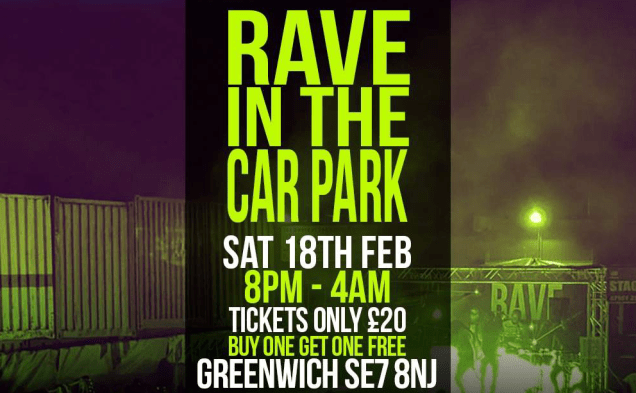
Thames Barrier car park ravers apply to dance all year round

Thames Barrier rave website screengrab
Organisers are planning another event on February 18 but now want a permanent licence to host them all year round

Plans have been lodged with Greenwich Council for outdoor raves to be held all year round in a car park close to the Thames Barrier.

A number of events have already been held on the site at Herringham Road, next to the Bunker 51 paintball venue, with residents complaining about noise on at least one occasion. Another event is planned for February 18.

Those events have been held with temporary licences, but now a newly-formed company wants a permanent licence to host 800 people on the site on Fridays and Saturdays, as well as Sundays during bank holiday weekends.

The application comes from Thecarparkldn Ltd, which was registered on January 15 by Andreas Millios at offices in Shoreditch, according to Companies House records.

Last year Millios had an application for an event in Morden refused by Merton Council after police objections, while a New Year’ Eve event in St Albans was also thrown out by the local council.
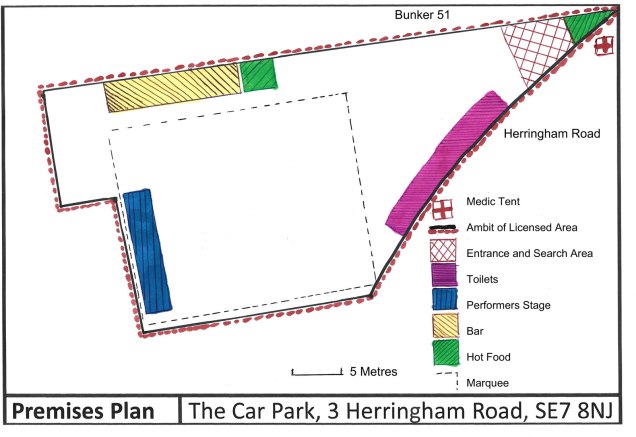
Millios’s company is applying for live music, recorded music, dancing and alcohol licences at 3 Herringham Road until 4am and to keep the premises open until 4.30am. It says events will not be held on consecutive weekends and restricted to two weekends per month.

The nearest neighbours to the venue are actually across the Thames, in the Barrier Point and Royal Wharf developments in Silvertown, but this website is aware of noise complaints in Charlton from past events.

One objection seen by this website says that people living a kilometre away were kept up until 4am and added: “It sounded like a very loud party at the end of the road, but in fact it was an incredibly noisy party further away.”

An outline of the car park application can be downloaded here, which contains details of how to respond. All responses need to be made by February 27. To contact your local councillors, visit writetothem.com.

3 Herringham Road
The car park is next to the Bunker 51 paintball venue

In 2018, the developer Komoto applied to build up to 500 homes on the car park site, which was home to the Johnsen & Jorgensen glass works until the early 1980s. Revised proposals were submitted in 2021, but little has happened since with the scheme, called Flint Glass Wharf.

Separate proposals for 1,200 homes on land surrounding the rave site were approved in March last year, with the area described as “horrible” by the chair of planning at the time, Stephen Brain, who approved the plans on his casting vote. Construction plans were recently submitted to the council, although a March start date for work on Herringham Quarter looks likely to be missed.


LIKE WHAT THE CHARLTON CHAMPION DOES? HELP US KEEP IT GOING

We tell the SE7 stories you won’t read elsewhere. And we’ll do the others better than anyone else. But it won’t survive without your help.

– Please tell us about your news and events – we reach people who stay away from social media groups
– Become a monthly supporter at presspatron.com/charltonchampion
.

Air quality worries as 1,200 homes by Thames Barrier recommended for approval

Hyde Herringham Quarter
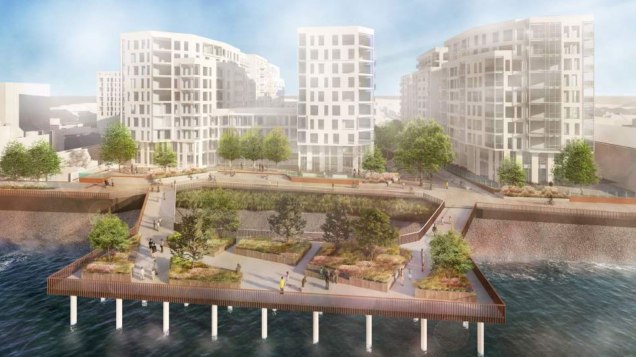
The development would make use of a jetty on the Thames. The Tarmac plant at Riverside Wharf is on the left

Plans to turn the Charlton riverside into a residential district could take a giant step forward next week if councillors approve over 1,200 new homes on what is currently industrial land.

But some residents face living in homes where they will not be able to open their windows because of concerns over air quality from an asphalt plant next door.

The Port of London Authority and the operators of nearby wharves have submitted objections to the Herringham Quarter project, saying that residents’ complaints about air quality, noise and smell could threaten their businesses.

The land concerned (not the blocks) – Plots A and C could be finished by 2026. Plot B is the Tarmac plant. Detailed plans for plots D and E will follow

Hyde housing association is asking for detailed permission to build 718 homes along with commercial units at Herringham Road and New Lydenburg Street, close to the Thames Barrier, in blocks of up to 10 storeys. It also wants outline permission for a further 494 homes, which could follow in the future.

Councillors are due to make a decision on the scheme next Tuesday, at a meeting of Greenwich’s planning board, the committee that deals with the biggest developments in the borough.

The blocks would be up to 10 storeys high, with some to be built on the site of Maybanks Wharf, currently a recycling yard for Westminster Waste.
The Tarmac asphalt depot next door would remain in place. The first homes could be ready by 2026.

Hyde’s application is the biggest Charlton Riverside scheme to reach councillors since the notorious Rockwell scheme for land off Anchor and Hope Lane, which has now been abandoned after Greenwich Council, City Hall and the government all rejected proposals for 771 homes there. The site is now to be used as a “last mile” logistics depot.

So far just one home – a flat at the derelict Victoria pub, which is to be turned into a pizza takeaway – has been given approval out of a potential 8,000 new homes in the area.

The proposals have changed since the scheme was first unveiled in 2019, with “affordable” housing now making up 55 per cent of the total in the first phase of the scheme.

Hyde’s plans include 263 homes for London Affordable Rent, about half market rent and available to people on housing waiting lists, comprising 37 per cent of the total number of homes. Another 133 homes (18 per cent) will be for shared ownership, with the remainder going on private sale.

The second phase of the scheme will include more private housing, taking the “affordable” total down to 40 per cent across the project.

However, the quality of life for people who move into the homes has been questioned by the operators of Murphy’s, Angerstein and Riverside wharves, who say that complaining residents could put their noisy businesses at risk of closure.

Hyde’s vision of Herringham Road in the future

They also warn that the introduction of residents living so close to the trajectory of the chimney stack emissions will make it unlawful for Tarmac to operate the asphalt plant at Riverside Wharf under its current permit.

The Port of London Authority has also objected, saying that Riverside Wharf needs to be able to operate 24 hours a day because of tidal movements.

In response, the developer is proposing that people living in affected properties will have “sealed units with no openable windows which will be fitted with mechanical ventilation”.

Council planners say that this mitigation is “considered to be acceptable such that undesirable conflict with the uses at the wharves will be avoided”.

Herringham Quarter render
A view from the Thames, with the Tarmac plant on the left

Just 90 car parking spaces will be provided, with Hyde expected to pay for a new bus route to serve the site – expected to be an extension of the 301 service to zone 4 Woolwich station rather than a route to zone 3 Charlton or zone 2 North Greenwich.

Developers in the area will be expected to pay £3,000 per home to Greenwich Council for new roads, and £2,800 to TfL for new bus services.

The council is also looking for a site to place a new primary school, after concluding that a planned school on Anchor & Hope Lane would provide insufficient spaces as it would also be serving the Greenwich Peninsula. Hyde will have to pay £915,000 towards that.

The local NHS is to get £1.1m in extra funding for GP services as the commercial units on the site are too small to include a health centre; the council’s GLLaB job brokerage will collect almost £1.3 million from the scheme.

One factor that will weigh heavily on the developer’s side is that Greenwich only has a three-year supply of new housing on the way – it should, by law, have five. This is enough to get a refusal overturned on appeal – putting pressure on councillors to back the scheme.

Another scheme for nearby Flint Glass Wharf – on the other side of the Tarmac plant – is also due to come to councillors soon, with 500 homes. South of Herringham Quarter, Montreaux is developing plans for the Stone Foundries site.


LIKE WHAT THE CHARLTON CHAMPION DOES? HELP US KEEP IT GOING

We tell the SE7 stories you won’t read elsewhere. And we’ll do the others better than anyone else. But it won’t survive without your help.

– Please tell us about your news and events – we reach people who stay away from social media groups
– Become a monthly supporter at presspatron.com/charltonchampion

Take a step into Charlton’s future: Support proposals for a Thames Barrier Bridge

Thames Barrier Bridge
A Thames Barrier Bridge could be a tourist attraction in its own right

Two years ago, we reported on early ideas for a pedestrian and cycling bridge at the Thames Barrier, connecting Charlton with Silvertown on the north side of river. Now the team behind the proposals are looking for your support to make this a reality. ALEX LIFSCHUTZ, of the architecture firm Lifschutz Davidson Sandilands, explains more and how you can get involved.

The Thames Barrier Bridge, conceived by the London architects Lifschutz Davidson Sandilands, with the marine, civil and structural engineers Beckett Rankine, is a low-cost, low-impact pedestrian and cycle bridge that would link the communities of Charlton and Woolwich with the Royal Docks. The transport consultants Steer reckon that five million pedestrians and one million cyclists would use the bridge every year, based on journeys to work alone. These figures don’t include leisure or other trips.

The grim statistics of the pandemic have alerted us to so many issues of health and social inequality. Likewise the return of birdsong to our cities has reminded us that, as we emerge from lockdown, we really do have to replace motor vehicles with sustainable transport. Walking and cycling are part of the solution to all of these problems – promoting health, social and economic progress, and reducing pollution. A hopeful sign is the massive increase of bike sales – according to The Guardian, up 40% on last year.

Thames Barrier Bridge
A bridge at the Thames Barrier would not stop shipping

But the river creates an enormous barrier to walking and cycling in east and southeast London. For instance, a journey from Charlton to the new City Hall at The Crystal, or the 70,000 new jobs in and around the Royal Docks Enterprise Zone, currently takes about 40 minutes, cycling and walking though the Woolwich foot tunnel (assuming the lifts are working or you don’t mind carrying your bike down and up the stairs), 40 minutes by the Docklands Light Railway, or over 70 minutes walking.

A bridge across the river close to the Thames Barrier would allow you to reach the same destination in 20 minutes, walking or you could cycle there in half that time. It would be the only bridge east of Tower Bridge (other than the Dartford Crossing), where half of London’s population now lives, compared to over 20 bridges in west London.

Thames Barrier Bridge
The bridge would create opportunities for communities on both sides of the Thames

In the late 1990’s, Lifschutz Davidson Sandilands came up with the idea of a bridge connecting the South Bank to Charing Cross station and slung off the existing Hungerford Railway Bridge, creating minimal obstructions to river traffic. Completed in 2002, the Golden Jubilee Footbridges have become the Thames’s most popular crossing with about 8.4 million pedestrian journeys each year.

Our idea for the new bridge at the Thames Barrier is similarly opportunistic. Like the Golden Jubilee Bridges, its supports would shadow the piers of the existing structure and hence create only a small additional impact on navigation and the flow of the river. In fact, like our bridges further upstream, it would also provide the barrier with protection from impact on whichever side it is placed. Its low height (about 15 metres above Mean Water High Springs) makes it easier to access by cycle, foot or wheelchair, with minimal shore taken up by its relatively short ramps rising from the parks at either side. It would be around nine metres wide with separate lanes for walking and bikes.

Lifschutz Davidson Sandilands came up with the idea for the Golden Jubilee Bridge, linking the South Bank with the West End (image: Mary and Andrew via CC BY 2.0)

It would totally transform the accessibility of the Charlton and Woolwich waterfronts including existing occupants such as the Thames-Side Studios and the many new homes and businesses planned for Charlton Riverside. Looking further afield, it would link the Green Chain, including Maryon Park and Charlton Park on the south side, to the Lee Valley and Queen Elizabeth Olympic Parks to the north.

Like Tower Bridge, the Thames Barrier Bridge is an opening bascule bridge, so allows passage for boats and barges by raising its deck. The elegant structure is a series of small spans that use a minimal amount of material (especially steel), making it both cost-effective and environmentally friendly. With shorter, multiple openings, the bridge is less prone to the risk of malfunction compared to a single point of opening, and can be raised at the last minute for ships to pass, minimising disruption to cycles and pedestrians. The bridge would serve journeys to and from work but also attract visitors and tourists, bringing economic benefits north and south of the river.

Thames Barrier
A bridge would connect new developments, transport links and green spaces on. both sides of the Thames

The idea is receiving support from local MPs and councillors, residents’ groups, cycle organisations, developers, environmentalists and transport experts. What we need are local political champions, including the Royal Borough of Greenwich and the London Borough of Newham, the Greater London Authority and statutory agencies like the Environment Agency to pick up the idea and help us run with it.

Of course, we are only at the concept stage and much testing needs to be done. Curiously, once it has political support, funding the design work – and ultimately the £300 million structure – is less difficult than you’d expect as there is a large amount of green finance available at the moment, given government and corporate climate initiatives.

So what can you do to help? Click on the website – www.thamesbarrierbridge.com – to find out more and send us your comments, or write to your local council.

The pandemic has shown us that we can rapidly change our behaviour to counter a virus; we can use the same energy and enterprise to counter the even more dangerous threat of climate change and, in doing so, make better lives for ourselves.

ALEX LIFSCHUTZ is the founder and principal of Lifschutz Davidson Sandilands.

This comment piece is also appearing on our sister website 853.


PLEASE SUPPORT THE CHARLTON CHAMPION

We tell the SE7 stories you won’t read elsewhere. We can’t do it without your help.
– Please tell us about your news and events
– Become a monthly supporter at presspatron.com/charltonchampion
– Donate to our running costs at paypal.me/charltonchampion

Thames Path ‘missing link’ is launched – with council hoping to open it all night

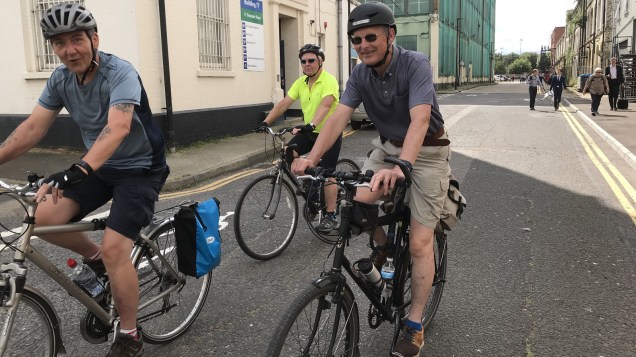
Cyclists on the Thames Path missing link
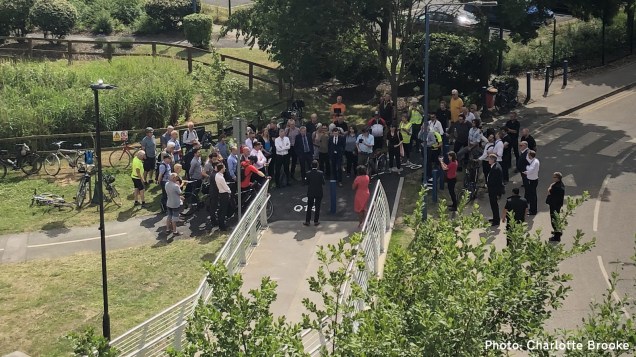
Cyclists and walkers gathered on Wednesday for the opening of the Thames Path’s ‘missing link’

The “missing link” on the Thames Path between Charlton and Woolwich opened on Wednesday – with Greenwich Council pledging to finish the job by trying to open it 24 hours a day.

After 15 years of lobbying by Greenwich Cyclists, the £1.5m route from the Thames Barrier in Charlton to King Henry’s Wharf in Woolwich was officially launched by London cycling and walking commissioner Will Norman and Greenwich Council cabinet member Denise Scott-McDonald.

Scott-McDonald, the cabinet member for public realm, told guests that while the connection – which passes through an industrial estate – would “initially” open from 6am to 9pm seven days a week, “our ambition is for it to open 24 hours a day, for everyone”.

The link uses a ramp to pass from the Thames Barrier site into the Westminster Industrial Estate – the old Siemens factory, which dominated the area before closing in 1968 – before passing Thames-Side Studios and the Arts Cafe. A second ramp at the end of Warspite Road then takes walkers and cyclists above the riverside before rejoining the existing Thames Path at King Henry’s Wharf.

Closures by developers aside, the completion of the “missing link” now means near-uninterrupted access to the Thames right through Greenwich borough from Deptford to Thamesmead and beyond, as well as improving cycle access to both North Greenwich tube and the forthcoming Woolwich Crossrail station.

Will Norman, who wheeled a bike through the link as part of the opening ceremony, said: “This really sits at the heart of what the mayor and his team are trying to do: to enable more people to be more active, to get out of their cars and actually enjoy exploring the city and finding new spots. Far more people can access this and use it as part of their daily lives.”

New signage indicates that the link will eventually be joined to Quietway 14, a cycling route which currently runs from Blackfriars Road to Canada Water station.

A Greenwich Council spokesperson told The Charlton Champion that signs directing users to “Greenwich Peninsular” would be corrected.

While the new route will be welcomed, actually getting to the Thames Path can be a challenge for cyclists – particularly crossing the Woolwich Road, which has seen plans for a segregated cycle lane – Cycle Superhighway 4 – dropped. Cyclist Edgaras Cepura was recently killed at the Woolwich Road roundabout in east Greenwich – nine years after Adrianna Skrzypiec died on her bike at the same spot.

Will Norman told The Charlton Champion that the A206 from Greenwich to Woolwich had been identified as one of the top 25 in London that needed action to make it better for cyclists – but that work on the Greenwich one-way system would come before the rest of the route.

Will Norman
Will Norman takes his bike along the “missing link”

He said: “CS4 was separated out under the previous administration into chunks, and the section from Greenwich to Woolwich was downgraded as part of that decision.

“We recently have been looking at the Liveable Neighbourhood programme, and working with the borough to address concerns around the [Greenwich] gyratory and making that safe, which as you know has millions of people coming to visit the Unesco world heritage site.

“Then clearly the next section is to work with the borough on the next part of the route, with borough officers and politicans and coming up with the best way to tackle that.” (See more at our sister site 853.)

Thames Path missing link crowd
Cyclists and walkers gathered for the openeing ceremony (Photo: Charlotte Brooke)

Fixing the missing link was one of the ambitions of campaigner Barry Mason, the former co-ordinator of Greenwich Cyclists and neighbouring Southwark Cyclists, who died in 2011.

Mason was well-known for leading a “midsummer madness” ride on 21 June each year, which would start from the Cutty Sark at 2am and arrive at Primrose Hill to see the sun rise on the longest day of the year.

The Charlton Champion provides news and information about issues and events in London SE7. Help us by telling us your stories – or buy the author a coffee.

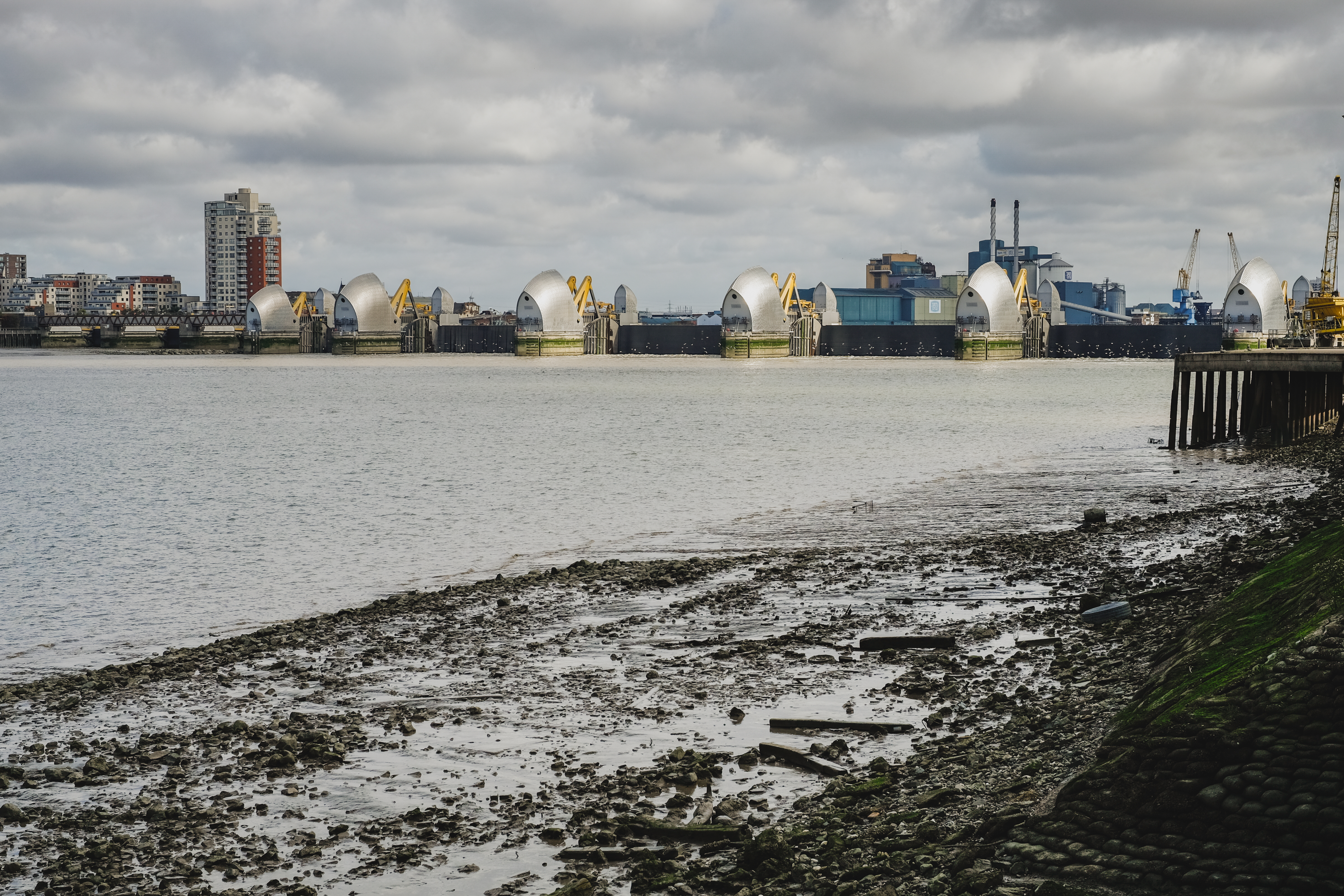
Testing times: see the Thames Barrier in action on Sunday 10th September

Thames Barrier Test 2017

Sunday 10th of September will see the annual full test of the Thames Barrier: an opportunity to see the barrier in action, meet the teams who run it, and learn about how it all works. The cafe and information centre will open at 9am; we recommend keeping an eye on the official website for closure timings nearer the date.

There’s a Facebook event for it here, and we recommend following Alan at the Barrier on Twitter, too!

Thames Barrier test 2016
Thames Barrier test closure – September 2016
Photo copyright Neil Clasper

Developer eyes 25-storey tower at Thames Barrier on Charlton riverside

Tall Ships, April 2017
Crowds watching April’s Tall Ships Regatta from in front of the development site

A property developer has revealed plans for a 25-storey tower for land next to the Thames Barrier – flying in the face of Greenwich Council’s proposed new masterplan for the Charlton riverside.

Komoto Group Limited wants to redevelop the site to the west of the Barrier to provide 570 homes plus commercial and retail space and up to 500 car parking spaces.

The company owns the site, which is currently home to the Raceway go-kart track, Bunker 51 laser-tag centre, a church, and other firms. The land was formerly home to the Johnsen & Jorgensen glass works, which closed in 1981.

But the plans directly contradict Greenwich’s proposed new masterplan for the area, which envisages mostly low to medium-rise developments of up to 10 storeys. There is a get-out plan which would permit taller buildings if there is “adequate public transport”, which certainly does not apply here.

Furthermore, as From The Murky Depths points out, the area’s filthy, dusty, and still full of industry.

Herringham Road
The site’s neighbours on Herringham Road

However, the masterplan has not yet been legally adopted, so Komoto is clearly hoping to squeeze this through before then. The company is currently asking for a “scoping opinion” – an early opinion from the council’s planners on what the main issues with the development are likely to be.

Earlier this year, developer Rockwell applied to redevelop the old British Ropes site at Anchor & Hope Lane with a 28-storey tower – the council has not yet made a decision on this.

You can find the application on the council planning website as 17/1324/EIA or read the full scoping report here.

Cruise ship passes in the night

Silver Cloud cruise ship goes through Thames Barrier at night

Rob Powell of Greenwich.co.uk has been keeping an eye on the river…

The cruise ship Silver Cloud passed Charlton on Sunday night on her outward bound journey after a one-day stay in the river’s Upper Pool by Tower Bridge.

With just a friendly security guard for company, I was at the the Thames Barrier at about 01:30 – just as it started raining – to see the 157m vessel pass Charlton and transit through London’s iconic flood protection gates.

The late night trip down the Thames was the beginning of a 10-night cruise of Northern Europe on the Silversea-operated ship with Leith the next scheduled stop on Tuesday afternoon.

Other cruise ships to sail past this year have included The World, Fram, Deutschland and Hamburg. Still to come in August and September are FTI Berlin, Seabourn Pride and MS Europa.

Cruise ships should become an even more common sight around these parts when the promised redevelopment of Enderby Wharf on the other side of Greenwich Peninsula eventually takes place.

There have been predictions that there could be 100 cruise ship arrivals at the proposed terminal every year, although restrictions on the size of ships coming through the barrier mean the world’s largest cruise ships won’t be able to make it to Enderby’s.

But despite recent announcements on progress, and suggestions cruise ships may start arriving there next year, it’s perhaps worth noting that there appears to be a lack of available cruises to book now which have the new terminal in their itinerary despite the fact cruises are commonly booked 1-2 years in advance.

Champion readers may be interested in a website I run with lots of photos from the river called ThamesPics.co.uk