Work is starting on Charlton’s new cycleway, extending the segregated route from the Angerstein roundabout in east Greenwich to the junction of Anchor and Hope Lane.
The first phase of the new route, between Old Woolwich Road and Farmdale Road, opened just before Christmas, and gives cyclists their own protected space on the road, separated from other traffic by wands. A crossing was also installed at the Angerstein roundabout, where two cyclists died in 11 years after colliding with lorries.
Now early work has begun on the second phase, which will continue the route past the Greenwich Shopping Park to Anchor and Hope Lane. Changes will include bus-stop bypasses, enabling riders to get around bus stops, and traffic lights at Gallions Road.
Turning from Woolwich Road into Gallions Road will be banned for motor vehicles to improve safety for cyclists, while a “cycle gate” will be introduced at Anchor and Hope Lane to give riders time and space to get away ahead of other traffic. The northbound slip road onto the A102 is also to be closed as part of this phase of work.
Last year TfL consulted on segregated lanes along the rest of the A206 to Woolwich; however, this section is currently being covered by wider bus lanes.
TfL says the Woolwich Road is “amongst the top 5% of routes in London which have the greatest potential for cycling to increase, but only if we build infrastructure to give people the confidence to cycle”.
The route is, in time, meant to become part of Cycleway 4, from Tower Bridge to Woolwich, but only a section from Tower Bridge to the Rotherhithe Tunnel has been built, alongside the route in east Greenwich.
Construction work is continuing on a section of route in Creek Road, Deptford, but plans for the rest of the route to and through Rotherhithe have not yet been confirmed.
Work is also due to start soon on an extra section at the central London end, taking the route as far as London Bridge.
Transport for London says the widened lane improves safety for cyclists
Transport for London says it is monitoring the effects of widened bus lanes between Charlton and Woolwich after over 2,000 people signed a petition calling for them to be removed.
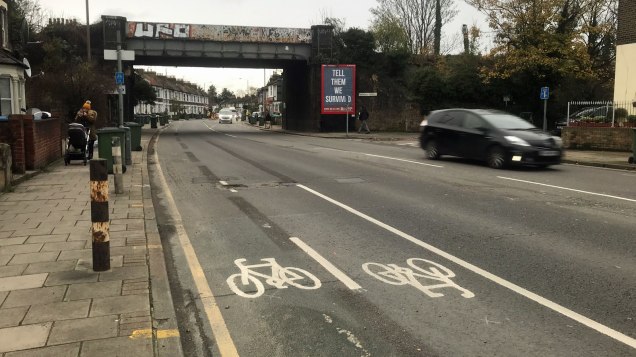
The lanes have been widened between Anchor and Hope Lane and the Woolwich Ferry to assist buses and improve safety for cyclists, cutting the ordinary traffic lanes down to one in each direction.
In January TfL consulted on plans to build a segregated cycleway between Charlton and Woolwich, which would have had a similar effect, but after the coronavirus pandemic the route between Greenwich and Charlton was prioritised instead. Eventually TfL hopes there will be a continuous cycle route between Tower Bridge and Woolwich.
Bus lanes were widened as an interim measure – and introduced to Woolwich Church Street for the first time – to speed up services and to add some extra safety for cyclists. However, they have been blamed for increased congestion on Woolwich Road and Woolwich Church Street.
A petition created three weeks ago by Gagandeep Singh says there are “vehicles queuing up all day and evening”. By Thursday evening it had gained 2,359 names. One signatory claims it took them 90 minutes to travel between Woolwich and Charlton; another said: “It’s impossible to get out of the roundabout at Warspite Rd. Traffic jams are terrible all day long.”
While there has been a huge jump in traffic since the end of the first coronavirus lockdown, there has been congestion where drivers attempt to filter from two lanes to one at the junction with Anchor and Hope Lane. While the wider bus lanes – which replace narrow cycle lanes on Woolwich Road – allow cyclists to overtake buses at stops, they are not continuous. This means riders still have to take their chances with HGVs and other fast-moving traffic at roundabouts – despite the introduction of a 20mph speed limit on the route.
Two lanes merge into one at Anchor and Hope Lane
A Transport for London spokesperson told The Charlton Champion the widened lane had been introduced as part of its Streetspace programme “to create more space for people to safely walk and cycle”.
He added: “The bus lanes push general traffic and HGVs further away from cyclists; making this corridor a much more pleasant and less intimidating route, and provide a link from Woolwich into the Cycleway that is currently being built between Greenwich town centre and charlton. These lanes are an interim measure while we work on the permanent scheme that was consulted on earlier in 2020, and which would provide a two way segregated cycle lane taking people from Woolwich all the way into Greenwich, and eventually into central London.
“Bus lanes protect buses from congestion and ensure journey times and intervals between buses are more reliable. Bus lanes will help guard against a damaging car-led recovery by improving bus journey times and safety for Londoners making journeys by public transport and the increasing proportion travelling by bike.
“Changes made as part of the Streetspace programme are being introduced on a temporary basis under temporary traffic orders, and will be monitored after implementation to ensure they deliver the expected benefits. Monitoring along the A206 corridor will include reviewing cycle flows, perception of safety, collision rates, general traffic flows and bus journey times.”
The widened lanes do not run across junctions
He continued: “We are reviewing the operation of the bus lanes with the Royal Borough of Greenwich, and the data we are collecting is helping to inform these ongoing discussions. Where appropriate, adjustments to the scheme will be made if they aren’t performing how we expected. The new measures will be in place for up to 18 months, after which the monitoring strategy will form a key part of discussions between TfL and the council as to whether the scheme should be removed or made permanent.”
CYCLEWAY 4 PROGRESS
Woolwich Ferry to Anchor and Hope Lane, Charlton: Bus lanes as interim measure, funding for cycle route not yet certain
Anchor and Hope Lane to Farmdale Road, Greenwich: Work yet to start
Farmdale Road to Old Woolwich Road: Due to open early December
Old Woolwich Road to Old Royal Naval College: Uses existing routes
Old Royal Naval College to Norway Street, Greenwich: Awaiting funding application
Norway Street to Rotherhithe Tunnel: TfL in discussions with local councils, plans due in coming months
The TfL spokesperson said: “This is later than originally anticipated for a number of reasons, including delays in our supply chain for temporary materials, issues with ducting identified when on site and a recent design change to Vanburgh Hill bus stops to assist bus operations.
“We are currently finalising plans for the section of cycleway between Charlton and Anchor and Hope Lane and will announce our proposals and construction timescales shortly.”
A small section of Cycleway 4 is already open between Tower Bridge and Rotherhithe Tunnel; TfL said this week that plans for the section through Deptford would be announced “in the coming months”.
The Angerstein branch rail bridge over Woolwich Road has been added to Greenwich Council’s Local Heritage List. Will Network Rail give it a lick of paint to celebrate?
Of the 10 nominations made in my local area of SE7, five landmarks made it through to the updated heritage list. Interestingly, three relate to the fascinating railway heritage in the area – which is all still in use today and definitely worth exploring. I’m really pleased that the Rose of Denmark was also selected because it is such an iconic local building, and this listing could be important when our local pubs feel so at risk. Details of each nomination are in the full document, but here’s a quick snapshot:
Angerstein Freight Railway pedestrian crossing & arched walkway “Rare survival of a historic pedestrian route over a freight railway, still in regular use by residents for its original purpose…and for transport of aggregates around London.”
Angerstein Freight Railway bridge, Woolwich Road “Rare example of a private individual obtaining Act of Parliament for railway construction due to the bridge. Carries a purpose-built freight line serving the Thames which is still in use, a rare survival.”
Railway Electric substation, Troughton Road “Unusual structure within a residential street with features designed on a monumental scale, of historic interest recording technological changes to the railway industry.”
Rose of Denmark public house, 296 Woolwich Road “Local landmark with strong communal value, displaying red of nearby Charlton Athletic FC – time-honoured locally valued feature.”
Rathmore Community Centre & Rathmore Benches (Former Good Shepherd Mission Hall) “Striking, high quality late C20th exterior artwork with strong social, artistic and townscape value. Intact and evocative, unique.” (An appeal has been launched to restore the mosaic benches).
The following SE7 nominations could not be considered at this point in time since they are the subject of current or recent planning applications. Nominations were put on hold until the application is determined, including any appeal:
Citing the “historical, architectural and environmental” significance of the pub, the Save the Pickwick campaign is calling on the developer to retain and reopen the pub in consultation with local residents, rather than demolish it and replace it with a ‘bland pub’.
The deadline for comments on the Pickwick planning application is Monday 24 September. To see the full application and make comments, visit planning.royalgreenwich.gov.uk and enter reference 18/2976/O. Comments on the application can also be sent to Peninsula ward councillors.
To get involved or contact the campaign, email savethepickwick [at] gmail.com.
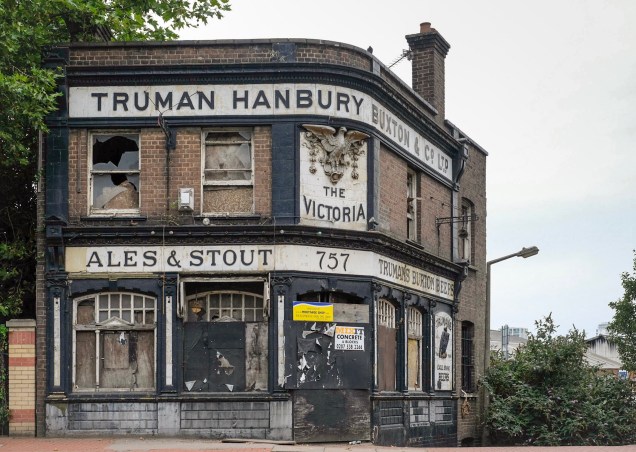
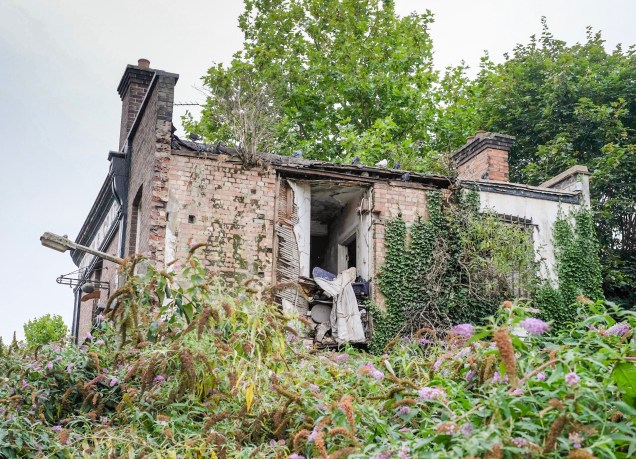
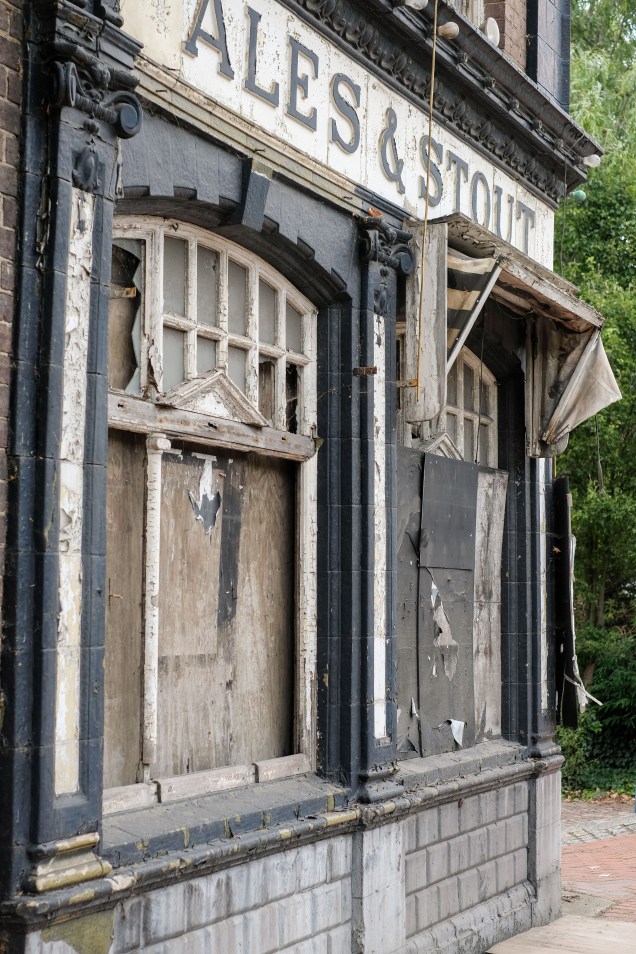
Out exploring the industrial land that is set to become Charlton Riverside (see the latest on that planning saga here) we took the opportunity to take some new photos of the decaying Victoria pub, which prompted a lot of questions on our Twitter and Facebook channels about its current status and future.
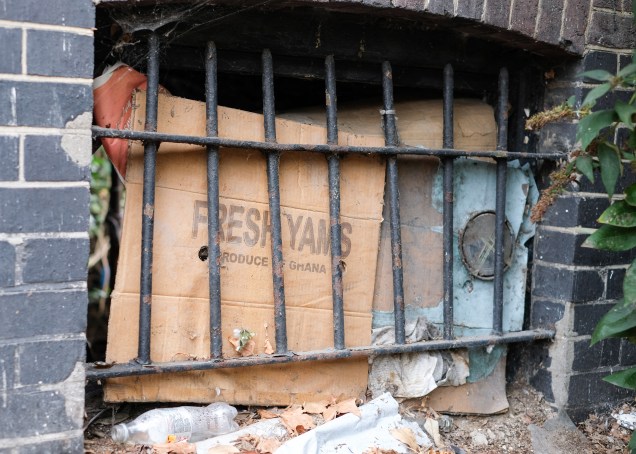
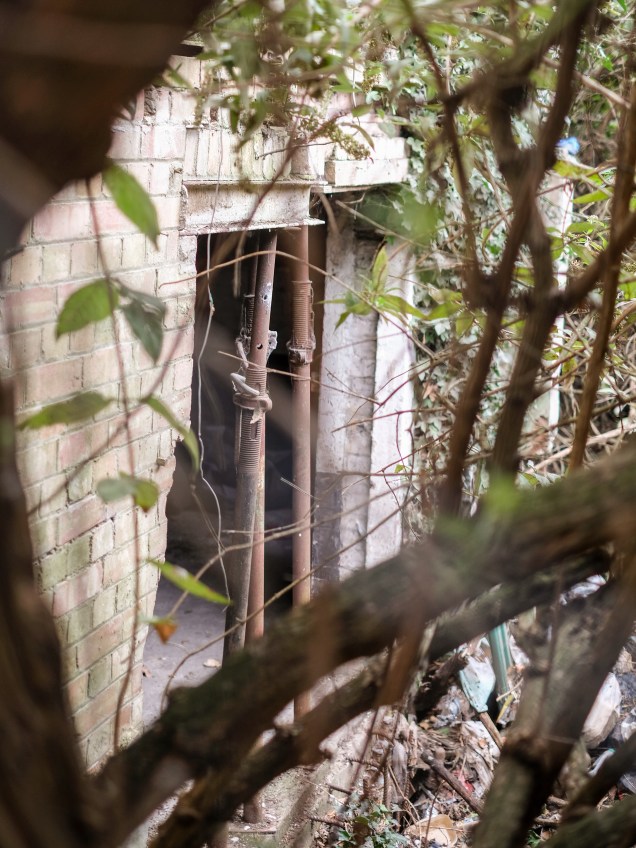
It’s in a poor state. With a reputation for having been a pub with a lean, it now appears to be falling backwards down the hill. Added to that, much of the back of the building is missing, and it’s clearly not been watertight for a long time.
Land Registry records show that the building is currently owned by a Jahangir Ghani, who bought it in July 2014 for £380,000. Unhelpfully, the owner’s address is given as the pub, though there’s clearly no one living there at the moment.
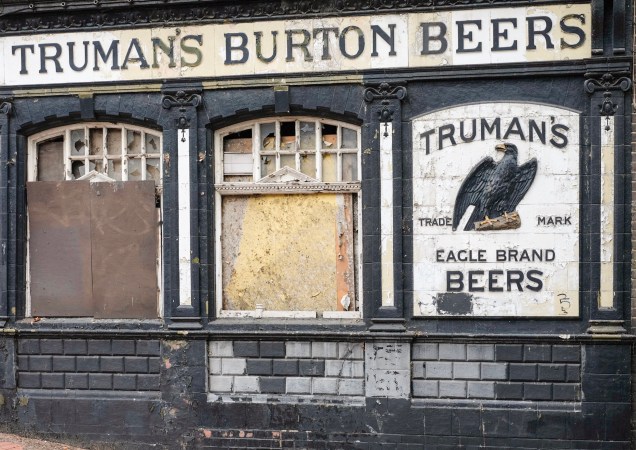
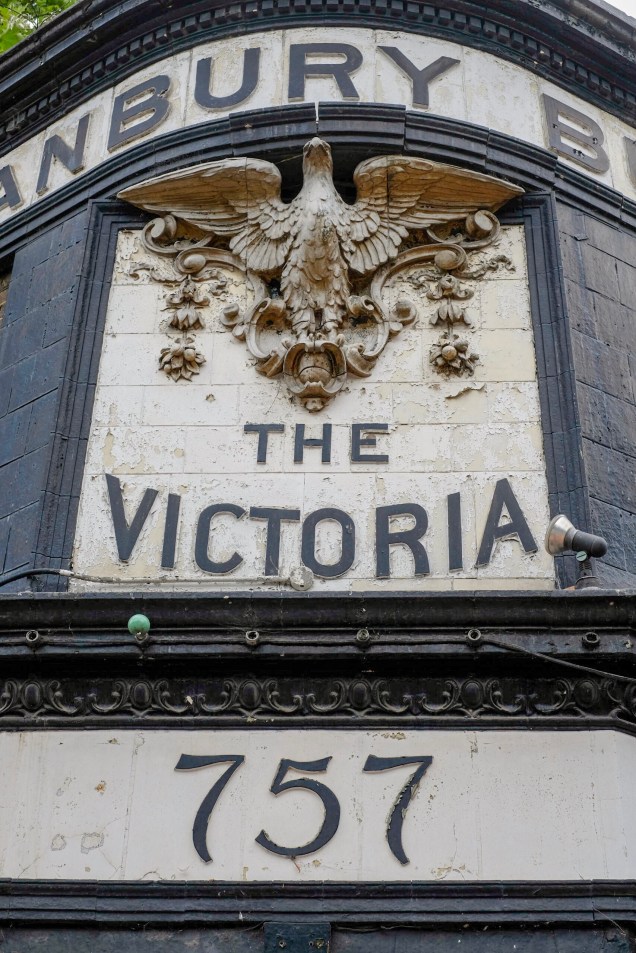
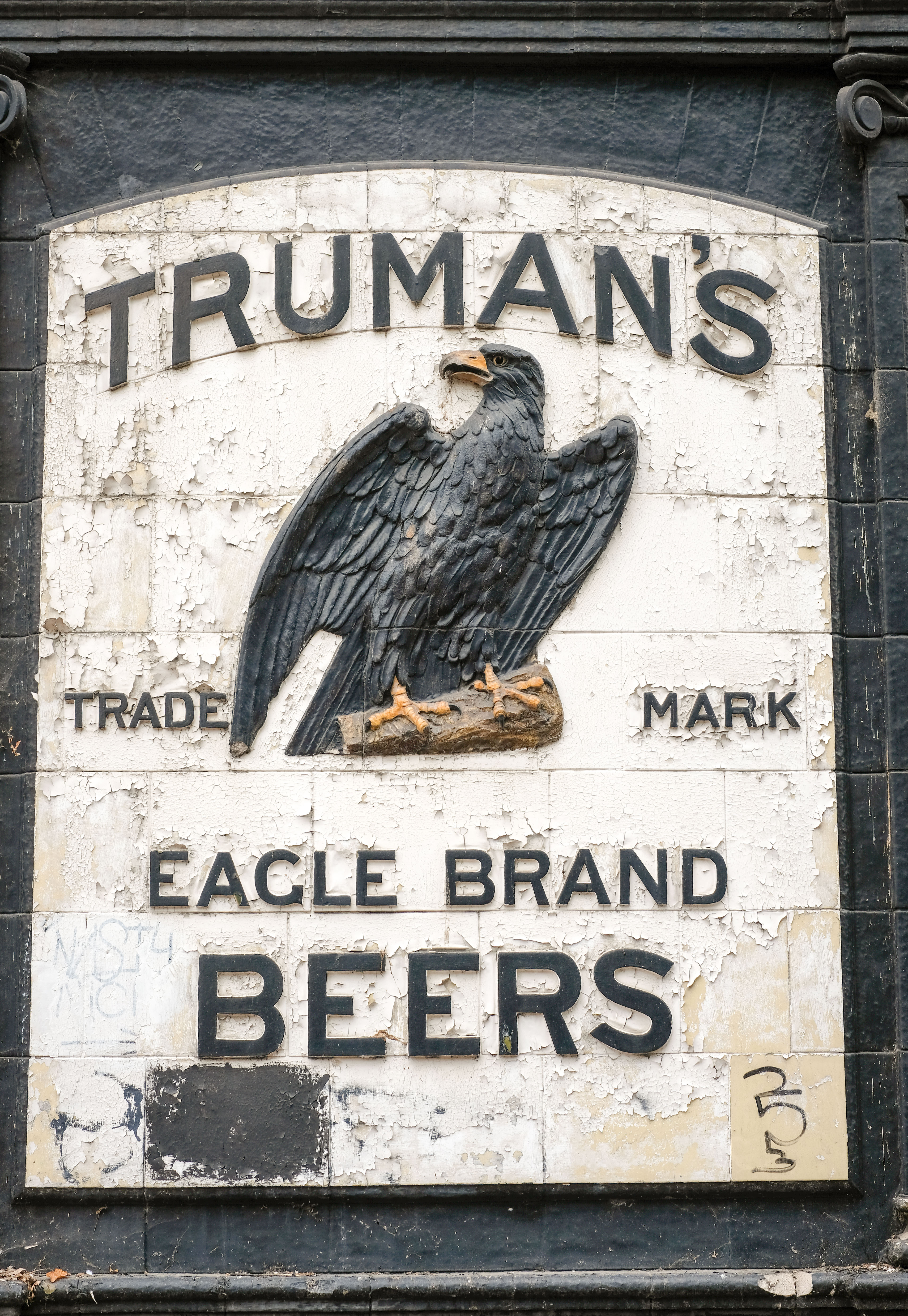
The building is included in Greenwich Council’slist of Buildings of Local Architectural or Historic Interest – the ‘local list’: “Late Victorian public house with Edwardian tiled façade by Truman’s Brewery. Despite fire-damaged interiors the fine tiled façade of 1910 survives with several splendid features including the large spread eagle which holds up the corner above the name ‘The Victoria’ and Truman’s trademark eagle on the Eastmoor Street façade. Significant townscape value being the only remaining building marking former historic crossroads of Eastmoor Street 107 of 132 Woolwich Road which gives a sense of the now lost, formerly intimate streetscape of the area. Qualifies due to architectural interest as an evocative and sole-surviving example and environmental significance as a characterful, time-honoured local feature. Forms part of the Thames Barrier and Bowater Road Conservation Area” . It is important to note that a local listing does not offer the same protection as a national listing in planning terms; find out more about listed buildings in Greenwich here.
Do you know any more about the plans for the pub? Get in touch and tell us what’s going on! And we’d love to hear your memories of the pub when it was open in the comment section below.


 The Charlton Champion