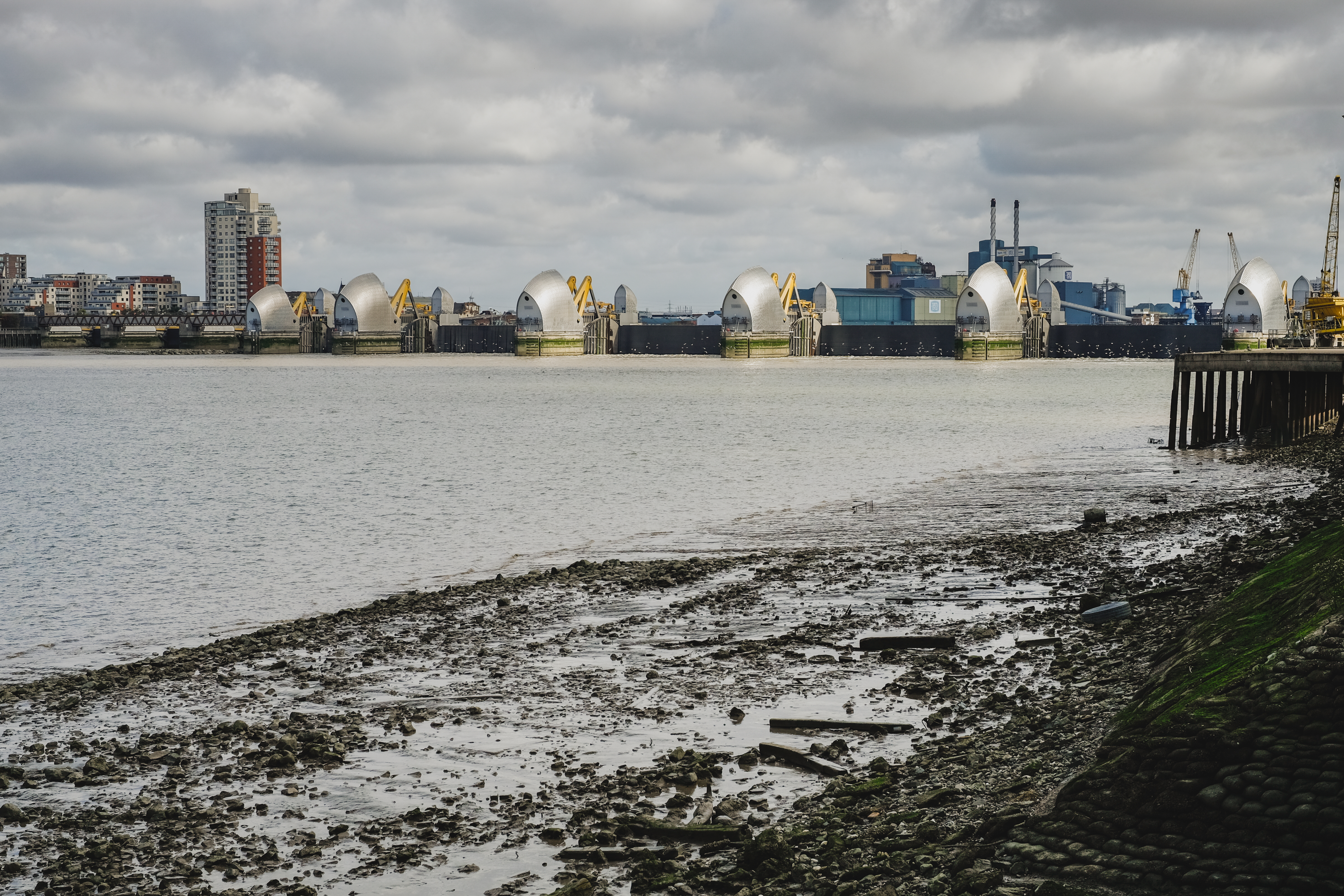
Sunday 10th of September will see the annual full test of the Thames Barrier: an opportunity to see the barrier in action, meet the teams who run it, and learn about how it all works. The cafe and information centre will open at 9am; we recommend keeping an eye on the official website for closure timings nearer the date.
The Big Red Bus Club, a volunteer-run playgroup used by 300 local families, has won the vote to become the charity of the year for the Charlton Sainsbury’s superstore.
The supermarket will now back the charity, which is based in the corner of Charlton Park, throughout the next year. Nationally, Sainsbury’s branches have raised £13 million since the scheme was launched in 2009.
In a nail-biting finish, The Big Red Bus Club beat its nearest competitor by just 14 votes in a poll conducted both in store and online.
The club runs activities and offers play-and-stay sessions for under-fives and their parents and carers.
Emily Frith, the administrator for the Charlton Mummies and Daddies Facebook group of over 1,000 local parents said: “I know how important it is to support local charities that work in our community and support my children. The Big Red Bus Club is a lovely place and run and led by local volunteers like me – just parents giving their time.”
Big Red Bus Club chair Sarah Smith added: “We run free daily stay and plays for local families with children under five. It’s hard to find free things to do, and that’s why Sainsbury’s support means so much to us. As a small local charity we hope that this year will be a great springboard for us to work with Sainsbury’s for the future.”
All change: The 180 will switch to North Greenwich if Transport for London’s plans go ahead
Transport for London is planning to halve the bus service between Greenwich town centre and Charlton as part of changes set to be brought in for the launch of Crossrail services at Woolwich and Abbey Wood.
Route 180, which links Charlton with Greenwich and Lewisham, will be diverted at the Woolwich Road flyover to run to North Greenwich station, with small cuts to be made to the frequency of the 472, which will continue to run to North Greenwich. The 129 service, which runs from North Greenwich to Greenwich town centre, will be extended to Lewisham as part-compensation.
TfL says 770 passengers will have to change buses each day as a result of the changes – and with no plans outlined to boost the frequency of the 177, the number of buses between Greenwich town centre and Charlton will drop from 12 buses per hour to six.
Both the 180 and 472 will also see changes at the other ends of their routes: the 180 will run to the Quarry development in Erith rather than the Belvedere industrial estates, while the 472 will run via Western Way in Thamesmead to terminate at Abbey Wood station, instead of its current route via Nathan Way.
Other changes will see route 178, which serves Shooters Hill Road, return to using double-decker buses to cater for expected extra demand for travel to Woolwich. Double-deckers will also return to routes 244 and 291, which run to Queen Elizabeth Hospital.
A new service, the 301, will run from Woolwich to Bexleyheath via Nathan Way (replacing the 472) and Abbey Wood. There are other service changes affecting the Erith and Belvedere areas, which can be seen on the TfL website.
There are no changes to buses along Charlton Road, or the 380 or 486 services.
The change to the 180 will make it harder to reach Greenwich from Charlton, Woolwich, Plumstead and Abbey Wood.
There will be fewer buses on the 472 on Bugsby’s Way, but more buses via the slower Woolwich Road route
What does this mean if I want to travel from Charlton to North Greenwich?
If you live east of Charlton station, there will be more buses to North Greenwich (20 rather than 16 per hour in peak times), but you’ll be more likely to get a slower service. There will be fewer buses on the faster 472 service via Bugsby’s Way – eight per hour instead of the current 10. More buses will run on the slower route via the Woolwich Road flyover – 12 per hour on the combined 161 and 180, compared with six on the 161 now.
From Charlton station, there will be no change to the 486. But from the stop in Anchor and Hope Lane next to Makro, there will now be 16 buses per hour rather than 18 (not including the morning-only extra services from here on the 472, which will continue). Or you could cross to the stop by the Antigallican, where 12 buses per hour will run on the slower route via Woolwich Road flyover, shared between the 161 and 180 (compared with six now on the 161).
Local transport campaigners have long complained about the “dance of death” where services from Charlton station to North Greenwich are split across the three stops serving the Woolwich Road/Anchor & Hope Lane junction. These changes bring more buses across these stops (28 rather than 24), but will mean more people will have to do that “dance of death” at a junction Greenwich Council says is the borough’s most dangerous.
From west of Charlton station, it’s a straightforward increase – from six 161 buses per hour to 12 on the combined 161 and 180 service. If you travel to/from the Greenwich Ikea site, however, you’ll see the overall level of service up the Greenwich Peninsula is hardly changing – it’ll increase from 44 to 45 buses per hour in the rush hour.
From Charlton Village – no change. Nothing is planned for the 422 or 486.
Bus stop
Current peak service
Proposed peak service
Charlton Lane
472 N G’wich: 10
161 N G’wich: 6
180 Greenwich: 6
177 Greenwich: 6
472 N G’wich: 8
161/180 N G’wich: 12
177 Greenwich: 6
Anchor & Hope Lane
472 N G’wich 10*
486 N G’wich: 8
472 N G’wich: 8*
486 N G’wich: 8
Rose of Denmark
161 N G’wich: 6
180 Greenwich: 6
177 Greenwich: 6
161/180 N G’wich: 12
177 Greenwich: 6
Greenwich Ikea site
All buses: 44*
All buses: 45*
*Does not include the extra buses on the 472 between Charlton and North Greenwich, which run mornings only and are due to continue.
I want to travel from Charlton to Greenwich town centre – what do I do?
You’ll have to wait longer if you want to travel from Charlton to Greenwich – you’ll only have the six buses per hour on the already-busy 177 to rely on in future. A possible – but more expensive – alternative will be the National Rail service from Woolwich Dockyard, Charlton or Westcombe Park stations to Maze Hill or Greenwich.
Or you could change buses at Greenwich Ikea, although the proposed 129 service from there to Greenwich and Lewisham will be cut to a bus every 12 minutes – less frequent than the current 180.
The cut to the 472’s frequencies mean there will be slightly fewer buses to Woolwich from Anchor & Hope Lane – down from 30 buses an hour at peak times to 28. Up the hill, no changes are planned to the 53, 54, 380 or 422.
Where’s my bus from Woolwich Road to Lewisham gone?
TfL suggests you change buses at Greenwich Ikea, but the proposed 129 service from there to Greenwich and Lewisham will be cut to a bus every 12 minutes – less frequent than the current 180. There are also fears of widespread traffic congestion when the Ikea store opens in late 2018, around the time these changes are due to take effect.
Taking a 177 to Greenwich town centre and changing there for a 129 or 199 will be a more sensible – but still fiddly – option. Those who want to change to other buses in Lewisham will lose out by having to pay another fare. TfL wants to expand its Hopper fare so it offers unlimited bus changes in an hour rather than just two – there is no date for this yet.
If you’re one of them, be sure to fill in the consultation and tell your local representatives what you think.
There will be no change to the 54 or 380 services to Lewisham, while there is a half-hourly National Rail service from Charlton to Lewisham.
Squeezed finances at TfL – but questions over modelling
Technical notes supplied by TfL indicate that it expects demand for bus travel between Greenwich and Woolwich – including Charlton – to drop after Crossrail services begin in December 2018. It also expects demand to drop along Charlton Road, although there is no cut planned for services there.
It is not made clear how TfL has reached this conclusion, although it could reflect some journeys from Woolwich to places such as New Cross and Peckham switching from bus to Crossrail and London Overground.
Transport for London’s map of projected demand – higher demand in red, lower demand in green. We’ve added in some place names. TfL predicts huge extra demand in Woolwich by 2021, but lower demand in Charlton and Greenwich.
I have a view on these changes – what do I do?
This isn’t a done deal – your views can influence what happens next.
Work has begun to restore Charlton House’s Summer House, thanks to a donation from the World Monuments Fund.
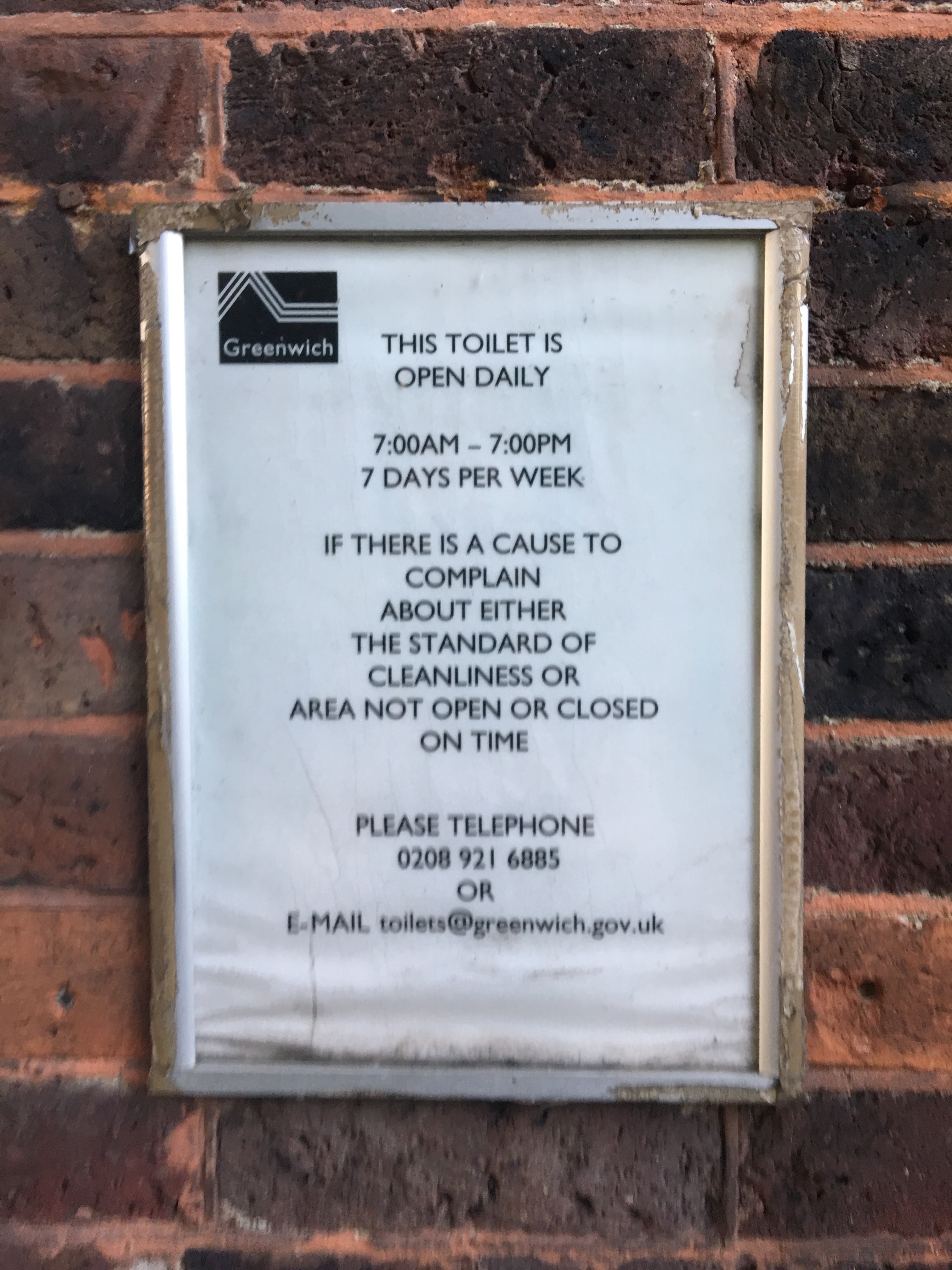
The Grade I listed Summer House, attributed to Inigo Jones, once gave panoramic views back along the River Thames to The City of London and has stood empty and unused since the public toilets within it were closed in the early nineties. It has been included in Historic England’s ‘Register of Heritage at Risk’ for many years. Work has now begun to remove asbestos and to clear the building of the modern toilet fittings and masonry partitions to leave it open and available for a wide variety of temporary uses.
Will this old Borough of Greenwich sign go into the Trust’s historic collection?
Tracy Stringfellow, Chief Executive of Royal Greenwich Heritage Trust, said, “Charlton House is one of London’s unsung architectural gems and this work is the first step of a process to re-imagine the house and its grounds to provide enhanced facilities for visitors that befit this historically significant site. It will give the estate a ‘front-door’ where small exhibitions and other temporary events can be staged and the Trust looks forward to working with local stakeholders to begin this journey.”
Architect Charlie MacKeith, overseeing the initial project, says “it is a great privilege to be working with the Trust at the start of Charlton House’s revival. This fascinating little building, currently hidden and locked, has started revealing tantalising fragments of its history even before we’ve started to remove pre-war additions. The reopened pavilion will have a dramatic impact on the park and village”.
The Charlton Champion understands that following the first stage of restoration, RGHT will be looking for ideas for temporary uses of the space – time to start thinking about what you’d like to see in the Summer House!
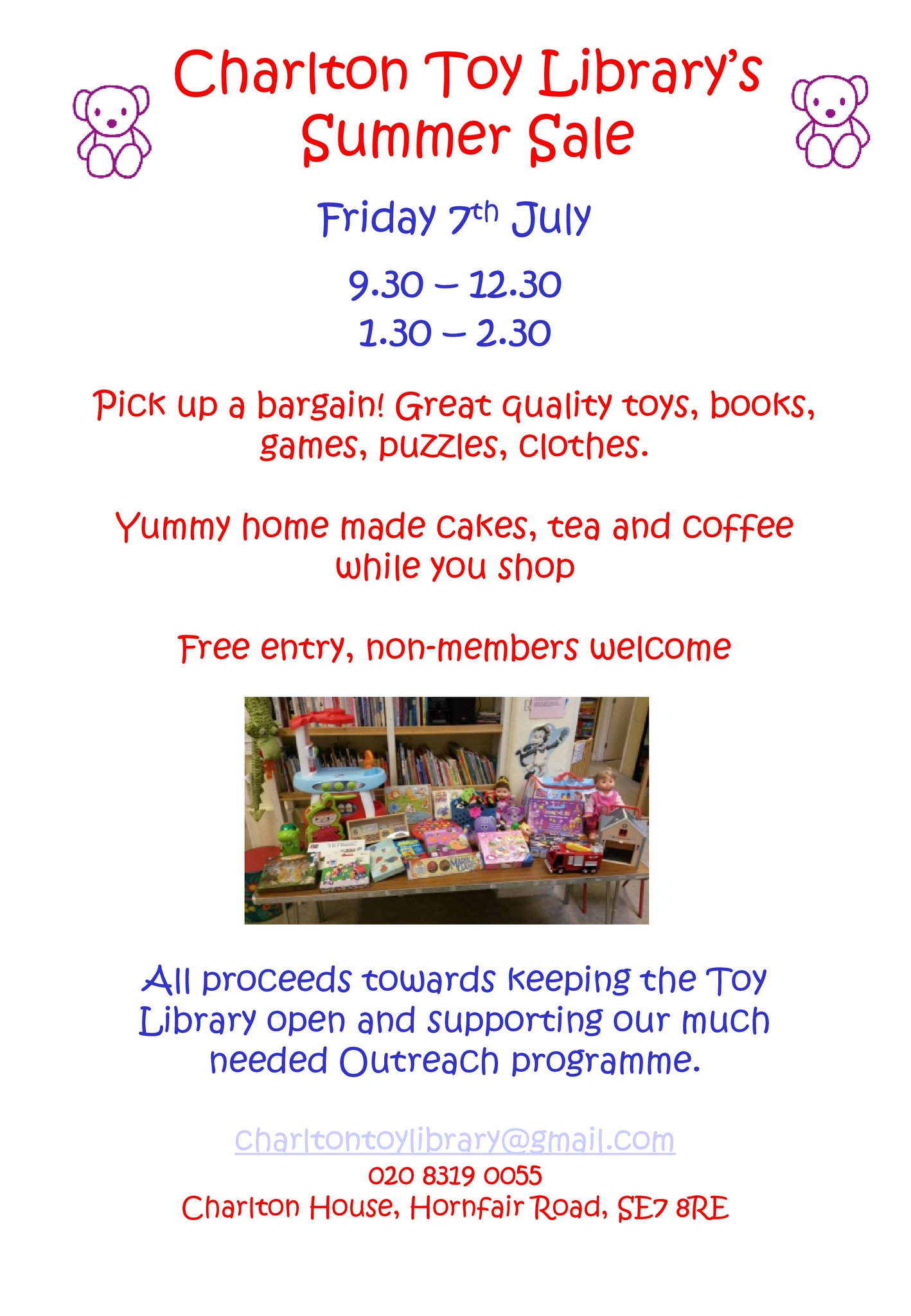
There’s an opportunity to support Charlton Toy Library this Friday, 7th July, at their summer sale. Open to all, the sale will take place 9.30am-12.30pm, and 1.30pm-2.30pm at Charlton House.
You can follow the Toy Library on Twitter at @CharltonToy.
The Springfield Grove estate was among those reclad by Charlton Triangle Homes in 2012
Charlton Triangle Housing has told residents the cladding used on its blocks is safe and will not easily catch fire, following the the disaster at Grenfell Tower in North Kensington.
On Friday, police confirmed at least 30 people had died in the west London fire, with the final figure feared to be many more. Media speculation has centred on the cladding recently fitted to the 24-storey tower, which was enveloped by flames within minutes in the early hours of Wednesday morning. The block’s managers have been accused of ignoring safety fearsraised by residents.
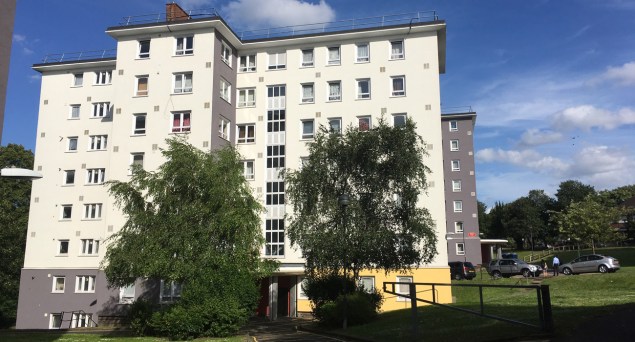
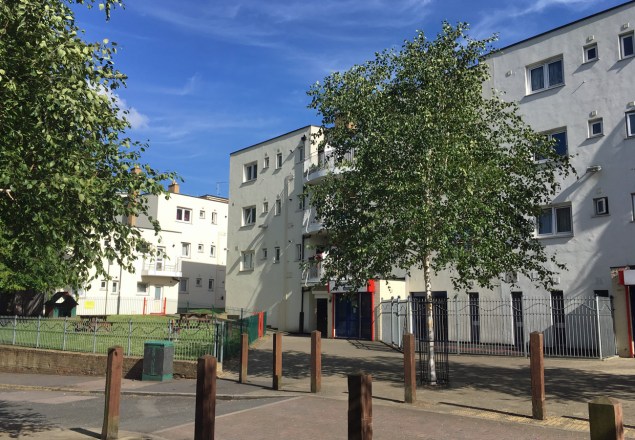
Most of the blocks run by Charlton Triangle, including those on the Springfield Grove and Cherry Orchard estates, were reclad in 2012 as part of an energy efficiency programme. The housing association, which also operates the Harold Gibbons Court, Mascalls Court and Valley Grove blocks, says its homes are not at risk.
A statement issued to residents reads: “There has been a lot of speculation and coverage in the press about the impact of external cladding in spreading the fire at Grenfell Tower.
“Whilst it is still far too early to determine the cause of the fire, this has caused concern amongst our residents given that all of our older blocks, with the exception of Valiant House, were overclad in 2012.
“Our external cladding is a mineral based system. It has a fire standard rating that means the materials used will prevent the spread of fire. The mineral insulation itself is non – combustible.”
Mascalls Court and Harold Gibbons Court were constructed after World War II. They were also reclad in 2012
Valiant House – a 16-storey block behind The Valley built in the late 1970s – was the only block not given cladding.
Charlton Triangle says it will be carrying out additional inspections over the coming week to double-check safety doors and escape routes, with caretakers reminded to be extra vigilant.
The association, which will soon become part of the giant Peabody group, took control of the blocks from Greenwich Council in 1999, refurbishing and remodelling the estates over the following years. Unlike many other London authorities, Greenwich retains direct control of most other housing estates in the borough.
On Wednesday, Greenwich released a statement saying it was carrying out extra checks on the cladding used on 11 of its high-rise blocks, with fire safety officers examining escape routes at the six 24-storey blocks.
It added that all 93 high-rise blocks in the borough had current safety certificates, with the exception of two on John Wilson Street in Woolwich which had interim certificates because they were undergoing refurbishment. Those two blocks would be given updated risk assessments once work had been completed, it said.
To donate to the London Fire Relief Fund, visit the British Red Cross. For details of how else you can help, or support if you have been affected by the disaster, visit the Red Cross website.
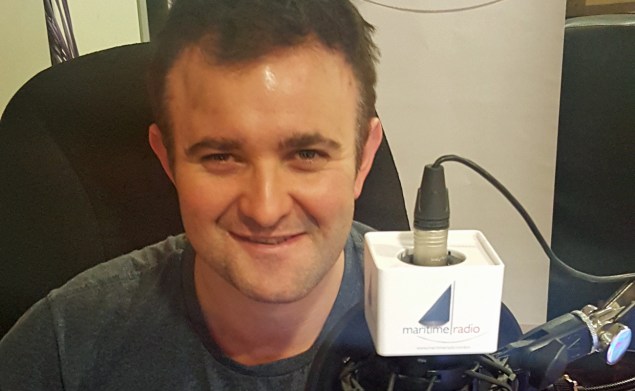
Last summer, the station broadcast from a studio inside the Valley Central community centre run by the Charlton Athletic Community Trust. Weekly Addicks radio show Charlton Live also appeared on the station, which plays a mix of music from the 1980s to the present day with local news coverage and events listings.
Founder and presenter Duncan Martin said: “It’s great to know that next time we go on the air, it will be full-time! The previous seasonal broadcasts were a huge success and our team strongly believe that we could deliver a radio service to Greenwich on a full-time basis. We’re thrilled that Ofcom also share our opinion!”
The station says it had 7,000 listeners during its 2016 run. It hopes to go on air in the first half of 2018, and is looking for advertisers to help fund its output.



 The Charlton Champion