The Community Garden in Maryon Park is throwing open its doors this Saturday as part of Capital Growth’s Urban Harvest event. Its chair TIM ANDERSON explains more…
Get a taste of London's edible gardens by dropping in to Maryon Park Community Garden in Charlton, one of Capital Growth’s flagship gardens, from 10am to 4pm.
Capital Growth is London’s largest food growing network, with over 2,000 gardens throughout the city.
At the Maryon Park Community Organic Food Growing Garden, activities include:
• Tours of the Garden and Forest School.
• Display of photos from the 1966 cult film Blow Up that was shot in Maryon Park.
• Activities for children: Making bird feeders.
• Pizza oven fired up from 12noon, bring your own dough and toppings
• Refreshments: Organic teas & coffee, cake and herb teas
• Jams and Chutney Sale
• Wood Craft Sale with Bird Boxes
• Plant and Cacti Sale
In the Community Garden Forest School area there will be a free Family Outdoor Art Workshop from 2pm to 3pm, lad by Simon Woodward from the Community Outdoor Art Therapy Service.
How to find the Community Garden: Enter Maryon Park from the main entrance in Maryon Road, follow the path to the left past the park lodge and find the Community Garden at the end of the park perimeter fence. Look out for the signs and bunting.
Charlton House’s Summer House, currently undergoing restoration works, will be open to visitors as part of this year’s Open House Weekend.
Many thanks to Charlton Champion contributor LARA RUFFLE COLES for this round-up of the properties in Charlton and nearby that are taking part in this year’s Open House Weekend.
Open House is a tricky beast… there is always so much to see over the two days, and as the event increases in popularity each year, balancing visiting many buildings versus visiting the popular ones gets harder and harder – let alone navigating your way round London.
So, how about you just stick to the Royal Borough of Greenwich this year? It is definitely worth focusing on a smaller area and is something the other half and I did one year – and we’ve been ‘Open House-ing’ since 2009.
This year’s event takes place on Saturday 22nd and Sunday 23rd of September, and Greenwich borough alone has 23 buildings to visit and 3 tours to consider. As it can all be a bit overwhelming, here is a Top Five ‘must have’ list, plus a few more if time allows.
An obvious but excellent choice. Our local community centre is London’s only surviving Jacobean mansion, and a superb venue to get married in. Visit rooms that are usually off limits during regular opening hours, and gaze lovingly at our local park through the upstairs windows. This year you’ll be able to take a look around the Summer House, currently undergoing an extensive refurbishment.
I’ve not been to this location but having visited other homes in Greenwich and further afield, a good nosy round someone else’s house is well worth your time (and it is the only house listed for Greenwich borough this year). This 1960s building is also the architect’s home so you can ask all the questions you like – whether your interest is the building itself or its interior design.
This graceful foot and cycle bridge between Deptford and Greenwich was opened in 2015 and spans over Deptford Creek. Visiting at low or high tide is an exciting prospect, and if you are really lucky you might see it open and close – please note we have no information on when this might happen!
A hidden gem at the top of Shooters Hill, this tiny 18th century tower reopened to the public a few years ago. The views from the roof are magnificent and you can also hire the castle for various events including weddings.
Built in 1903, our borough’s Edwardian town hall has an absolutely stunning main hall with bifurcated stairs. The entrance itself, the clockhouse and the exterior are also worth a good look at. And you can definitely get married here – as I did in 2014!
I’ve not been inside the yacht club, but viewing the building, the walkway to it and the surrounding Thames views make the trip there worthwhile. The area itself is also part of the Thames Path.
Across from Woolwich Barracks, the bombed-out St George’s Garrison Church is well worth a pootle about. Lovely brickwork, mosaics that have been recently restored, and a new arched roof to protect the ruins from further damage.
Don’t forget to order your guide to plan the weekend in advance. You can use the Open House site to read up on every listing, but having the actual book to carry about is essential. Order ASAP as delivery will be a few days.
If you aren’t keen on carrying an A5 book about, you can download the Apple and Google apps, but please do buy the guide for £10 and help support this amazing event.
Did you know that Open House takes places in other cities? 42 participants as of this year, read more at Open House Worldwide.
Have you got an Open House Weekend recommendation? Let us know in the comments below!
37 Bowater Road is set for demolition under the developer’s plans (photo: Neil Clasper)
Developer U+I has revealed it wants to demolish one of the remaining Siemens cable factory buildings on the Charlton riverside as part of a plan to build shops, offices and up to 520 homes.
The property giant, which recently completed the Deptford Market Yard development, has asked Greenwich Council if it needs to carry out an environmental assessment into the plans to develop land, which covers two streets in the Westminster Industrial Estate on the Charlton/Woolwich border: Bowater Road and Faraday Way.
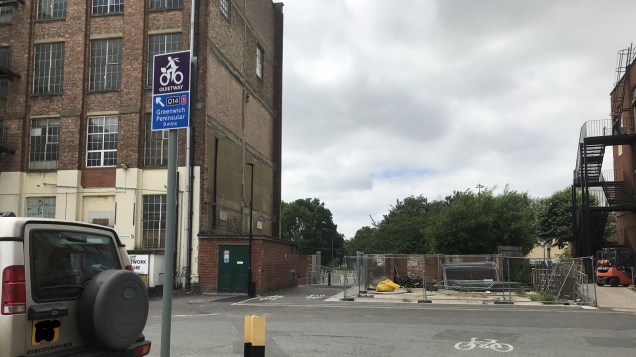
Until 1968, this was home to the giant Siemens cable works, and many of the buildings remain in place. Several of them have recently been given local listing status by Greenwich Council, which has created a conservation area. U+I wants to demolish one of them, 37 Bowater Road, and keep the others.
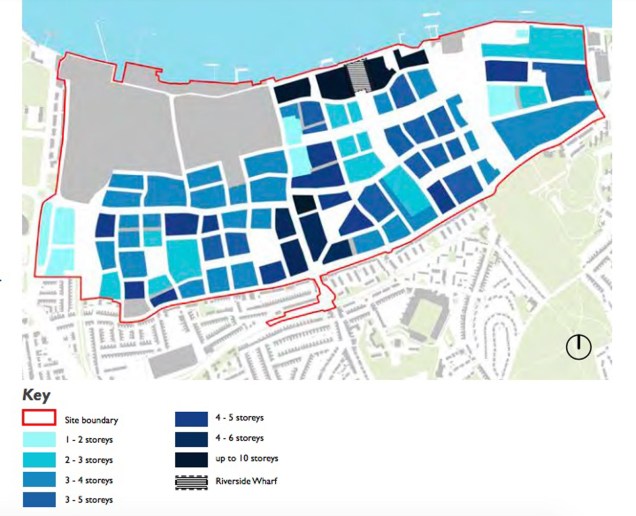
The masterplan backs riverside towers near the Thames Barrier
Just as with the recent Flint Glass Wharf proposal, this is in an area where 10-storey blocks have been permitted (see map above).
37 Bowater Road is the building on the right of the new “missing link” cycle route
‘One of London’s largest factories’
A heritage assessment of the area commissioned by Greenwich Council says: “The south side of Bowater Road represents a step change in the scale of the works development from about 1911.
“The first building to be constructed is a much larger L-shaped building of 5 storeys plus basement was built for making rubber coated copper wire cable. It adopts new structural technologies, made possible by new regulations granted in the London Building Act of 1909, and employs a reinforced concrete frame beneath a Fletton brick shell.
“The adoption of new technologies made it possible to include much larger steel framed windows externally and wider spans between support columns internally, creating a lighter and clearer working environment overall.
37 Bowater Road. Photo: Neil Clasper
“The building was designed by Herbert and Helland, Siemens’ in-house architects. This was one of London’s largest factories when built and an early adopter of the new construction methods.
“The building has a matching extension of 1942, built at the height of the wartime production effort, after extensive bomb damage on the adjacent site must have placed extreme pressure on the works’ resources.” (You can read the rest in Chapters 3 and 4 here.)
The striking white building which runs along the north of the site, 18 Bowater Road, is proposed to be kept, although it is currently in poor condition. (See page 14 here for a map of the site.)
This is still a relatively early stage of the planning process, so no designs or details on “affordable” homes have yet been submitted.
Citing the “historical, architectural and environmental” significance of the pub, the Save the Pickwick campaign is calling on the developer to retain and reopen the pub in consultation with local residents, rather than demolish it and replace it with a ‘bland pub’.
The deadline for comments on the Pickwick planning application is Monday 24 September. To see the full application and make comments, visit planning.royalgreenwich.gov.uk and enter reference 18/2976/O. Comments on the application can also be sent to Peninsula ward councillors.
To get involved or contact the campaign, email savethepickwick [at] gmail.com.
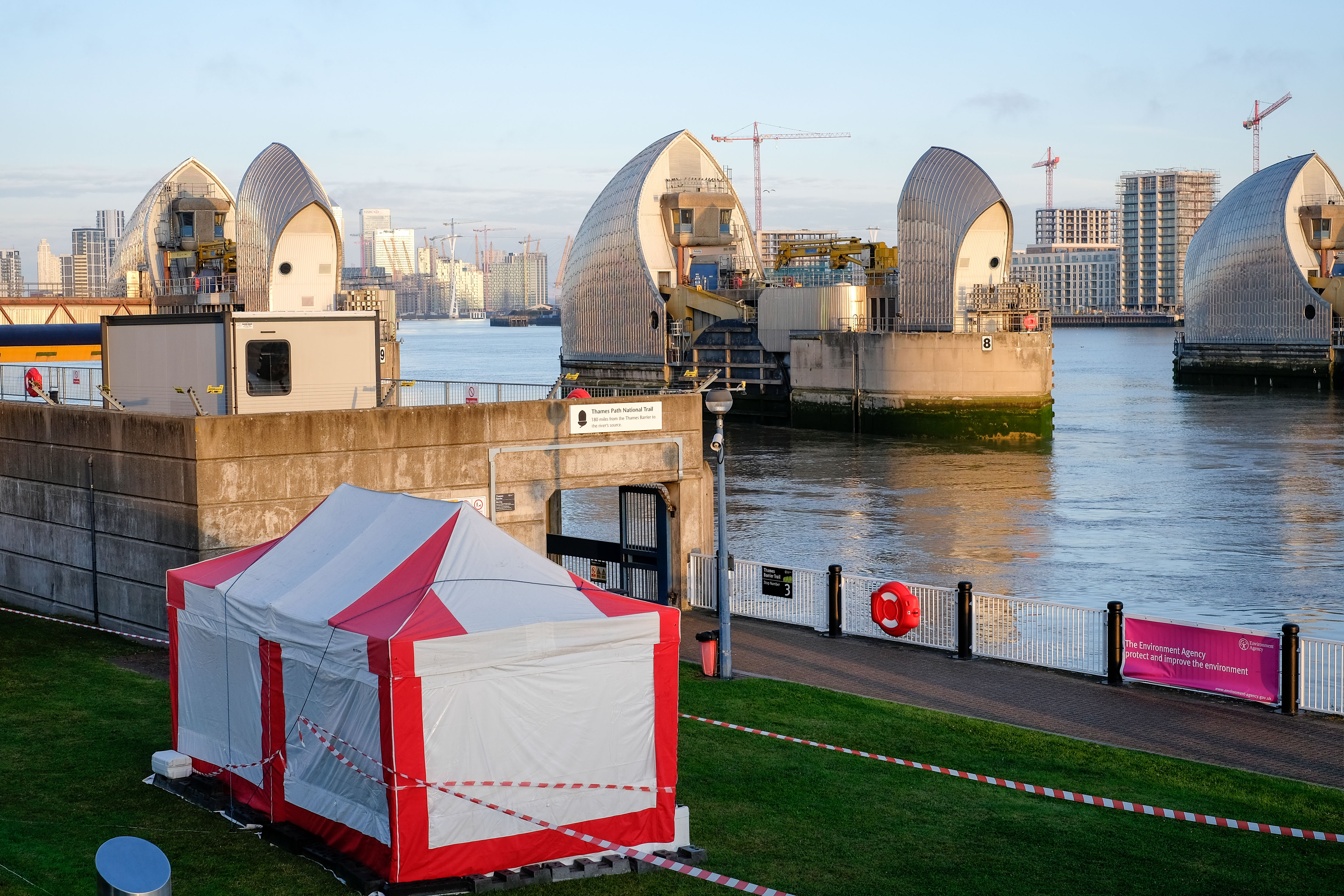
“Once a year, the Environment Agency holds a full tide test closure of the Thames Barrier. The Barrier gates rotate by 90 degrees into the fully closed defence position stopping the tide going upstream into London. As the tide continues to come in, a higher level of water will build up downstream of the Barrier creating a different water level either side of the gates. Shortly after high tide, the gates will rotate further creating a 2 metre gap underneath (underspill). This in turn creates a white water rush effect behind each of the massive gate structures attracting birds to feed on small fish. This ‘underspill’ lasts approximately 2 hours.
There will be various fun and educational activities for children, talks, demonstrations, information and display stands.
As part of Open House weekend 2018, The Thames Barrier Information Centre will be open and free of charge on the day”.
Address for the Thames Barrier:
Thames Barrier Information Centre
1 Unity Way
London
SE18 5NJ
You can keep up to date with activities at the Thames Barrier via their Facebook and Twitter accounts.
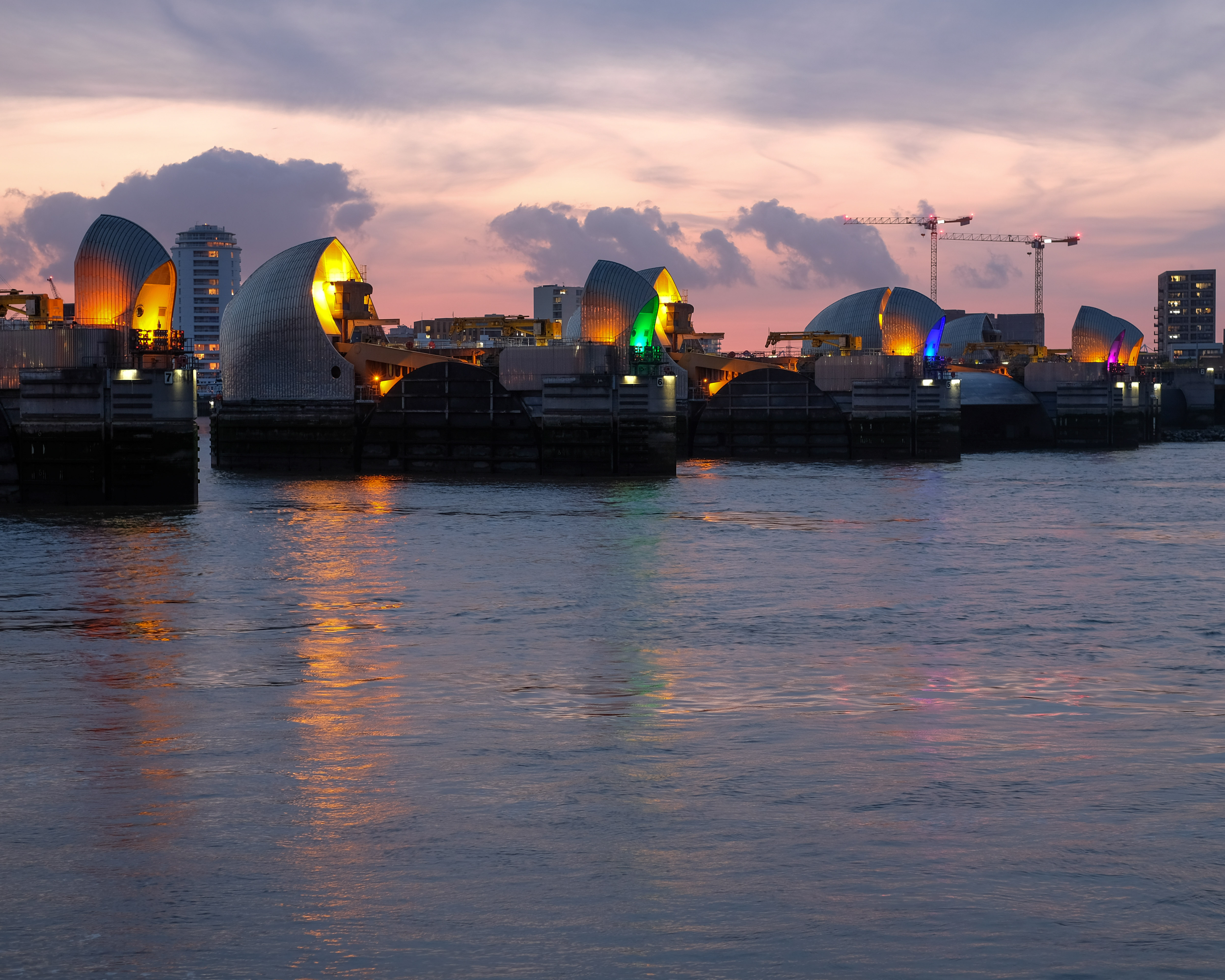
The Thames Barrier in ‘closed’ positionUnveiled in May 2018, the sculpture is a memorial dedicated to those who worked on London, Kent and Essex’s flood defencesThe Thames Barrier lit up in rainbow colours for International Day Against Homophobia, Transphobia and Biphobia in May 2018
What has Charlton ward councillor GARY PARKER been up to? Here’s his latest report.
Dear Charlton Residents, this is my current ward report, this is a snapshot of my recent activities it does not cover individual case work or a range of other meetings. I try to highlight a few key activities which maybe of general interest. Please contact me direct if you want more information: gary.parker[at]royalgreenwich.gov.uk; Twitter: @CllrG2013.
Charlton Society – I attended the Charlton Society meeting on redevelopment and regeneration of the village and surrounding areas, together with my co-councillors and other officers from the Charlton Society, some good ideas came forward, I will be working with the CS and others to develop and support these ideas wherever possible. A meeting is scheduled in the near future with council officers and we gave the Charlton Society some information about current funding opportunities through the council – more below.
New Funding- Charlton-based organisations or those that support Charlton residents can now bid for new funding from the council this includes the ward budget – your ward councillors want to give money to as many local organisations as possible within the £30,000 budget allowable and also from the Community Infrastructure Levy (to be launched on 17 September) – a fund from actual development to support local neighbourhoods. There is over £109k to support projects in four wards including Charlton. This is a one year fund with more money available next year – for more info see www.royalgreenwich.gov.uk.
Planning & Development Issues – I have been working with local groups and individuals regarding a range of planning issues, yet again. I opposed the recent application by Rockwell and spoke at the planning board meeting on this in July as did many local residents. The application was rejected but since then, the Mayor of London has ‘called in’ the decision for review, as he claims that Greenwich has not been achieving its affordable housing targets. In my view this call in is a challenge to local democracy, the planning board, who I have been sharply critical of in the past, did the right thing as did local residents. There is a large group of residents, community organisations, businesses and groups in the area actively opposing this development – I will support them as much as I can. If the application is upheld by the Mayor I will be encouraging the council to seek a judicial review on this issue. I will continue to campaign vigorously on this issue, which is now as much about local democracy as it is about planning issues and defending local communities against big developers.
Pocket Homes – Pocket Living is a property development company supported by the Mayor of London which builds homes for sale to first time buyers at reduced prices. The Council cabinet took a decision on 16 July to go out to consultation with residents on the sale of three plots of land to the company at three sites – in Blackheath Westcombe, Greenwich West, and The Heights in Charlton. I called in this decision with Cllr Fletcher from Blackheath ward, a “call-in” is a council process by which councillors can ask for decisions to be reviewed. I have some specific concerns which I raised about: social value, the impact in Charlton ward, land contamination at the site and the nature of the consultation. Many local residents attended this meeting and they too voiced their concerns. Since then this issue has featured significantly in social media and in the local press.
Events & Engagements – A selection
I attended two Better Together Community Engagement events covering Charlton.
I attended the Royal Greenwich Heritage Trust board meeting on 17th July and raised a number of local issues including parking charges at Charlton House and access to the archives for local residents and historians – I will issue a separate report on the trust soon.
I support the John Roan- anti academisation campaign and attended the picket line to support striking workers in July.
I attended and supported the new Greenwich Housing Forum which held an open public meeting about housing issues in the Borough – I estimate nearly 100 people attended- more info @greenwich_forum
I chaired the Council’s Regeneration Scrutiny Panel on 23 July – it reviews policy and executive actions on regeneration issues in the borough.
I held a meeting with the council’s deputy chief executive about the Woolwich Creative District and other heritage and regeneration issues in the Charlton area on 24 August.
SURGERIES/CASEWORK – Raised a very large amount of housing and planning related casework, community safety and crime related issues which is ongoing. I also dealt with some issues in Charlton Park related to alleged drug dealing and anti -social behaviour and continued graffiti and vandalism around the toilets. I am concerned about the escalation of such behaviour in Charlton Park and am working with my co-councillors to address this issue.
COUNCIL – I also attended the July 2018 full council meeting and the main overview and scrutiny panel meetings of which I am a member. This received reports from senior council officers and cabinet members about major issues in Greenwich.
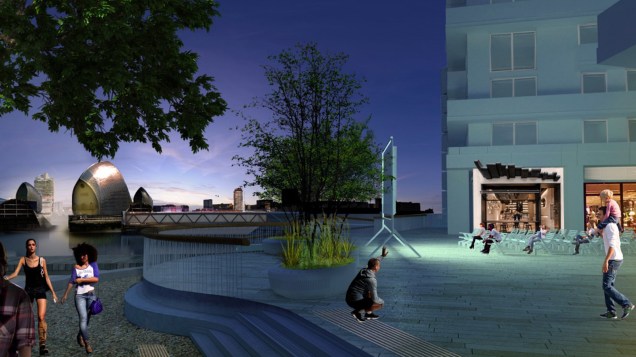
How Komoto says the development will look at night
Hot on the heels of the Rockwell saga, the second major development proposal for the Charlton Riverside has come forward, with plans for up to 500 homes at Flint Glass Wharf, next to the Thames Barrier.
Developer Komoto Group had originally suggested a 25-storey tower for the site at Herringham Road, which is currently home to the Raceway go-kart track, Bunker 51 laser-tag centre, a church, and other firms.
This slideshow requires JavaScript.
The land was formerly home to the Johnsen & Jorgensen glass works, which closed in 1981.
Now the scheme – the first on the riverfront itself – has been reduced in size to blocks of between seven and 10 storeys. It has been designed by Farrells, the architecture practice working on Deptford’s Convoys Wharf development.
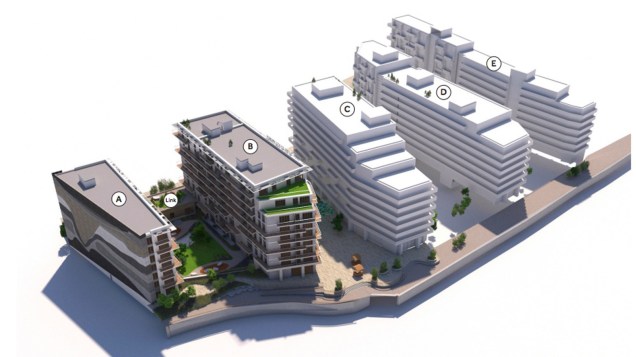
The two blocks closest to the Thames Barrier are Phase One, the rest is Phase Two
Phase one – two blocks close to the Barrier
Firstly, Komoto is applying for detailed planning permission for two blocks of seven and nine storeys containing eight studio flats (all private), 82 one-bedroom flats (ten at social rent, six at “intermediate”), 34 two-bedroom flats (two at social rent) and 22 three-bedroom homes nine at social rent, nine “intermediate”), as well as 482 square metres of flexible commercial and employment floorspace and 35 car parking spaces.
This is just 24.6% “affordable” housing – although if you count by rooms, which Komoto does, this rises to 31% “affordable” accommodation. Either way, this falls short of the 35% target for “affordable” housing – expect moves from Greenwich Council and City Hall to increase this.
A view from Herringham Road
Phase two – further away from the Barrier
It is also applying for outline permission for up to another 354 homes – with a similar mix of private and “affordable” – and up to 1,300 square metres of flexible commercial and employment floorspace, along with up to 153 parking spaces. The blocks here will be between seven and 10 storeys high.
If this phase gets approval, Komoto will return to Greenwich Council at a later date to complete the details.
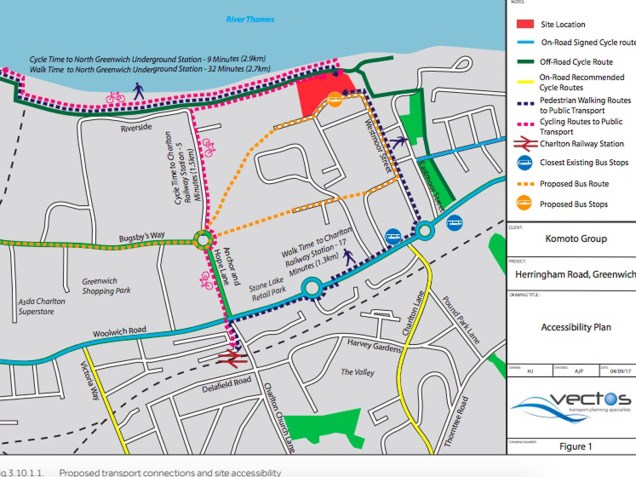
Transport connections emphasise the short cycle ride to North Greenwich
The low-ish number of car parking spaces is pretty standard for new London developments – but is striking for an area that is currently isolated, separated from the rest of Charlton by dirty industries on streets battered by heavy lorries. And while residents may be able to wake up and see the Docklands Light Railway purring through the Royal Docks across the Thames, they will have no way of reaching it.
Komoto says a new bus service will be provided along Herringham Road – and also emphasises the relatively short cycle distance to North Greenwich tube, a more palatable option on two wheels – or even two feet – than trying to get to Charlton station.
A barrier in front of the Barrier
From the Thames – the two blocks on the left are Phase One, with the Thames Barrier screened off from building AThe view from the Thames Barrier site, showing the gabion wall
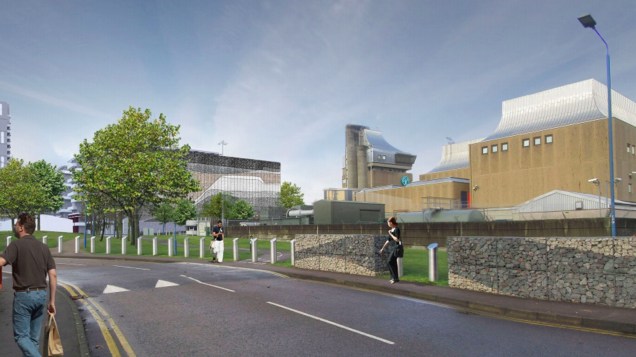
Another notable feature is that the development will be walled off on one side from the Thames Barrier compound because of security concerns – residents won’t be able to peer into the operations centre at the end of Westmoor Street.
The developer says: “The barrier is considered to be at a high risk of attack from terrorism, therefore it is of particular importance that the proposed scheme does not overlook its operations in any way.
“To respond to this we are proposing a full height gabion art wall which provides a visual narrative of the geological development of this part of the river Thames. The art wall also doubles up as a visual screen that prevents overlooking of the compound and control centre from the development.”
A view from the Thames Path
Unlike the Rockwell scheme for 771 homes off Anchor & Hope Lane, the Flint Glass Wharf development has no immediate residential neighbours to annoy. And while Greenwich Council’s Charlton Riverside Masterplan envisages buildings of between three and six storeys, this particular site is deemed suitable for 10-storey blocks.
A view across the Thames (the Royal Wharf development in Silvertown now sits on the north bank)
Khan’s decision may well weaken Greenwich councillors’ appetite for a fight over Flint Glass Wharf – particularly if Komoto includes more “affordable” housing. Whatever their decision, what happens here will be just as important for the future of the riverside.
For full details, go to planning.royalgreenwich.gov.uk and look for application 18/0732/F (the design and access statements are most useful). Thanks to Toby for the invaluable tip-off.
(Updated 13 September to clarify the number of storeys in the Charlton Riverside masterplan.)












 The Charlton Champion