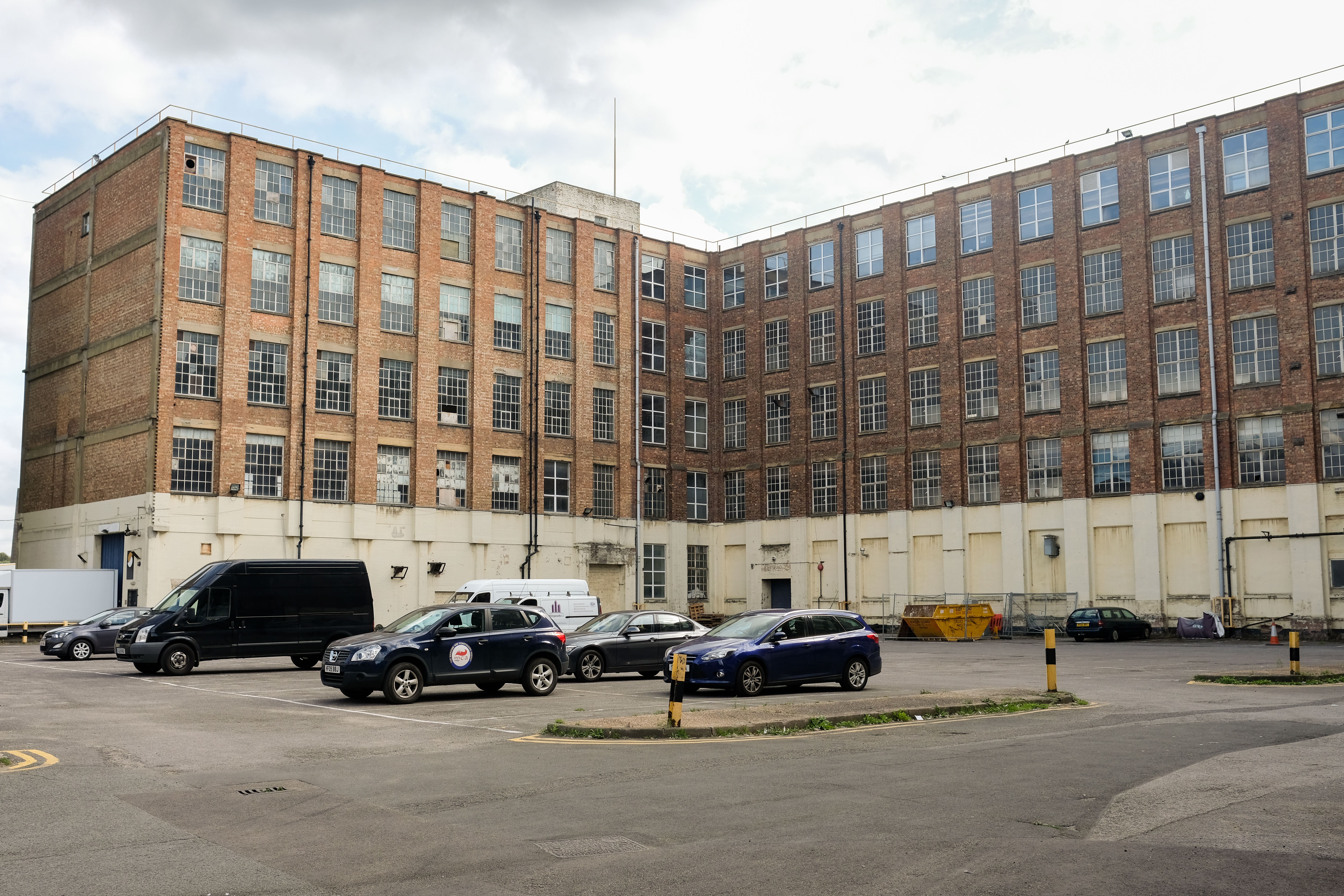
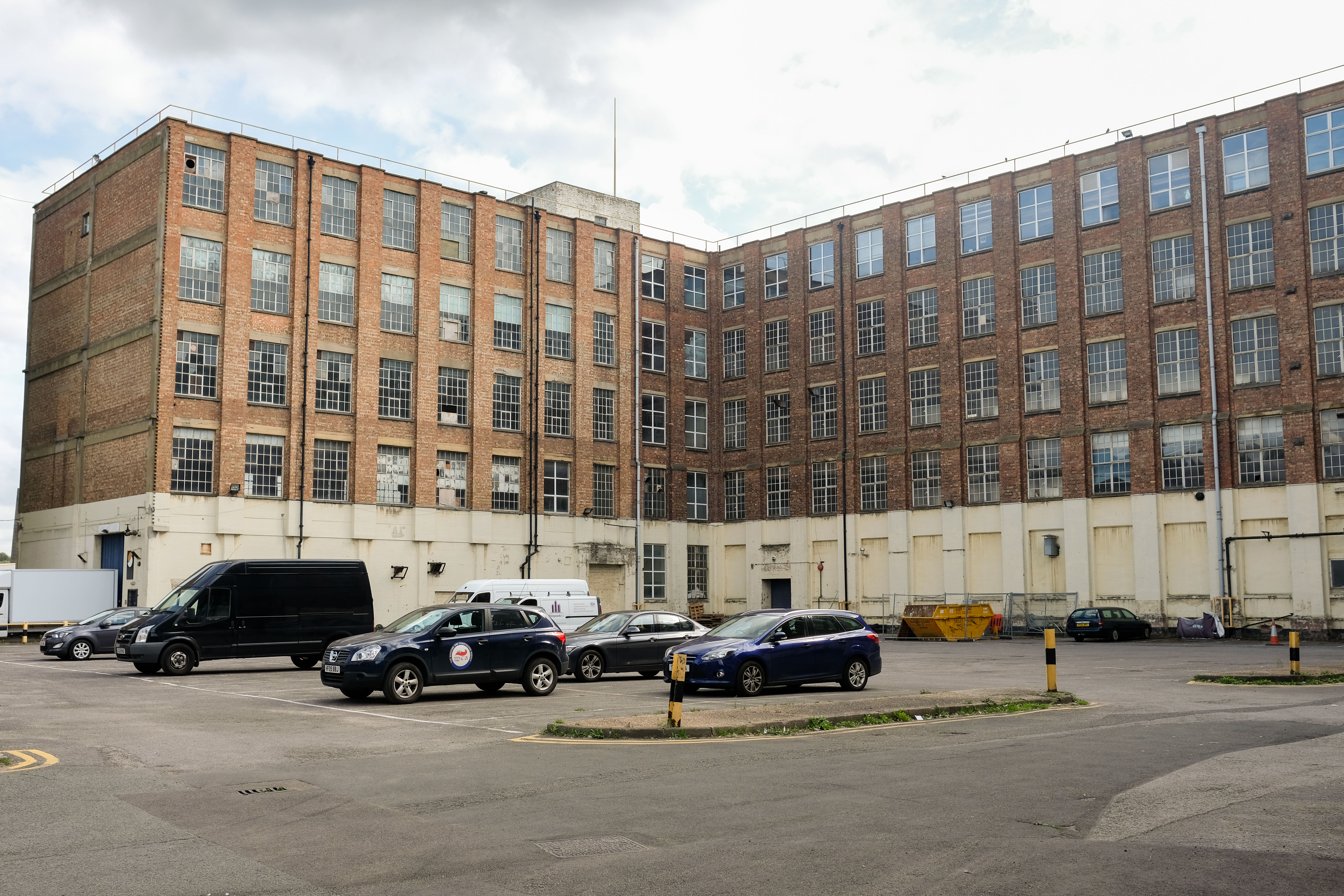
The Faraday Building, soon to be demolished, if U+I gets permission (photo: Neil Clasper)
Developer U+I is hosting a new exhibition for its Faraday Works development, next to the Thames Barrier, on 11 and 13 July. The exhibition intends to update local residents on U+I’s revised plans following a similar exhibition in February.
The developer intends to build 500 homes ranging from 6 to 13 stories, with at least 35% of the homes to be “affordable”, with a priority for housing at social rent (usually half of market rents). The scheme is reusing buildings from the giant Siemens cable works, which closed in the late 1960s.
The Wire Workshop element of the scheme would create 460 jobs as a co-working hub for local businesses, and the scheme also plans to keep light industry on site, with the Telegraph Works building being extended to accommodate industry downstairs and homes above.
The Faraday Building at 37 Bowater Road will be demolished as part of the development, with U+I stating that it has “reviewed ways to achieve full retention… but it is not possible to achieve the same levels of benefits without the removal of the Faraday Building. The replacement will replicate the materials and façade as faithfully as possible.”
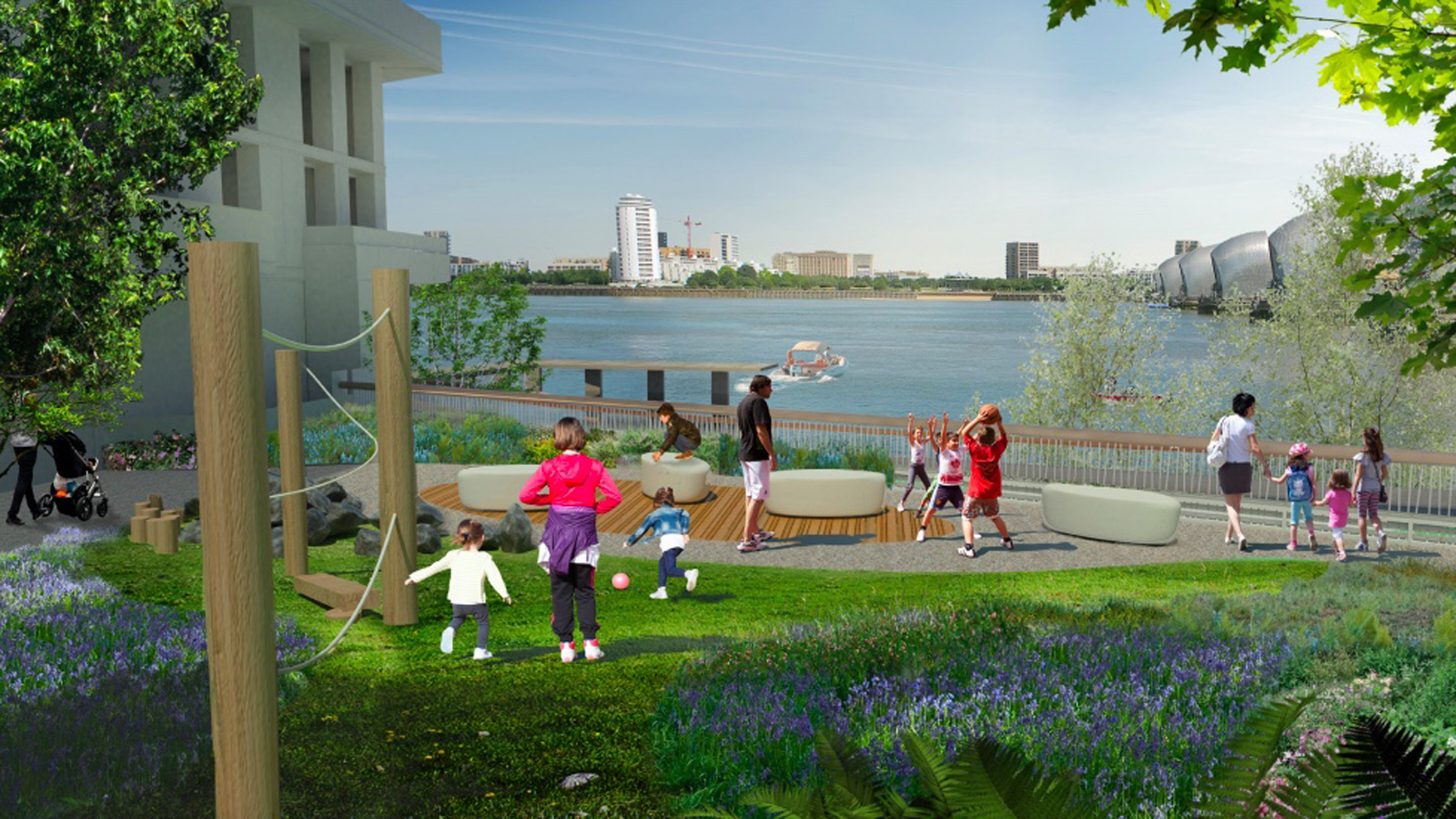
Artist’s impression of the restored Bowater Road (photo: U+I)
Feedback from the first exhibition, in February, included requests for retail and community space, and U+I now plans to include a shop on Bowater Road and discounted use of the Wire Workshops facilities for residents. It also proposes a new museum focusing on the history of the site.
If you would like to review the exhibition boards from February, they can be found on the Faraday Works website.
The dates and times for the exhibition, to be held at 25 Bowater Road, on the Westminster Industrial Estate, are as follows:
The Hyde scheme would see plots A and C built first, followed by D and E. The rejected Rockwell scheme is to the left, the Flint Glass Wharf proposal is the other riverside project
The housing association plans to build blocks on the river on the site of the existing Westminster Waste works at Maybank Wharf as well as blocks further back on other industrial sites on New Lyndenburg Street.
Hyde says in documents filed to Greenwich Council’s planning team that the blocks will be between one and 10 storeys tall, and that it hopes to begin eight years of construction next year, starting from the river and moving inland. The documents filed are for a scoping opinion – a request for early feedback from Greenwich planners ahead of a full planning application.
Plans for a new river wall are included in the scheme, along with open space and 7,000 square metres of business and retail space.
One site not included in the proposal is the Tarmac aggregate plant – while Hyde has bought the land, the application says the site, which is on a protected wharf, will continue to operate, leading to the possibility of some of the new blocks having to be screened off from the site, just as has happened in the newer phase of Greenwich Millennium Village, which is next to Angerstein Wharf.
Hyde promises a “cycle friendly” layout, although just how “cycle friendly” a development next to a site which uses HGVs can be is open to debate. It also proposes an extension to the new Bexleyheath to Woolwich 301 bus service, which starts on 15 June, to serve the new development, which would link the scheme to the Crossrail station at Woolwich – although nudging commuters to use a zone 4 station merely underlines how cut off some of the early Charlton riverside developments could be.
Two of the other three Charlton riverside schemes have not yet gone to planning, while one has already been rejected by both Greenwich Council and City Hall.
They are:
the Rockwell scheme for 771 homes at Anchor & Hope Lane was refused first by Greenwich Council last summer, then by the Mayor of London in January;
Housing association Hyde Group is to hold an exhibition next month on plans to build new homes on Charlton Riverside – the fourth scheme for the area to come forward in recent years.
Now Hyde is coming forward with plans to redevelop the land plus three other nearby plots stretching away from the Thames.
“We are proposing to redevelop this important site to deliver much-needed new homes of varying size, mix and tenure, including a minimum of 40% affordable housing,” Hyde says in a flyer distributed to residents. It does not elaborate on what “affordable” means.
“Our proposals also include the creation of new green space to improve access to the riverside, alongside commercial and retail space.”
The exhibition is at the Charlton side of Windrush Primary School on Thursday 9 May from 4.30pm to 8.00pm, and Saturday 11 May from 10am to 2pm. (Hopefully by then Hyde and its representatives K&A Consulting will have realised the school is not in “East Greenwich”, as claimed on the flyer.)
Residents who cannot make the exhibition but would like to know more are asked to email charltonriverside[at]kandaconsulting.co.uk or call 020 3900 3676.
The three other development schemes for the Charlton Riverside going through, or about to go through planning:
the Rockwell scheme for 771 homes at Anchor & Hope Lane was refused first by Greenwich Council last summer, then by the Mayor of London in January;
The Charlton Riverside area is set to undergo a dramatic transformation in the coming years, which will see it turn from a historically industrial area to a new residential district. Planning applications are starting to come in for new housing developments at Anchor & Hope Lane, Herringham Road and on the old Siemens factory site.
But we believe there’s something important missing from the story that’s been told to date, and that’s the people who live and work in the area now, and the changes that the new developments are bringing to their lives.
We’d like to help tell the stories of the people who live, work, run businesses, go to church, visit for leisure, or spend time in the Charlton Riverside area for whatever reason. This could be something as simple some photos of you, your community, your colleagues or business, or a longer interview with you about your life in the area.
We can’t do this alone, and are very keen to speak to anyone who would like to help with this project: individuals, residents’ associations, community groups, councillors, or other groups with an interest in the area.
If you’d like to get involved in any way, or have a story, photo or idea you’d like to contribute, we’d love to hear from you. Get in touch with The Charlton Champion here or simply email us at charltonchampion.se7[@]gmail.com.
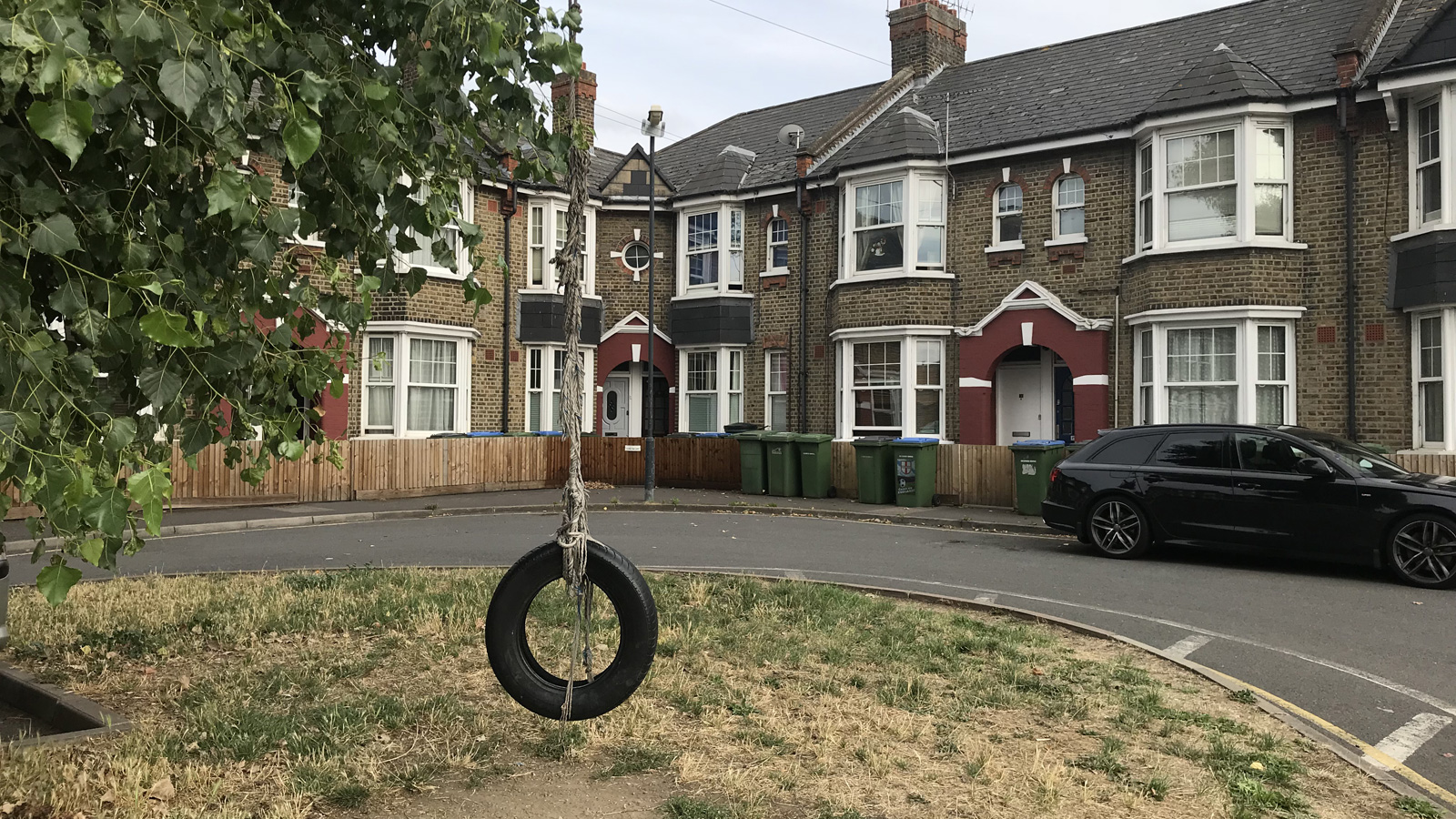
The planned development would be built here, behind Atlas and Derrick Gardens
Housing campaigners are to hold a public meeting on Monday 8 October about developer Rockwell’s plans to build 771 homes off Anchor and Hope Lane.
London mayor Sadiq Khan overturned Greenwich Council’s refusal of the scheme during the summer, meaning City Hall will now decide on the application.
The Charlton Champion understands a new proposal has been submitted to the mayor’s office, however it has not yet been made public.
Khan’s decision to “call in” the decision came with criticism of Greenwich Council for not allowing enough “affordable” housing in recent years – Rockwell’s scheme would have 32.4% “affordable” housing.
Residents in Atlas and Derrick Gardens say the new development would loom over their homes
Local businesses have also voiced fears that they will have to move or close, saying the new development’s residents will not want them as neighbours.
Rockwell’s plans for 32.4% of the units to be “affordable” housing were inserted into the scheme at the last minute. Of those, 162 would be for London Affordable Rent – roughly £150/week for a one-bedroom flat – and aimed at those on low incomes, with the remaining available for shared ownership.
Greenwich Housing Forum recently held a meeting to discuss Greenwich Council’s plans to sell land at The Heights as well as on estates off Lewisham Road and Kidbrooke Park Road to developer Pocket Living. Video of that meeting can be seen here.
The meeting on the Rockwell scheme will be held at 7.30pm on Monday 8 October at Charlton House.
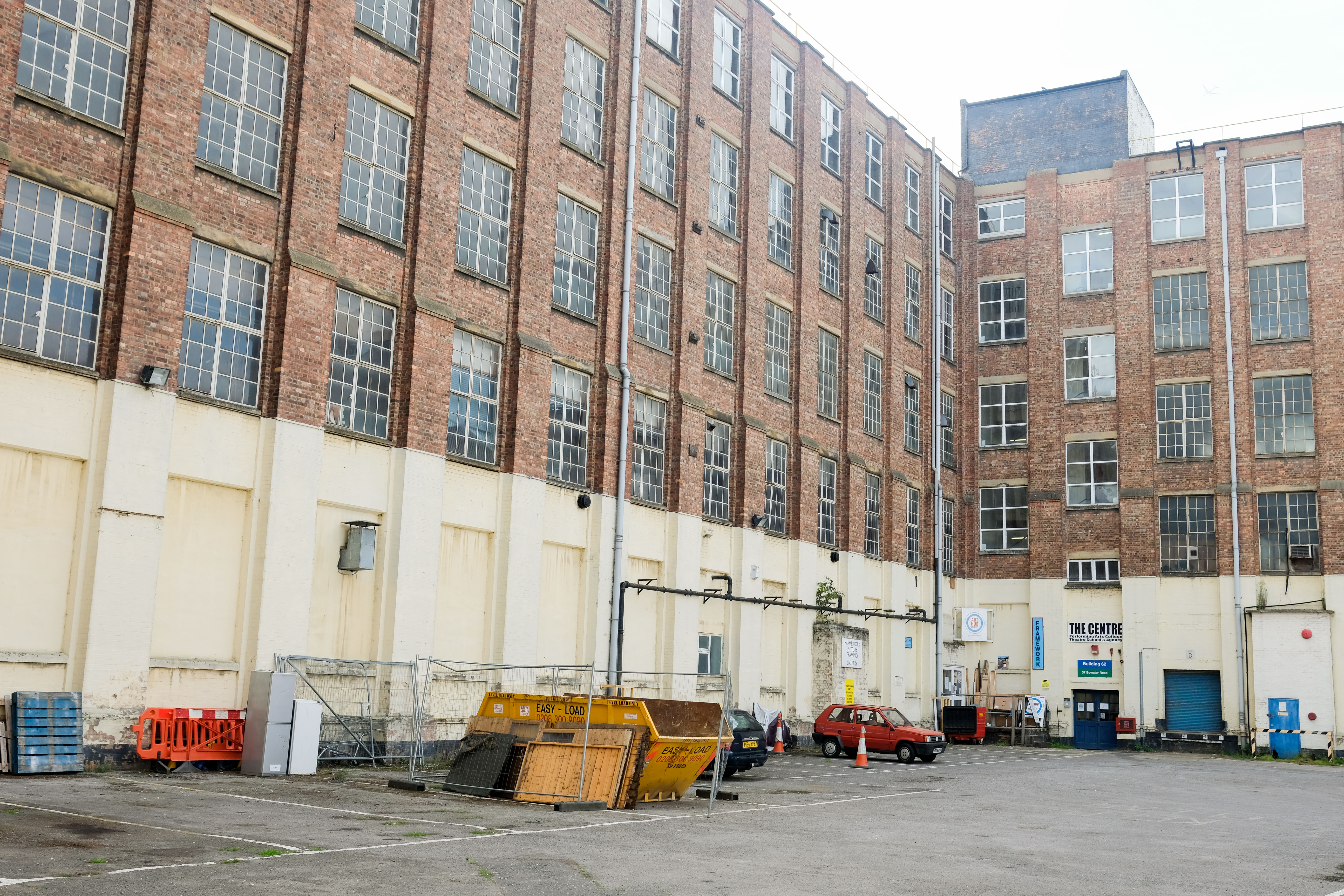
37 Bowater Road is set for demolition under the developer’s plans (photo: Neil Clasper)
Developer U+I has revealed it wants to demolish one of the remaining Siemens cable factory buildings on the Charlton riverside as part of a plan to build shops, offices and up to 520 homes.
The property giant, which recently completed the Deptford Market Yard development, has asked Greenwich Council if it needs to carry out an environmental assessment into the plans to develop land, which covers two streets in the Westminster Industrial Estate on the Charlton/Woolwich border: Bowater Road and Faraday Way.
Until 1968, this was home to the giant Siemens cable works, and many of the buildings remain in place. Several of them have recently been given local listing status by Greenwich Council, which has created a conservation area. U+I wants to demolish one of them, 37 Bowater Road, and keep the others.
The masterplan backs riverside towers near the Thames Barrier
Just as with the recent Flint Glass Wharf proposal, this is in an area where 10-storey blocks have been permitted (see map above).
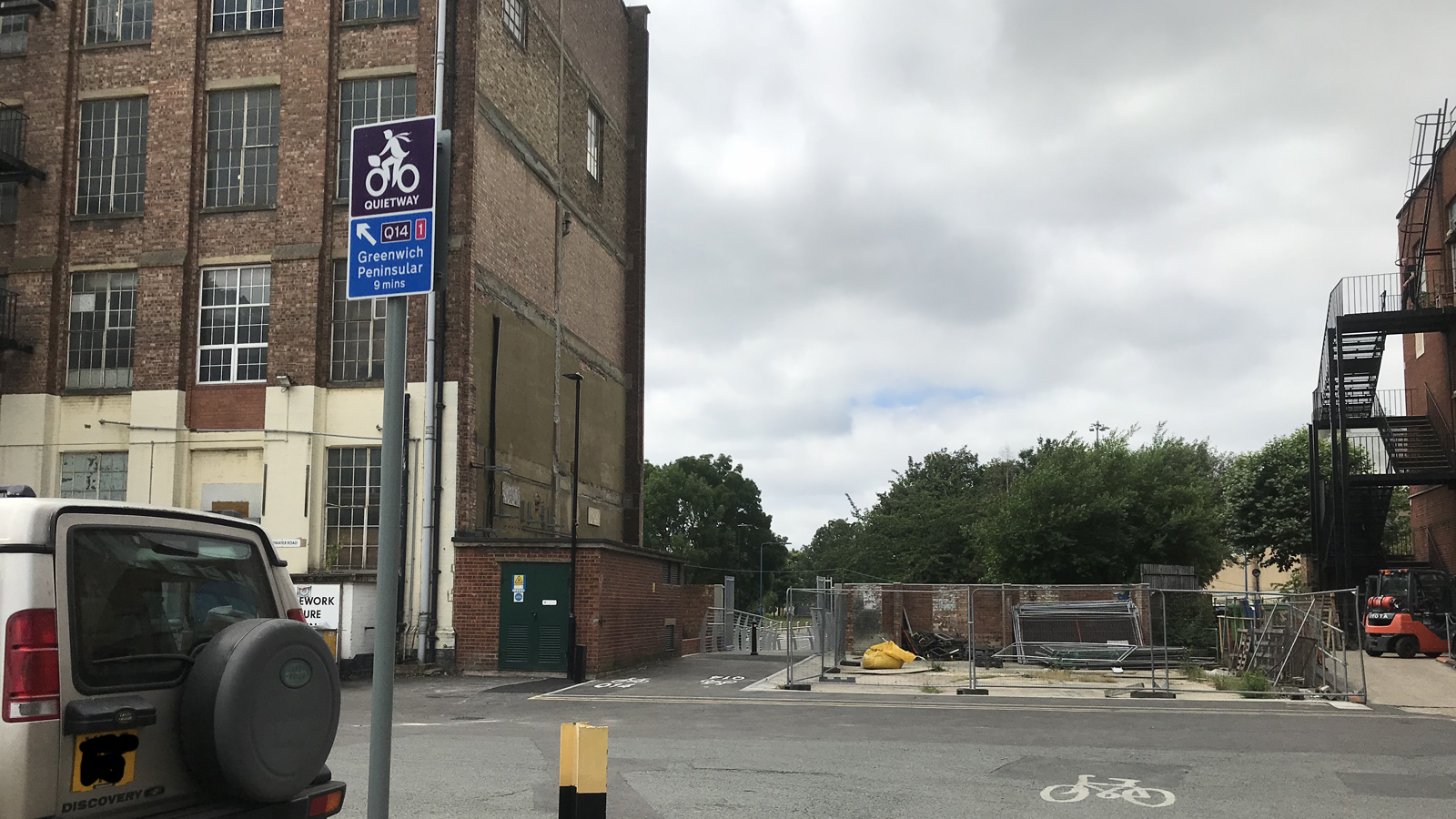
37 Bowater Road is the building on the right of the new “missing link” cycle route
‘One of London’s largest factories’
A heritage assessment of the area commissioned by Greenwich Council says: “The south side of Bowater Road represents a step change in the scale of the works development from about 1911.
“The first building to be constructed is a much larger L-shaped building of 5 storeys plus basement was built for making rubber coated copper wire cable. It adopts new structural technologies, made possible by new regulations granted in the London Building Act of 1909, and employs a reinforced concrete frame beneath a Fletton brick shell.
“The adoption of new technologies made it possible to include much larger steel framed windows externally and wider spans between support columns internally, creating a lighter and clearer working environment overall.
37 Bowater Road. Photo: Neil Clasper
“The building was designed by Herbert and Helland, Siemens’ in-house architects. This was one of London’s largest factories when built and an early adopter of the new construction methods.
“The building has a matching extension of 1942, built at the height of the wartime production effort, after extensive bomb damage on the adjacent site must have placed extreme pressure on the works’ resources.” (You can read the rest in Chapters 3 and 4 here.)
The striking white building which runs along the north of the site, 18 Bowater Road, is proposed to be kept, although it is currently in poor condition. (See page 14 here for a map of the site.)
This is still a relatively early stage of the planning process, so no designs or details on “affordable” homes have yet been submitted.
How Komoto says the development will look at night
Hot on the heels of the Rockwell saga, the second major development proposal for the Charlton Riverside has come forward, with plans for up to 500 homes at Flint Glass Wharf, next to the Thames Barrier.
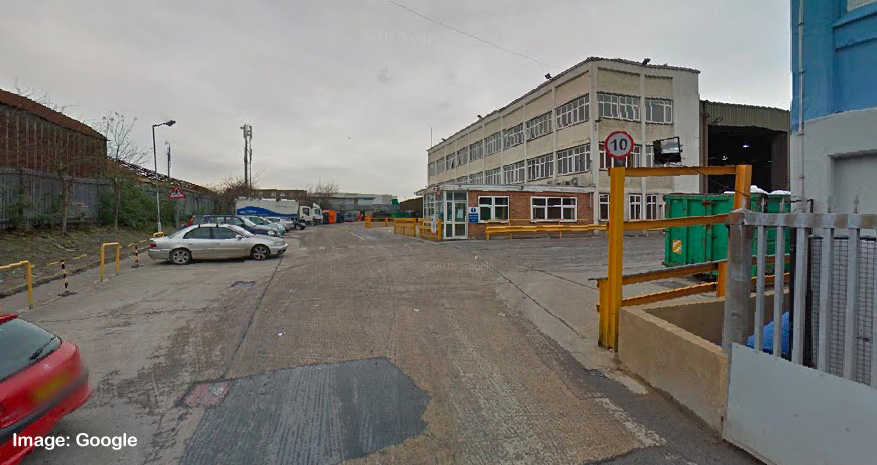
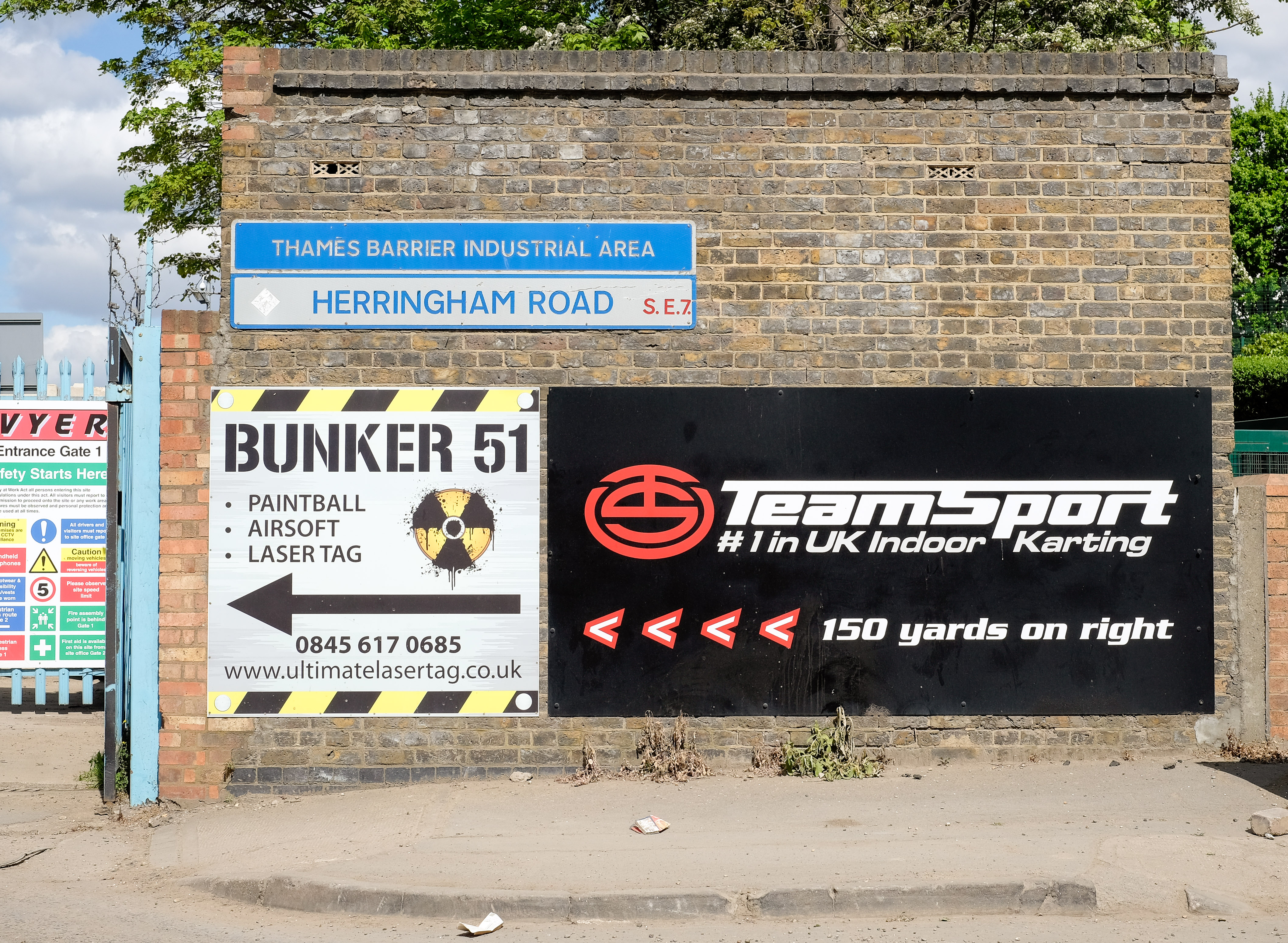
Developer Komoto Group had originally suggested a 25-storey tower for the site at Herringham Road, which is currently home to the Raceway go-kart track, Bunker 51 laser-tag centre, a church, and other firms.
This slideshow requires JavaScript.
The land was formerly home to the Johnsen & Jorgensen glass works, which closed in 1981.
Now the scheme – the first on the riverfront itself – has been reduced in size to blocks of between seven and 10 storeys. It has been designed by Farrells, the architecture practice working on Deptford’s Convoys Wharf development.
The two blocks closest to the Thames Barrier are Phase One, the rest is Phase Two
Phase one – two blocks close to the Barrier
Firstly, Komoto is applying for detailed planning permission for two blocks of seven and nine storeys containing eight studio flats (all private), 82 one-bedroom flats (ten at social rent, six at “intermediate”), 34 two-bedroom flats (two at social rent) and 22 three-bedroom homes nine at social rent, nine “intermediate”), as well as 482 square metres of flexible commercial and employment floorspace and 35 car parking spaces.
This is just 24.6% “affordable” housing – although if you count by rooms, which Komoto does, this rises to 31% “affordable” accommodation. Either way, this falls short of the 35% target for “affordable” housing – expect moves from Greenwich Council and City Hall to increase this.
A view from Herringham Road
Phase two – further away from the Barrier
It is also applying for outline permission for up to another 354 homes – with a similar mix of private and “affordable” – and up to 1,300 square metres of flexible commercial and employment floorspace, along with up to 153 parking spaces. The blocks here will be between seven and 10 storeys high.
If this phase gets approval, Komoto will return to Greenwich Council at a later date to complete the details.
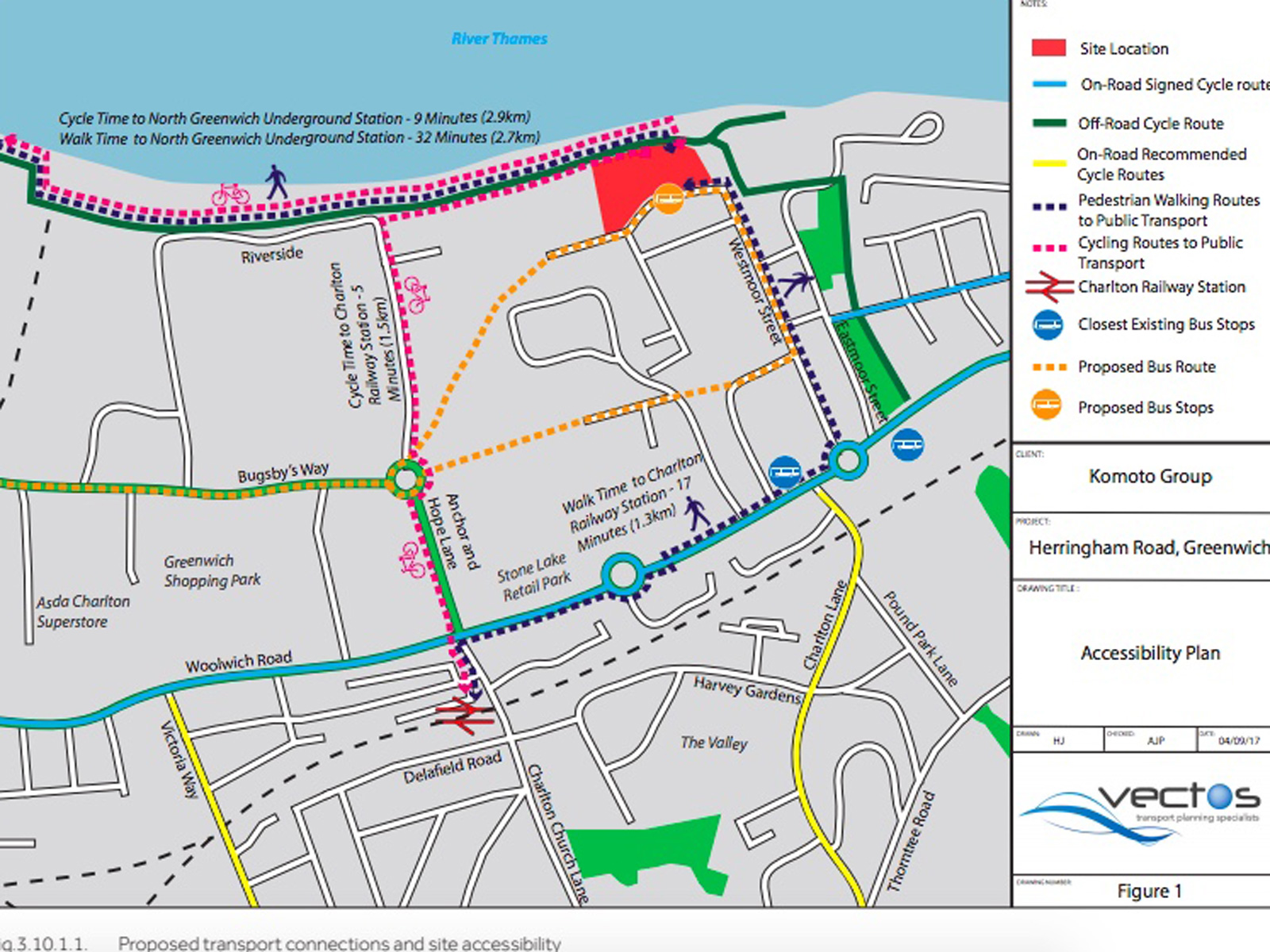
Transport connections emphasise the short cycle ride to North Greenwich
The low-ish number of car parking spaces is pretty standard for new London developments – but is striking for an area that is currently isolated, separated from the rest of Charlton by dirty industries on streets battered by heavy lorries. And while residents may be able to wake up and see the Docklands Light Railway purring through the Royal Docks across the Thames, they will have no way of reaching it.
Komoto says a new bus service will be provided along Herringham Road – and also emphasises the relatively short cycle distance to North Greenwich tube, a more palatable option on two wheels – or even two feet – than trying to get to Charlton station.
A barrier in front of the Barrier
From the Thames – the two blocks on the left are Phase One, with the Thames Barrier screened off from building A
The view from the Thames Barrier site, showing the gabion wall
Another notable feature is that the development will be walled off on one side from the Thames Barrier compound because of security concerns – residents won’t be able to peer into the operations centre at the end of Westmoor Street.
The developer says: “The barrier is considered to be at a high risk of attack from terrorism, therefore it is of particular importance that the proposed scheme does not overlook its operations in any way.
“To respond to this we are proposing a full height gabion art wall which provides a visual narrative of the geological development of this part of the river Thames. The art wall also doubles up as a visual screen that prevents overlooking of the compound and control centre from the development.”
A view from the Thames Path
Unlike the Rockwell scheme for 771 homes off Anchor & Hope Lane, the Flint Glass Wharf development has no immediate residential neighbours to annoy. And while Greenwich Council’s Charlton Riverside Masterplan envisages buildings of between three and six storeys, this particular site is deemed suitable for 10-storey blocks.
A view across the Thames (the Royal Wharf development in Silvertown now sits on the north bank)
Khan’s decision may well weaken Greenwich councillors’ appetite for a fight over Flint Glass Wharf – particularly if Komoto includes more “affordable” housing. Whatever their decision, what happens here will be just as important for the future of the riverside.
For full details, go to planning.royalgreenwich.gov.uk and look for application 18/0732/F (the design and access statements are most useful). Thanks to Toby for the invaluable tip-off.
(Updated 13 September to clarify the number of storeys in the Charlton Riverside masterplan.)









 The Charlton Champion