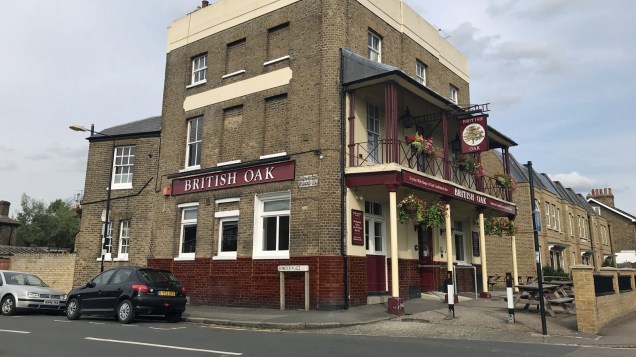
The Oak, which is many Charlton residents’ local pub, still has two separate bars as well as a beer garden and regularly hosts live music and other events.
Clements and his staff were praised for how they look after their beer and glasses, with judges noting “they even consider what type of water is available in their local area to determine how much product is used”.
It beat pubs in Coventry and Stafford to scoop the prize.
Residents in Atlas and Derrick Gardens say the new development would loom over their homes
Greenwich & Woolwich MP Matt Pennycook has told the developers behind controversial plans to build 771 homes off Anchor & Hope Lane that they should respect the masterplan developed for Charlton Riverside – and build more affordable housing.
Pennycook spoke out days after London mayor Sadiq Khan blocked Greenwich Council’s refusal of the scheme by developer Rockwell to build five 10-storey blocks and other buildings on land surrounding Atlas and Derrick Gardens.
The mayor, who has designated Charlton Riverside an “opportunity area” for development, will now decide whether or not the plan goes ahead.
Khan’s decision came with criticism of Greenwich Council for not allowing enough “affordable” housing in recent years – Rockwell’s scheme would have 32.4% “affordable” housing.
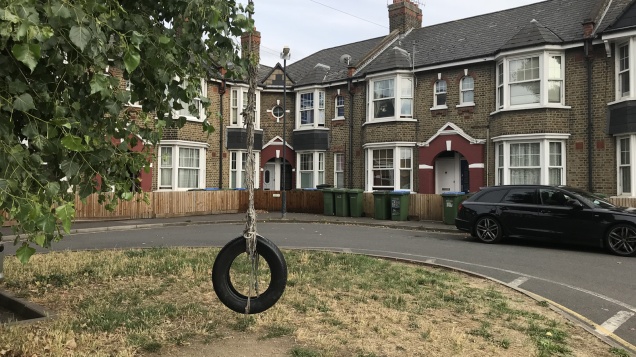
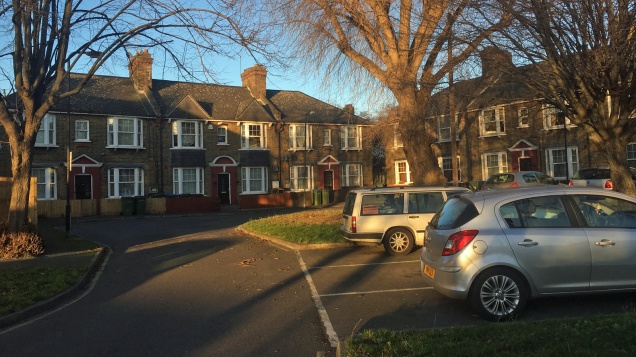
Residents in nearby Atlas and Derrick Gardens – built in the early 20th century for workers at the nearby Cory bargeworks – say the Rockwell development will loom over their homes and deny them natural light.
Local businesses have also voiced fears that they will have to move or close, saying the new development’s residents will not want them as neighbours.
Rockwell had already started promoting the scheme when Greenwich rejected it
Pennycook said on his Facebook page that Rockwell needed to be making the blocks smaller and providing more “affordable’ homes.
He wrote: “I fully understand the pressure the Mayor is under to build more homes in London as the market falters, I’m deeply disappointed that City Hall have chosen not to back Greenwich Council and stand behind the local community’s very strong objections to the proposed scheme.
“I will of course look carefully at any modifications that the Mayor is able to secure over the coming weeks/months and I trust that there will be extensive consultation with local residents and community groups as well as with the developer.
“However, City Hall must appreciate that there is a very strong feeling locally that we not compromise on the vision set out in the 2017 Charlton Riverside masterplan.
“That is why it’s crucial that development across the entire Charlton Riverside opportunity area, including any modified proposals from Rockwell, respect the vision of an exemplary urban district set out in that masterplan document.
“For Rockwell’s site that means not only a higher level of affordable housing, and a modified dwelling mix, but also reductions in the proposed height of buildings. If that requires reductions in the total number of units then, in my view, that’s what needs to happen.”
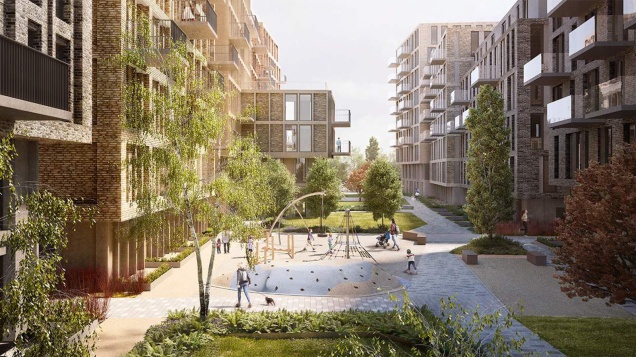
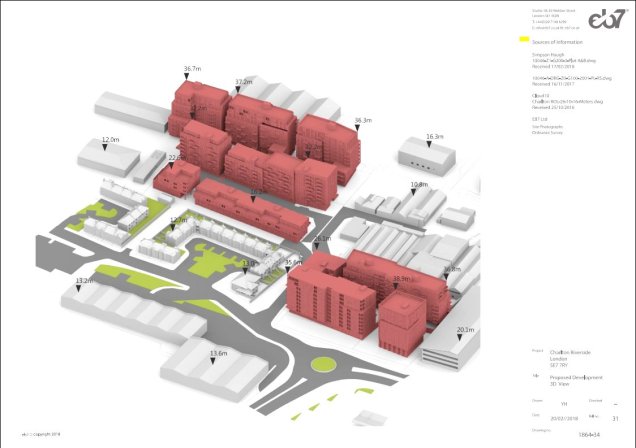
Rockwell says its new scheme will look like this
While the Charlton Riverside masterplan does not rule out 10-storey blocks, it says they should be an exception, preferring to see buildings of between three and six storeys.
Khan’s letter to Greenwich Council announcing he was taking over the planning process said the Rockwell scheme “has potential to make an important contribution to housing and affordable housing supply”.
Pennycook’s intervention was greeted with scepticism by journalist Paul Wellman, who tracks London’s developers for Estates Gazette. “Want more affordable housing? Generally the compromise is more private and greater heights. The below scenario is hugely unachievable,” he tweeted.
Want more affordable housing? Generally the compromise is more private and greater heights. The below scenario is hugely unachievable. https://t.co/m9U40BcKhh
Hounslow had refused a scheme with 421 homes, including 40% “affordable”, citing the possible effect on nearby Kew Gardens. But Khan approved a revised scheme with 50% “affordable” housing and 441 homes.
Khan said: “This scheme shows how we can unlock the potential of an underused site to build more of the genuinely affordable homes Londoners so urgently need. I’m clear that to fix the capital’s housing crisis Government must play its part, but we can make a difference now by ensuring developments include more genuinely affordable housing.
“I am committed to using the full strength of my planning powers to get London building more affordable homes.
“This is another important step as we work towards my long-term strategic goal for 50 per cent of housing in all new developments across the city to be social rented and other genuinely affordable homes for Londoners.”
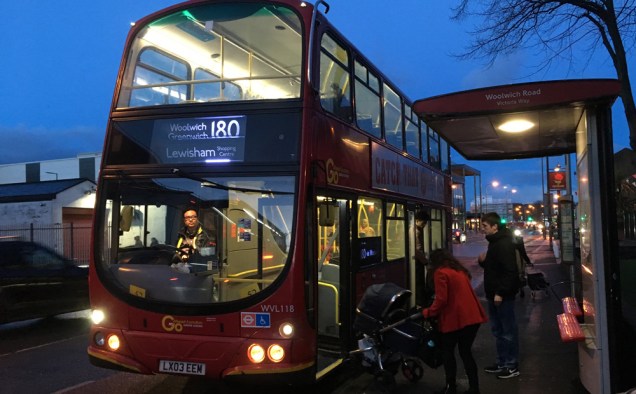
The cut means means only the 177 will run between Greenwich and Woolwich, halving the service from 12 to six buses per hour.
Instead of running from Lewisham, the 180 will run from North Greenwich via the Greenwich Millennium Village, the under-construction Ikea and Bugsby’s Way – a slight change to the original plan which saw it running via Peartree Way and a longer stretch of Woolwich Road.
TfL, which is chaired by London mayor Sadiq Khan, says: “The 177 has sufficient capacity for the level of demand on this corridor. We will continue to keep this under review.”
Route 129, which links Greenwich town centre with North Greenwich, will be extended to start back from Lewisham, but at a reduced peak-time frequency of five buses per hour, compared with the six provided by the 180.
Passengers who want to travel to and from Lewisham will be expected to use another service or change from the 180 to the 129 at Ikea.
The 472 to North Greenwich will also be less frequent – in peak hours it will be cut to eight buses per hour (currently 10), six on Saturdays (currently eight) and five on Sundays (currently six). It will also be rerouted in Thamesmead to run to Abbey Wood.
Crossrail is due to open at Abbey Wood and Woolwich on Sunday 9 December – this date has not been officially confirmed – so the changes should be in place around that time.
Saul Dibb’s war drama Journey’s End will screen at Charlton House
This year’s Charlton and Woolwich Free Film Festival has revealed its line-up, with World War I drama Journey’s End leading the selection of movies being screened at Charlton House.
2018’s event, to be held between 7 and 15 September, sees a range of films being shown at venues across Charlton, Woolwich, Plumstead and Shooters Hill. There’s no charge – just turn up, and throw some coins in the bucket if you can help with the costs of putting it on.
Director Saul Dibb’s adaptation of RC Sherriff play Journey’s End will be on at Charlton House on Tuesday 11 September (7.30pm, doors 6.30pm). Written by a captain wounded at Passchendaele, it depicts a handful of British soldiers “waiting to be killed” in a trench near the end of World War I. Charlton House was used as a military hospital towards the end of the Great War, and historian Clive Harris will give a talk at 7pm about about the real-life events that inspired the production.
Charlton House also plays host to the festival’s third short film competition on Thursday 13 September (7.30pm, doors 7pm), which this year has the theme Diversity and Future. There’s a £500 prize waiting for the winner.
On Friday 14 September (7pm, doors 6.30pm) comedy The Dish rounds off Charlton House’s contribution to the festival. Set in 1969, Sam Neill plays an Australian sheep farmer who has to steer the satellite dish – and its eccentric crew – to bring the Apollo 11 moon landings to the world’s TV screens.
Woolwich’s big screen in General Gordon Square will open the festival on Friday 7 September with The Greatest Showman. and close it with Sister Act on Saturday 15 September (Update 5 September: Sister Act has been cancelled).
The 53, which runs from Plumstead, Woolwich, Charlton and Blackheath through Deptford, the Old Kent Road and Elephant & Castle to Whitehall would be cut back to County Hall from March 2019 under proposals to “reduce bus flows” across Westminster Bridge and along Whitehall.
The scheme affects routes from across London, and will also mean the 171 from Catford, Brockley and New Cross to Holborn being cut back to Elephant & Castle.
Transport for London’s proposals come as it battles financial worries after a complete cut in day-to-day government funding instituted by Evening Standard editor George Osborne when he was chancellor. It is also having to deal with a four-year fare freeze from mayor Sadiq Khan, and a fall in bus passenger numbers.
A consultation on these new proposals will come in mid-September.
The 53 proposal is likely to face stiff opposition. The service – which in its heyday ran as far north as Parliament Hill Fields and Camden Town – is the last remaining bus link to central London from Blackheath, Charlton, Woolwich and Plumstead, and terminating at County Hall will leave passengers needing to switch to another service.
It was last cut back in 2002, from Oxford Circus to Whitehall, with the 453 from Deptford Bridge picking up the slack.
TfL is predicting falls in central London bus passengers once Crossrail opens in December – bus in the 53’s case, the Elizabeth Line will still be a bus ride away for many of its passengers.
Some industry insiders have speculated that TfL would like to cut the route even further, to the Elephant & Castle, but can’t do so because of a lack of space for buses to terminate.
(Updated 12.10pm Thursday) Transport for London told The Charlton Champion the proposals were still at an early stage and needed to be discussed with boroughs.
Director of public transport service planning Geoff Hobbs said: “Buses have a crucial role to play in boosting the number of people walking, cycling and using public transport.
“As set out in the Mayor’s Transport Strategy, we’re currently looking at how we can adjust and reorganise the bus network to ensure it reflects a rapidly changing London, including planning for year-on-year increases in bus kilometres in outer London. We need to modernise and simplify the network and ensure that bus capacity is in the right places at the right times.
“We’re currently working closely with London’s boroughs on a potential set of proposals and they are helping shape our plans. These changes will also be subject to full public consultation before they’re put in place so we can hear from customers.”
Chariot services began in London earlier this year
Commuters in Charlton and Blackheath who are tired of crowded and unreliable buses to North Greenwich could be able to get a new service to the Jubilee Line hub – if they pay a little more.
Car giant Ford, which launched its Chariot service between Shooters Hill and North Greenwich earlier this year, is applying for permission to serve three stops on Westcombe Hill between the Royal Standard and Westcombe Park station. It is also asking to serve three new stops on Shooters Hill Road.
It says it is down to “significant customer requests” – most likely as a result of the notorious overcrowding on the 108 service down Westcombe Hill to North Greenwich.
But the service – which would run non-stop between North Greenwich and Westcombe Park stations – is also likely to appeal to a section of Charlton commuters who face daily battles with the 486 service down Charlton Church Lane and the 161 on Woolwich Road, who can easily walk to Westcombe Hill.
Fares on the Shooters Hill Shot, which runs in rush hours only, are typically £3 each way, although users can gain free rides by asking friends to sign up. Users book their seats with an app, similar to minicab service Uber.
Even though Chariot has to apply to TfL for a licence to run the service, the services are not be part of its network or fare structure.
The service currently snakes its way around back streets in Shooters Hill and Kidbrooke before running down the A102 to North Greenwich. Chariot is also applying to run every eight minutes, rather than every 10 minutes as now.
Residents said the new blocks would loom over their homes and deny them natural light
London mayor Sadiq Khan has blocked Greenwich Council’s refusal to allow a developer to build 771 homes at the end of Anchor & Hope Lane, meaning he will now decide whether or not it will go ahead, rather than local councillors.
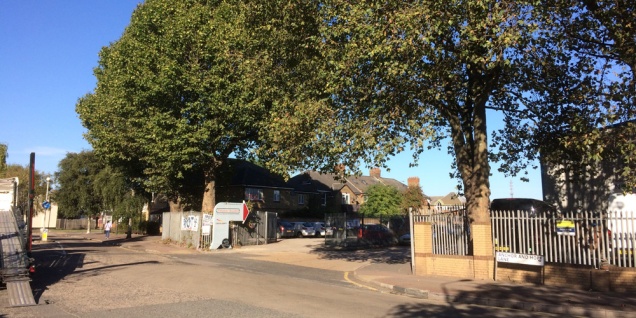
Developer Rockwell had planned to build on the VIP industrial estate behind Atlas and Derrick Gardens, with five 10-storey blocks, but its plans were thrown out by Greenwich Council’s planning board last month, with chair Sarah Merrill calling the proposal “reminiscent of Stalingrad”.
All 11 councillors on Greenwich’s planning board voted to reject the scheme, the first to come forward at Charlton Riverside – designated an “opportunity area” by the mayor.
But Khan has now opted to take over deciding what happens with the scheme himself – the first time a Greenwich Council planning decision has been called in by City Hall.
Rockwell says its new scheme will look like this
In a letter sent to Greenwich Council and seen by this website, Khan says that the proposal will have a “significant impact on the implementation of the London Plan and the draft London Plan” – the mayoral blueprint for planning across the capital.
The news will anger local residents who have battled against the proposals – particularly those who live in Atlas and Derrick Gardens, who say the Rockwell development will loom over their homes and deny them natural light. Local industries have also voiced concerns about whether they will be able to continue in business with a large residential development on their doorstep, and Squeeze singer Glenn Tilbrook has complained that his recording studio would be put in jeopardy by the plans.
It will also annoy Greenwich Labour councillors, who will be expected to campaign for Khan in 2020’s election – and who are well aware that the infrastructure in the area is anything but strong.
I had a feeling this might happen, especially when the new chair of the planning committee described the Charlton Riverside scheme as "looking like Stalingrad." https://t.co/FAomGIP6Oq
London mayors have the power to “call in” major developments after councils have made a decision, but it rarely happens. While it has never happened to Greenwich Council, two past developments on its borders have been called in.
A call-in effectively means the planning process starts again, with the mayor’s officers taking over and a public hearing taking place at City Hall.
More recently, Khan overturned Bromley Council’s approval of a new stadium for London’s oldest football club, Cray Wanderers, who play in the eighth tier of English football, and two four-storey blocks of flats at Flamingo Park, off the Sidcup by-pass.
Negotiations with Greenwich Council finally produced a revised plan by the end of 2017, cutting the maximum height down to 10 storeys with 25% “affordable”. In July 2018 this was increased to 35% “affordable” when judged by number of rooms, or 32.4% when assessed by the number of units.
5pm update: Greenwich Council regeneration cabinet member Sizwe James says: “I am disappointed that the Mayor of London has called in the Eynsham Drive and Charlton Riverside planning applications, both of which were rejected by our Planning Board last month. This means that the Mayor of London, and not the local councillors elected by the people of Greenwich, will decide on these applications.
“At the Planning Board, local residents spoke passionately about the issues they had with the proposed developments. The committee members listened to the residents and shared their concerns about the height of the buildings, the lack of homes for families, and the affordability of those homes.
“After the planning applications were rejected, we hoped that the developers would come back to us with a new application that provided much needed affordable housing for families, in developments of an appropriate size and scale for Abbey Wood and Charlton.
“Whilst I respect the rights of the Mayor of London to call in these planning applications, and understand the pressure he is under to get more homes built, we very much hope he will address the concerns of residents in the process.
“I would urge him not to simply wave the applications through, but include us in discussions with the developers to secure a greater proportion of well designed, affordable family homes.
“We also need to learn from the mistakes made in the 60s and 70s and create proper neighbourhoods, with walkable streets, places to work and spaces for children to play and socialise.
“I hope that we can work together with the developers and the Mayor of London to do this.”




 The Charlton Champion