You can help the community in Charlton get through the pandemic
With coronavirus cases on the rise again, Greenwich Council’s public health team wants to know what it can do to support you and those you care about as the pandemic goes on.
The team are working their way through different parts of the borough holding community meetings. Everyone is at risk from Covid-19, but the risk is higher for some – such as those who live in deprivation, in dense housing, bedsits, people from black and minority ethnic groups.
Nobody knows this community like those who live here, and to make sure nobody is forgotten in Charlton, the team is inviting residents to a Zoom meeting on Wednesday morning to talk about what happened during the first wave of the virus, who missed out on help, and what can be done now to help people through the coming months.
Just as importantly, with social media spreading false claims about the virus, it is a chance to find out what is really happening with the pandemic.
Overall, the aim is to keep the spread of the virus as low as possible and to and help everyone stay protected.
The public health team have identified an area of Charlton they’re particularly interested in hearing from – see the map below.
The meeting is at 10am on Wednesday 28th October. All are welcome.
To find out how to take part, email kelly-ann.ibrahim[at]royalgreenwich.gov.uk and she’ll send you the Zoom link.
Charlton Community Gardens’ community orchard is next to the Old Cottage Cafe
A message from CHARLTON COMMUNITY GARDENS…
Charlton Community Gardens are keeping in touch this autumn with a ‘Takeaway’ bag.
Children, with a little help, can enjoy these activities at home.
– Plant a bulb in a decorated jam jar
– Make and colour a Halloween mask
– Make a plastic flower to put in the jam jar
– Enjoy some quizzes and word searches
Collect your free bag from our Cafe Orchard (Community Orchard) – next to the Old Cottage Coffee Shop in Charlton Park on Thursday October 29th between 10.00 and 12.00. Children must bring an adult with them.
Please email us to book your bag – your child’s age and gender would be helpful: charltoncommunitygardens[at]gmail.com.
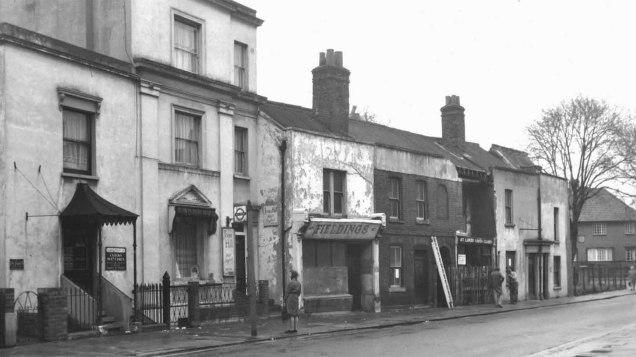
Charlton Village in 1970. “The watchmaker, hairdresser and Fieldings before the cottages were demolished, the tree to the right still stands in Fairfield Grove”
From Saturday, the Charlton Society is hosting a street exhibition in The Village, with displays on 17 shops showing engravings and photographs of the village since 1775. If you can’t make Saturday, the exhibition will last until 27 November.
In addition, if you can spare time on a Friday afternoon, the society is hosting an open day on 30 October from 2pm to 4pm: “Members of The Charlton Society Committee will be in the Village outside The Village Green Grocers where they will hand out copies of a commemorative Year Book and a facsimile of Charlton Village and its Parks Walk, originally printed in 1984. We hope that Charlton Society members and residents will take the opportunity to walk around the Village and view the exhibition.”
A view from 1775, with St Luke’s Church on the left and the spire of Charlton House on the right
The society adds: “The Charlton Society has been operating virtually since the beginning of the Covid-19 lockdown and have produced this exhibition to highlight Charlton Village as a unique London village, thank our traders for supporting the community throughout the lockdown and demonstrate some of the activities that The Charlton Society has engaged in during its 50 years.
“The Charlton Society has been operating since 1969 in response to a growing concern at the level of modernisation that could threaten the special character of the Village. Never an enemy of necessary development The Charlton Society was established to awake interest in the special character of Charlton Village, to assess new developments with a view to bring the best to Charlton as a whole, to protect the neighbourhood from the excesses of development but support good design and improvement.”
The old Charlton Conservative Club (image: Google)
A developer has withdrawn plans to turn the former Conservative Club on Charlton Church Lane into 26 bedsits to accommodate 49 people.
The club closed seven years ago and permission was given in 2015 to demolish the rear hall to provide a two-bedroom flat and a three-bedroom maisonette together with a new block of three two-bedroom flats, and construction of a terrace of four two-bedroom houses on land at the back of the property. Work began but was never completed, and construction workers have continued to arrive at the site.
Greenwich Council confirmed that RIU Management (UK) Ltd, a company based at the former club, had withdrawn its application in a letter to people who had objected to the plans. The company is controlled by 58-year-old Sanjai Dhar, who is also registered at the club; however it was originally set up by a British Virgin Islands-registered company, Riu Management, which had a correspondence address in Switzerland, according to Companies House records.
“The proposal is a form of residential accommodation aimed at providing affordable and high quality accommodation in the form of co-living arrangement,”planning documents said. “With the average house price in Greenwich at a value of £554,000, co-living which is a house in multiple occupation, offers an affordable alternative of living accommodation whilst retaining the luxury. Therefore, this a growing trend and co- living arrangement caters for young professionals who struggle to afford London’s increasing property prices.”
Meanwhile, plans to demolish what is left of the Charlton Liberal Club and build a three-storey building with eight flats have been refused by Greenwich planning officers. The scheme had been submitted by an Enfield-based company, Liberal Ltd, controlled by property developers Can and Kerem Yavuzarslan.
The council said there was no evidence that the Liberal Club was unviable as it had only been on the market for one month, and that the loss of the club would deny the area a community facility and a source of employment. It also said the “proposed design is excessive in scale and poorly sited, such that it appears cramped with its plot and creates an uncharacteristic terracing effect”.
The main Liberal Club building was converted into flats in 2016 and a new building erected next door, but the club closed two years later.
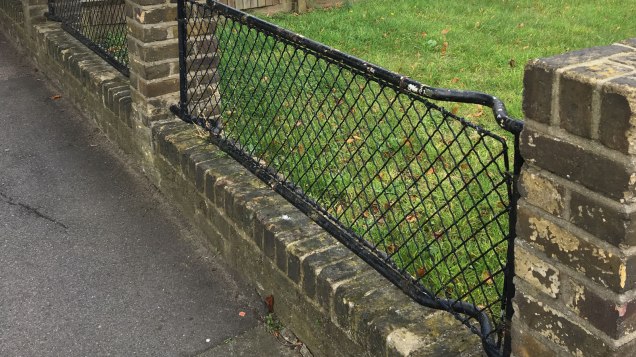
Stretcher fences in Marlborough Lane – a part of Charlton’s history
Historian RICH SYLVESTER would like a word about a project he’s working on with the National Maritime Museum – what object sums up Charlton’s history to you?…
You can see the pool of objects we have started with at hogblog.org – we invite your suggestions! What objects are in your area that tell of Charlton History ?
Contact the editor with your suggestions at editor[at]hogblog.org.
Plus – join the Zoom sessions on 50 Objects of Greenwich from November 3rd at 7pm – five themed evenings looking at paintings, public art, and a discussion on “who are the history keepers?” Book at http://www.rmg.co.uk/greenwich50objects.
Bardan Pradhan took over the greengrocers three years ago
The coronavirus lockdown turned life upside down for many small businesses. The Village Greengrocers, which featured on our lockdown shopping list six months ago, prospered. LANCE BOHL found out why.
Originally from Kathmandu, Bardan Pradhan gained an MA in business administration before taking jobs as diverse as a smartphone area development manager for a Japanese conglomerate and as a tutor in economics. He also co-owned Philly Boys Cheese Steaks, which sold fast food at Camden Market, London Zoo and music festivals. “Although I worked with red meat for about six years I’ve never really eaten it myself,” he says.
“I always knew that I wanted to do something on my own, and decided that I wanted to make a definite move away from that area and focus on enabling people to eat healthily and sustainably. And that’s how I came to be involved with the shop.”
When The Village Greengrocers came up for sale in 2017, Bardan jumped at the chance. Although it was a traditional greengrocer, its main focus was supplying pubs and restaurants with the shop run very much as a sideline. The first thing he did was to reposition it as an organic grocery store with not just fresh vegetables but also bread, dried fruits and honey. “I started selling only good quality, sustainable, foods from local suppliers. If air miles had to be involved, I wanted them as low as possible.”
Although 2019 was a very difficult year, lockdown actually helped the shop not just grow, but thrive. It was the first shop in Charlton Village to introduce a distanced queuing system and also restrict the number of people in-store, before lockdown came into effect.
“This made our customers – and staff – feel much safer and more comfortable when shopping during lockdown,” Bardan says. “The personal service my customers received made a huge difference to them. There was a definite shift away from large supermarkets in the retail parks, which had huge queues and staff who could be quite rude to people.”
People suddenly found their choice of places to shop had reduced dramatically. The vast majority of stores were closed and The Village Greengrocers was one of only two shops in Charlton Village which were open. People still needed to buy food, but had fewer places to buy it from.
“Our customer numbers increased hugely and, because we only sell food, it meant our queues were relatively short – so the shop was more convenient to use. Plus we opened regularly from 9am until 3pm every day of lockdown, whereas other shops varied their hours significantly, with no notice.”
The Village Greengrocers is trying to move away from plastic packaging
People started to stockpile – not just toilet roll, but even fruit and vegetables, sometimes buying as much as two or three weeks’ supply at once. This meant that staples, such as potatoes and carrots, became very hard to source at a supplier level. “My main problem suddenly became getting hold of enough stock for the shop. Luckily, I’d built up a good reputation over the years with traders and porters at the wholesale market which stood me in good stead. But it was a difficult time.”
Before lockdown, almost half Bardan’s stock came from major organic suppliers. After March, these suppliers experienced vastly increased demand from their larger customers and smaller independent shops such as The Village Greengrocers were unable to get deliveries. “I quickly found local producers who were more than happy to supply me with fine quality artisan bread, pastas, cheese, poultry and dairy, Kentish eggs as well as fruit and vegetables. What’s more, I trust them and they’re reliable. These relationships work really well and the shop’s now got a whole new network of local suppliers.”
A government small business grant and council rent relief meant the shop could invest in more stock and hire a fourth full-time staff member, helping Bardan concentrate on getting stock in.
Home deliveries of fruit and vegetable boxes have helped keep vulnerable people going while shielding. Many were unable to get a delivery slot from the major supermarkets, and this personal service has been rewarded by customers staying loyal to the shop. “I’m expanding our delivery service with locally-produced bread, milk and eggs,” says Bardan. “The next step is to finalise and launch the online store. Our customers will be able to select from a range of pre-set boxes, which they can customise if they want. At the moment they create a list and send it by email, which is quite time-consuming.”
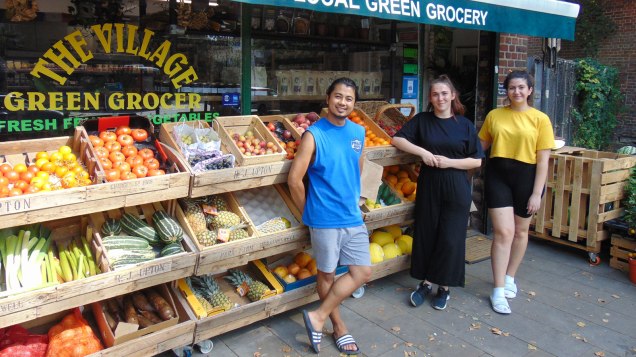
The Village Greengrocers team are now looking to the future
Bardan also plans to cut the shop’s impact on the environment by making 30 currently pre-packed goods – including rice, greens, dried goods, coffee and pastas – available loose from dispensers. He is passionate about the idea. “By dispensing with the individual packaging, customers will be able to bring their own bags and get the same quality but at a much lower price and in a more environmentally friendly way.”
Publicity including coverage in Metro and American Express’s Shop Small campaign has also helped, with the shop regularly updating its social media accounts.
“I think lockdown has completely changed people’s eating habits,” says Bardan. “Fast food chains were closed for a long time and this, along with home working, meant people started to prepare and cook food themselves. Also, they are focused on building up their immune system and the demand for fresh fruit and vegetables is now much greater than ever before.
“I really think the four of us make a great team. We’re in a very good position, and we’ll continue to serve the local community we supported during the difficult time of lockdown.”
LANCE BOHL lives in Charlton and is an internal communications contractor.
This is one of a series of stories published here and on our sister site 853 about how SE London’s communities have reacted to the coronavirus pandemic. See all the stories published so far.
During the summer, we reported on lead thieves causing damage at St Luke’s Church in Charlton Village. Now two other listed buildings in the village – the Summer House and the Assembly Rooms – have been vandalised by ham-fisted thieves who have caused thousands of pounds of damage while trying to get hold of lead, some of it degraded.
It remains unclear whether they will be able to cover the damage on insurance – a major setback to efforts to restore the buildings. Thieves have also targeted St Richard’s church hall in Swallowfield Road.
The Charlton Society‘s RODEN RICHARDSON looks at why each building is important – and explains the damage done.
The Summer House
With its uniquely classical proportions, this 17th century Grade I protected gem of a building is part of the Charlton House Estate and hence in the care of the Royal Greenwich Heritage Trust, which has recently been carrying out much-needed repair and restoration work. The spectacular curvilinear roof is covered in fine, graded slate tiles, with lead flashing along its 4 curved ridges. After storms in January 2018 and tree damage to the roof, the existing and unsatisfactory asbestos felt flashing was replaced with conservation-standard lead.
However, it wasn’t long before this was torn from all four ridges by thieves in a single operation. It was all replaced in early September this year at a cost running into five figures – a sum vastly greater than the stolen lead. But then, at 2am a few days later, the thieves attacked again. No doubt expecting another easy haul, this time they didn’t reckon with an alarm that had by now been installed and they only got as far as partially lifting a short section of the flashing on a single roof ridge, which the Trust was able to repair by the following evening.
The damage done to the Assembly Rooms
Assembly Rooms
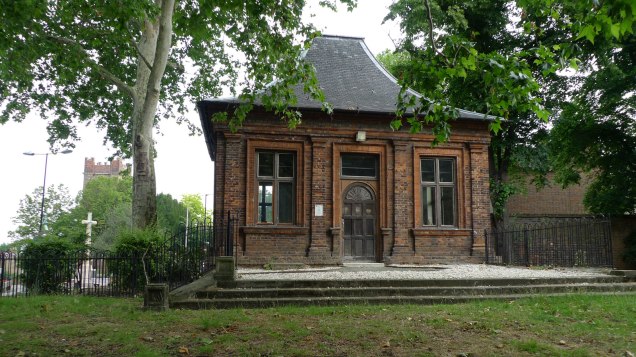
Completed in 1881 in red, handsomely decorative brick and terracotta, the Assembly Rooms were a gift to the local community from the Maryon Wilson family, the former owners and last occupants of Charlton House. Recently Grade II listed, and now the responsibility of the Royal Greenwich Heritage Trust, the Assembly Rooms remain a great community asset which might have been lost if that same community hadn’t saved them from demolition in the 1970s. A highly ambitious restoration project at the time, one of the key tasks was to replace the domed, multi-facetted roof cupola. This highly skilled work was undertaken at a local college by students specialising in the traditional materials and techniques required. The cupola’s dome is covered in lead, and this has now become the Village’s most recent target for attack by lead thieves.
As the picture shows, they managed to prise some of the lead away until they were either caught in the act or because it was more difficult to remove than anticipated. Once again, the value of the lead is minimal when compared to the cost of restoration and repair work, which also involves the base of the cupola structure, the fine tiled roof that the thieves scaled to reach their objective and serious rainwater damage to the parquet flooring inside the Rooms, which, like Charlton House, have been closed since the onset of Covid-19.
Edward Schofield, visitor and operations manager at the trust, says that the attack comes at a time when the charity is working towards ways of safely and reliably reopening the trust’s buildings to the community. “This criminal damage goes beyond the basic theft of materials – apart from the disruption, the overall repair and replacement costs, not least for the extensive scaffolding required, will be considerable.”
St Luke’s
Built in 1630 – a little before Christopher Wren’s Royal Observatory a couple of miles or so away on the same escarpment – historic St Luke’s is one of London’s most compelling and attractive parish churches. Not immediately visible to the eye from the outside, the roof has two ridges forming a valley and it is from here and the gulley at the side that thieves ripped out lead coverings, causing extensive damage in the process, including to the interior fabric of the building. Churchwarden Rick Newman confirms that the amount stolen was minimal but that the cost of repair will run into the tens of thousands of pounds, considerably more than the limits imposed on claims for what is being deemed as “metal theft”. St Luke’s has ambitious plans for the repair and upkeep of the building – important and essential work on the unique castellated tower has already been completed – but with other works required, this theft and vandalism is a major setback.
It has just been discovered that lead has now also been torn from above the main porch and side door to St Richard’s Church Centre at the corner of Swallowfield and Sundorne Roads. Rick Newman describes the crime as “a frustrating addendum to the current epidemic of lead thefts in Charlton”.







 The Charlton Champion