Jane Lawson’s working life was spent teaching and lecturing in Pakistan, Uganda and London. Jane was also a Presiding Justice on the Westminster and Family Bench. Since retirement Jane has been able to pursue her passions for walking the footpaths of London, exploring the built and natural environment of London and of the Royal Borough of Greenwich in particular, and identify and study the wild flowers to be found along the footpaths.
This talk will be about all three – The Green Chain Walk – its buildings and its botany. It’s a treasure trove of often unexpected joys and delights.
Admission will be £3 (£2 for Charlton Society members) and the meeting is this Saturday, May 20, at 2.30 pm.
With loads of community groups joining in, it promises to be a great day out. Browse the plant stalls and find out what local groups have been doing and what opportunities there are to join in.
There will be lots for children to do, with a “Bugs in the Beds” trail around the Old Pond Garden, face painting at the Producers Market and Charlton Toy Library crafts. The WI will be there with their scrumptious cake stall and the Charlton House beekeepers plan to sell their honey.
St Luke’s Church will be open for Tower tours (panoramic views from the top!) and Millennium tapestry talks.
The plant sale will take place on Sunday, May 21, from 11am to 3pm.
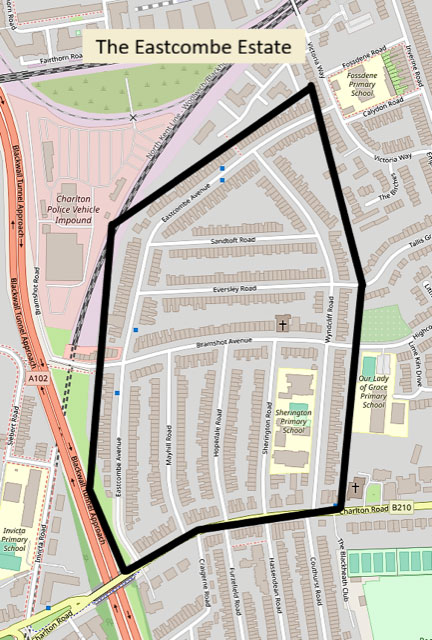
The Eastcombe Estate covers what estate agents call the “Charlton Slopes”
If you live in an area roughly bounded by Eastcombe Avenue, Wyndcliff Road and Charlton Road, then there’s a chance to find out about the history of your patch with the Charlton Society tomorrow (Saturday).
If you’ve ever dealt with certain estate agents, you may know this area as the Charlton Slopes… The talk is from local historian Barbara Holland.
Barbara Holland began her local history research when she retired after 30 years working for Greenwich Council. She has given talks to local groups on a variety of subjects including Charlton builder ‘Mad Jack’ Ellis, Charles Heisch and Charlton Gardens and Gardening. She is chair of the Friends of Greenwich Park History Research Group which explores some of the lesser-known facets of the park’s past.
Barbara has lived locally for more than 40 years and has a particular interest in telling the hidden stories of people and places in Charlton. In her illustrated talk about the Eastcombe Estate, she will look at its early history and ownership and how the estate was developed at the start of the 20th century.
She will highlight aspects such as the layout and housing design, the early occupants, and how the area has changed over the years.
Admission is £3 (£2 for members) and the talk at 2.30pm on Saturday at St Luke’s Church in Charlton Village.
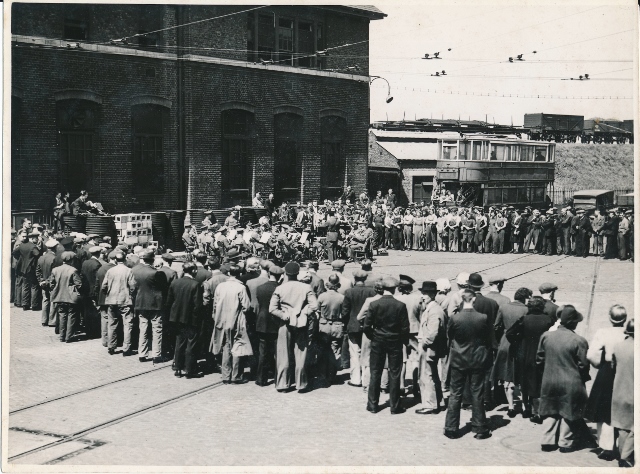
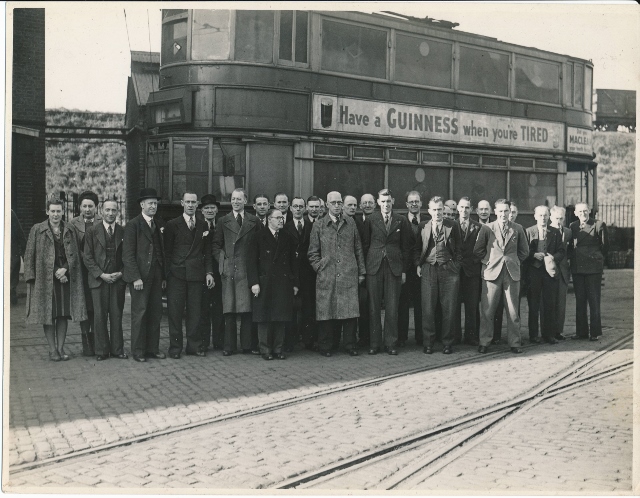
At the other end of SE7 was the old Charlton tram works, where vehicles from all over London were taken for repairs and servicing. The man who ran the trams at the time, Aubrey Bell, is commemorated in the name of the small road leading to the old depot – Felltram Way.
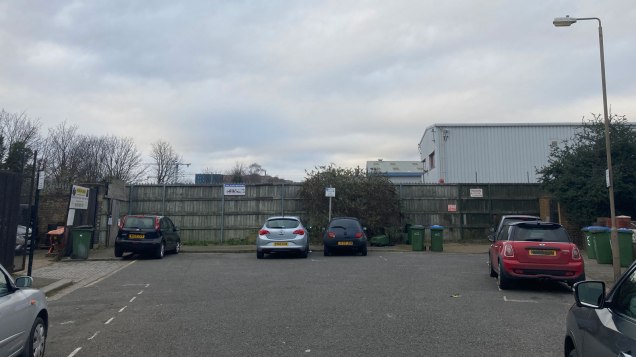
The depot later became an Airfix factory before being demolished in the early 1990s, and the only clue left to its past is how the street widens at the entrance to the old works.
The works in February 1944
Transport enthusiast ANDREW FRY was browsing a secondhand stall in Dorset when he found some intriguing photos. He picks up the story…
Not too long ago I purchased a secondhand book, at a bus rally down here in Dorset, relating to London Transport and inside I found seven 1940s black-and-white photographs.
On the reverse each of the photos is stamped as being taken by The Topical Press Agency Ltd and three mention ‘Charlton Works’ which is why I then decided to search on Google.
It appears that this was the largest works for the London Transport tram network so it might be that descendants of those in the photos may still reside in your area and would be interested in having these photos.
If this is the case I will gladly send them, free of any charges, to any interested person or group.
If you’d like to get in touch with Andrew, email him at shottsford[at]sky.com.
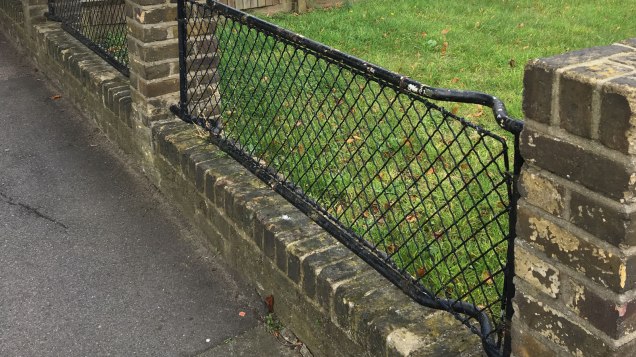
Stretcher fences in Marlborough Lane – a part of Charlton’s history
Historian RICH SYLVESTER would like a word about a project he’s working on with the National Maritime Museum – what object sums up Charlton’s history to you?…
You can see the pool of objects we have started with at hogblog.org – we invite your suggestions! What objects are in your area that tell of Charlton History ?
Contact the editor with your suggestions at editor[at]hogblog.org.
Plus – join the Zoom sessions on 50 Objects of Greenwich from November 3rd at 7pm – five themed evenings looking at paintings, public art, and a discussion on “who are the history keepers?” Book at http://www.rmg.co.uk/greenwich50objects.
If you’re looking to take a local stroll over the next few days, you could do it along the Charlton riverside – before it changes forever. Greenwich University landscape architecture student MEREDITH WILL takes us for a walk from the Greenwich Peninsula to the Thames Barrier.
Charlton Riverside is a unique area within London, and it is about to change dramatically. While Charlton residents will probably be aware of the local master plan and large-scale development proposals, the history of the riverfront in Charlton is less well known, and in need of celebrating.
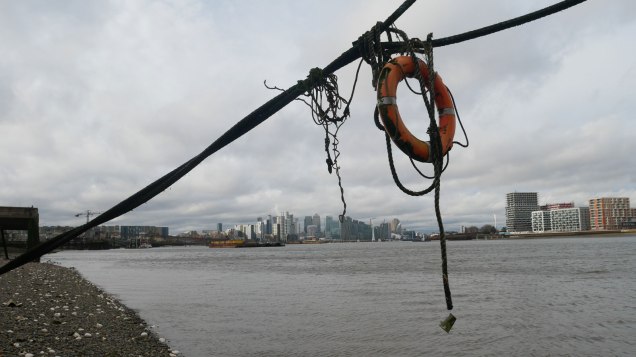
An easterly amble down the two-mile stretch of the Thames Path from Greenwich Peninsula Ecology Park to the Thames Barrier provides a fascinating mix of active industry and remnants of the past along the river.
At the ecology park, you can step back in time to experience the river as it was before the 1800s. The wetland habitats have been reconstructed to emulate the environment that although now almost forgotten, once covered the entire Charlton Riverside area. There you can see the kinds of water birds and insects that would have been common before industry took hold. Now a watery urban oasis, visitors can search for snipes, reed warblers, swifts and the many butterflies and dragonflies that thrive in the wildflower meadow.
Following along the Thames Path, around the Greenwich Yacht Club, you come towards Angerstein and Murphy’s Wharves. Angersteim was the first wharf to be developed to the east of Greenwich, opening up the area for all future industry.
Looking back up the Thames from Riverside Wharf
It was built in the 1850s by John Angerstein, originally born in Russia to a Germany family, who later settled in Greenwich. Angerstein, like many others at the time, made his fortune in the slave trade, profiteering off the trading of enslaved people in Grenada. Angerstein’s extensive art collection became the basis of The National Gallery. Over time the wharf has been involved in dredging, metal works, glassworks, and aggregates industries.
For the last 30 years both Angerstein and Murphy’s wharves have been home to Day Group Ltd, loading and unloading sea-dredged aggregates and supplying material for London’s ever-expanding construction projects. The works are unmissable as you pass by; the many conveyer belts, corrugated irons shacks and mountains of tarmac are like walking onto the set of Mad Max.
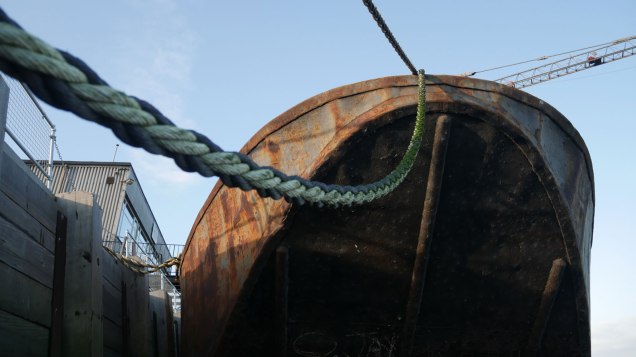
A barge being repaired at Cory Environmental
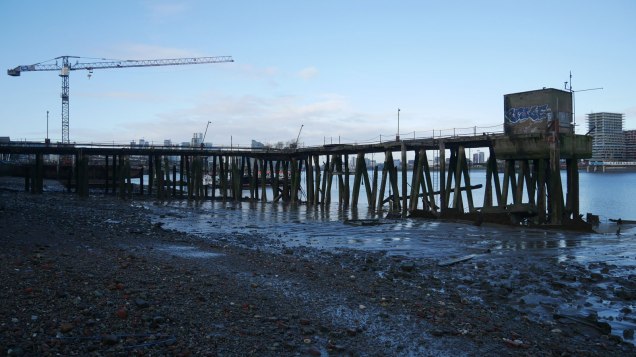
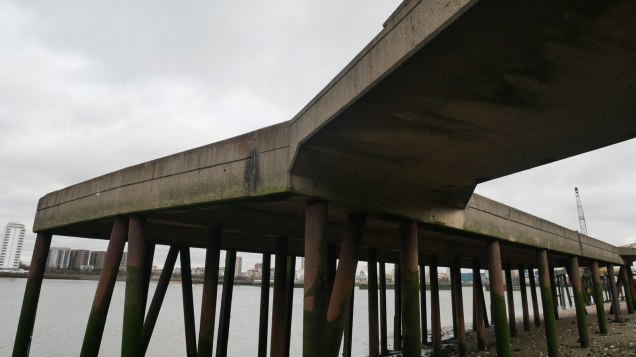
Murphy’s Wharf – originally known as Christie’s Wharf – was built alongside Angerstein in the 1920s for the import and treatment of timber. It was famous for having a concrete pier, instead of the older wooden structures lined along the banks and for the quick unloading time of the dockers who worked there. The pier and cranes remain largely as they were built, but now stand unused and mossy – monuments to the workers and their industry. For the keen eye, the train track linking these wharves to the rail network can still be seen from the line between Charlton and Westcombe Park.
Beyond this lies Cory’s Barge Works. Now Cory Environmental, the company still operates on site, building, maintaining and repairing barges that take domestic waste out of central London. This is probably the only continually-operating boat repair company that has been working on the same site since 1873. Some of the timber sheds may be even older than Cory’s.
Durham Wharf from the Anchor & Hope beer garden
Further downstream is Durham Wharf, built in the early 1900s, which once transferred coal and sand into the city along the narrow gauge railway line which can be seen across the yard. Cory’s last used it in the 1970s and since then it has remained untouched.
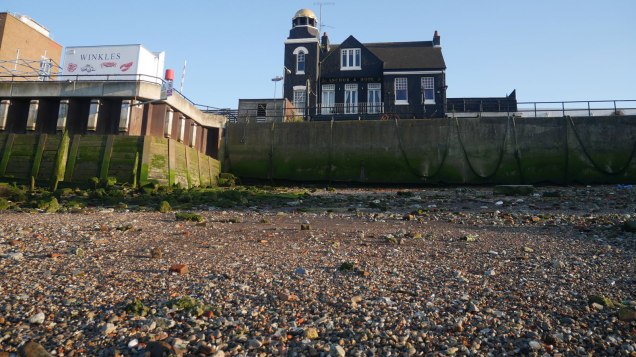
Next you’ll reach the jewel in the crown, one of London’s best public houses, and a welcome sight for many a sailor, the Anchor and Hope pub, where the community of workmen have been served since Tudor times. The current building was built in 1898, and is a very popular stop-off point for people attempting to cover the whole Thames Path. A winkle shack is just next door if you fancy a salty snack.
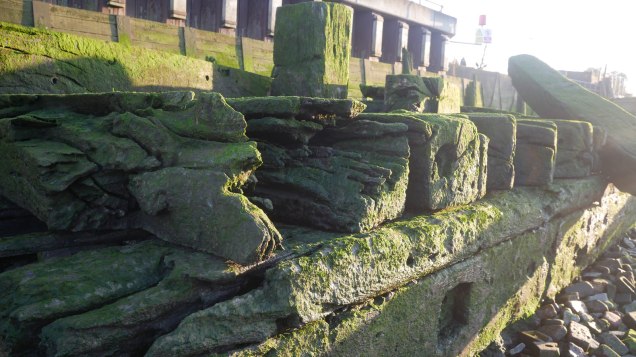
The remains of Castle’s shipbreaking works
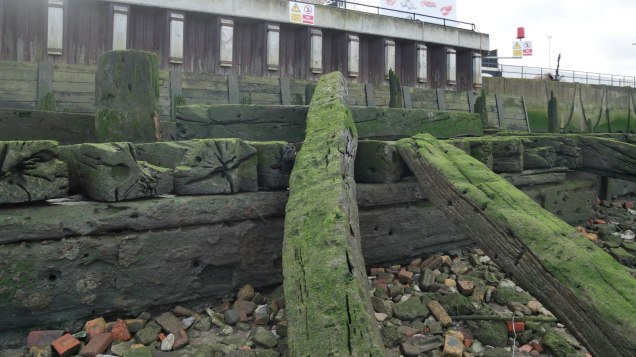
If you’ve timed your journey with the low tide, brave the mud and explore the foreshore by going down the steps by the pub. You’ll be rewarded with one of the most important maritime archaeological sites in the country – the remnants of huge Victorian battle ships which were broken up on the foreshore for parts. People have been able to identify what these timbers were used for and which ships they came from. The most famous of these ships was the HMS Duke of Wellington, a first-rate triple-decker flagship, powered by both sail and steam.
Down on the foreshore
A short distance away is the youngest wharf along this stretch, Maybank Wharf, occupied by Westminster Waste. Built in 1966 for transporting paper from it nearby factory, it is no longer in use but is in near-perfect condition. A development from Hyde Housing is set to replace the current buildings with flats and a public park on the jetty.
The Maybank jetty
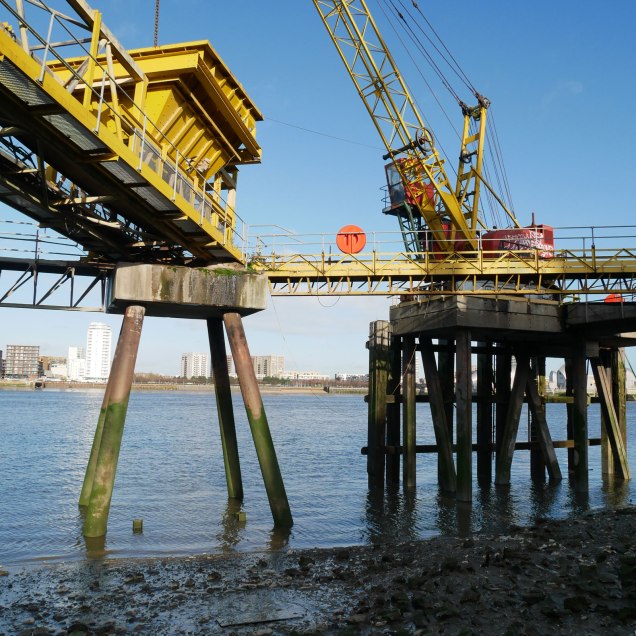
Next you will come across Riverside Wharf, a striking yellow and red structure which stretches over the Thames Path. This Tarmac plant, as well as Angerstein and Murphy’s wharves, is safeguarded, meaning it has been given special protection by the Mayor of London to prevent their redevelopment.
The final wharf along this walk is the Flint Glass Jetty and Thames Wharf, erected in 1920 by Johnsen and Jorgensen, Swedish cod liver and polar bear traders, for their glass works business. The factory was one of the world’s leading glass works, importing bottles to be made into thermometers and other glass equipment.
Riverside Wharf at high tide
Although just short of two miles long, this amble along Charlton Riverside allows walkers to traverse across 200 years of history, from misty marshland through waves of 19th and 20th century industry and into the next chapter of redevelopment. While the developments will inevitably change the industrial character of this area, there’s hope that Charlton’s unique history will not be lost or forgotten. The redevelopment offers an opportunity to re-engage with this history and ensure its legacy is respected.
A group of students from the University of Greenwich are conducting a project on Charlton and the Thames. If you have any stories relating to the Charlton foreshore, industry past or present or anecdotes and memories, please get in touch with us at CharltonForeshoreStories[at]gmail.com.
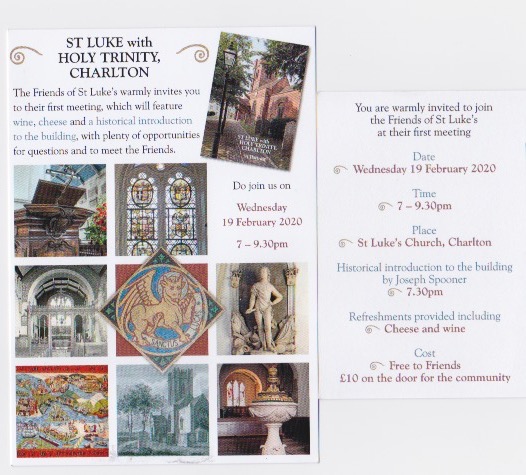
The first meeting of the Friends of St Luke’s will be held at St Luke’s on Wednesday 19th February, starting at 7.00pm ahead of a historical introduction to the building led by Joseph Spooner at 7.30pm. Joseph will be sharing his wealth of knowledge, as well as revealing some hitherto overlooked or under-documents aspects of the building and its history.
Refreshments include cheese and wine. Entry is free to those who have already signed up as Friends or who sign up as Friends on the night, otherwise entry is £10.00. The recently published and well-received Portrait of St Luke’s will be available for sale on the night for £5.00 rather than the usual £7.00.
Main door plans
As part of our contribution to the improvement of Charlton Village, the Friends of St Luke’s are looking to raise funds for the main door to be repaired and represented. Locals may recall that about thirty years ago it was painted blue but has long since faded and needs repair as well as repainting.
A detailed investigation was undertaken in 2018 and established that the door is oak and has been in place since the church was rebuilt in 1630. Furthermore, under the at least twenty layers of paint revealed by high magnification and ultraviolet examination, the door was originally painted ‘warm brown’, possibly with ‘brush-grained decoration intended to imitate hard wood such as walnut or oak’.
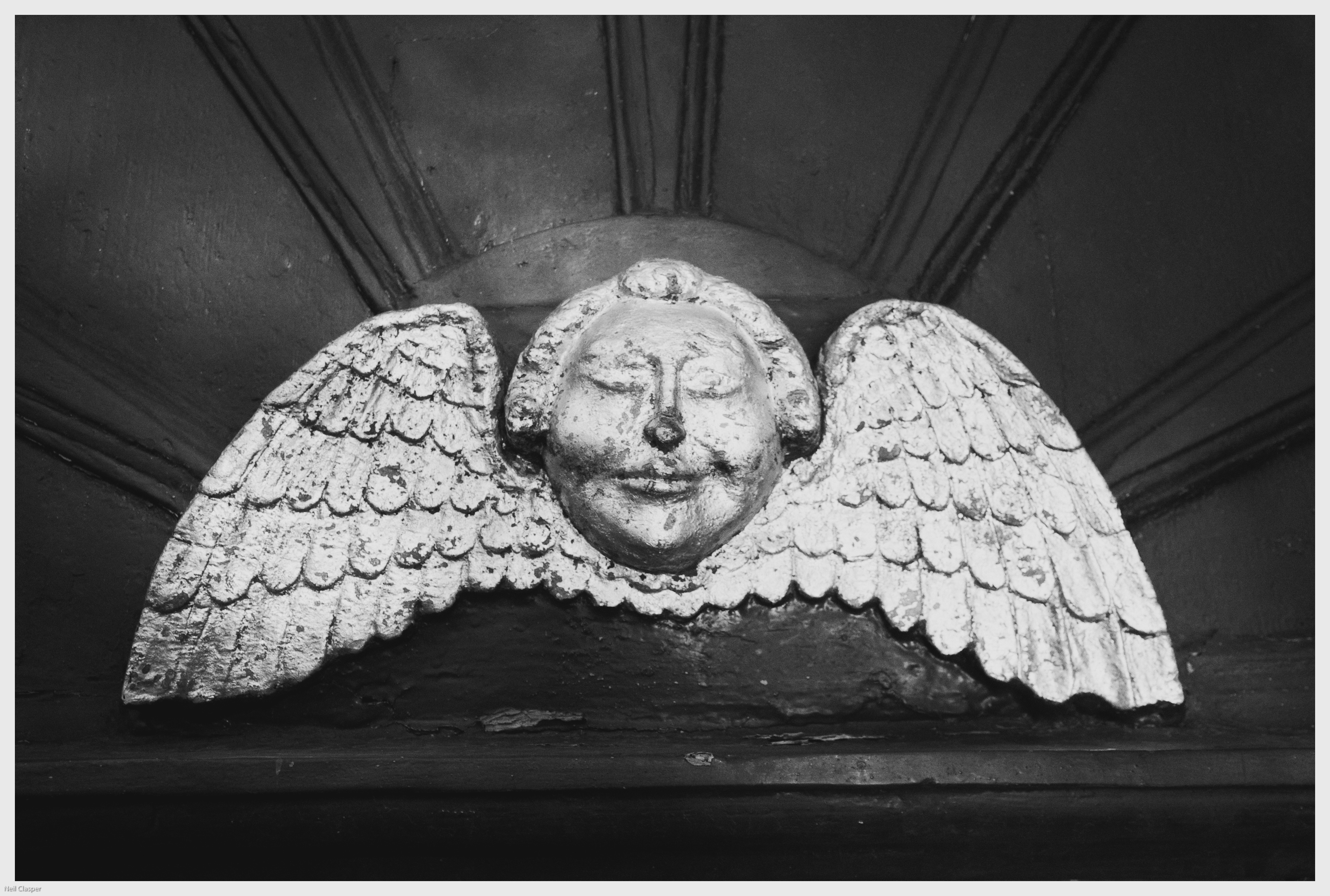
Presumably, in the days long before DIY products that do what they say on the tin, it would have been impractical to have left the original oak uncovered. In re-presenting the door we would also ensure the cherub above the door gets a fresh gilding, noting in passing that the cherub is also found on one of the mantlepieces in Charlton House.
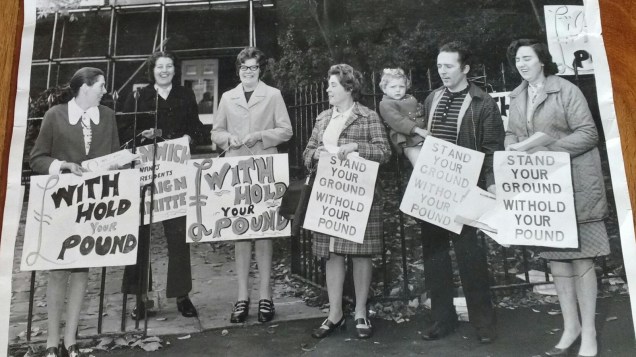
Rent strikers withholding their pounds at Charlton House stables
There’s a lot of history in Charlton House’s old stables block – some of it more recent than you think. We’re grateful to DIANA CORDWELL for sharing some memories…
Back in the early 1970s when I was an eager, young cub reporter, I was sent off to a rent strike protest at Greenwich Council’s rent offices at The Stables, Hornfair Road, Charlton.
With notebook and pen in hand and a cameraman in tow, I pitched up at the demo to be confronted by no less than my own mother Joyce and a gaggle of her neighbours brandishing placards saying”stand your ground, withhold your pound!” So there I was in the embarrassing situation of getting quotes from my own mother about her and her fellow demonstrators going on rent strike. Not to mention back at the office having to explain why one of the demonstrators in the photos sent up by the photographer had the same surname as me!
This was the start of my mum’s rather long relationship with the Press (45 plus years at the current count) and her constant appearances in various local newspapers under one guise or the other.
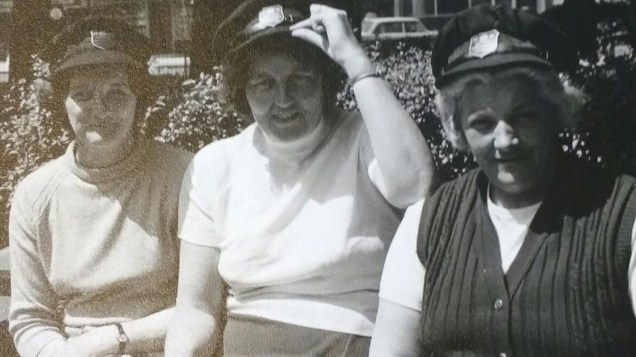
Following the rent strike, she popped up again in a feature on Greenwich borough’s much loved lollipop men and women (she did the school crossing patrol at Invicta Road, Blackheath Standard) and then on countless occasions over the decades in bowls match finals, women’s darts finals (we both played for the White Swan pub, Charlton Village) and several encounters with herself and a string of different mayors at various clubs she attended throughout the borough!
Joyce – in the middle – ran the school crossing patrol near Invicta School
I remember another occasion when the Kentish Independent‘s editor Charlie King (who was known for imbibing a pint or two himself) decided we’d run a new weekly feature called Pub Spot. Off I went to the Richard I in Royal Hill, Greenwich – known affectionately as “The Tolly House” – and there she was again sitting with a group of in-laws and every ready with a smile for the camera and a quote for the Press.
With going on holiday also being up there with my mum’s favourite activities, it was only a matter of time before she popped up again in stories on Greenwich Council’s own hotel down on the Kent coast (remember that?), her TGWU trades union hotel in Eastbourne and a Mercury “Twirlies” trip to Fuengirola, Spain! It got to the point where a news editor short of a story would bellow across the newsroom to me: “Di, what’s your mum up to today?”
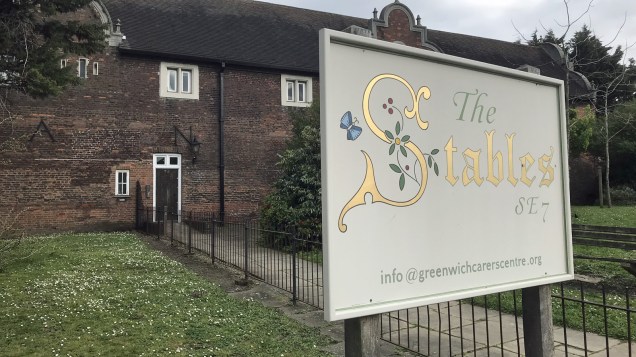
Today, some 50 years on, my dear old mum – now 92 – has found herself back at the Charlton Stables. But this time she’s inside and not out on the pavement.
For The Stables, no longer rent offices, is the home of the wonderful Greenwich Carers Centre and its outstanding, dedicated staff. Supported by the council and various charities, this little gem nestling by the side of Charlton House offers support,activities, events and holidays for carers and those they care for. They also run a brilliant cafe with a beautiful garden where the welcome is always warm.
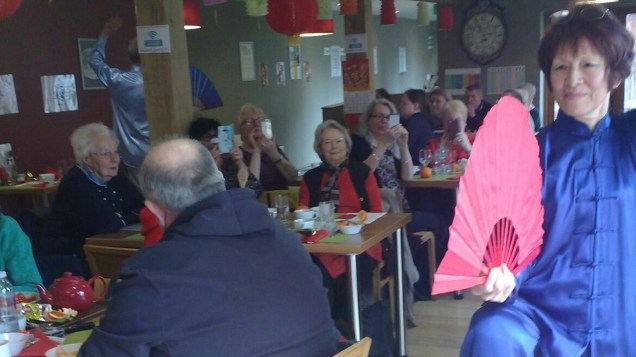
Mum Joyce attends Wednesdays and Thursdays, gets picked up and taken home in the Stables minibus, plays bingo and does art workshop and then enjoys a tasty home-cooked meal and cuppa with her friends. I popped along myself a couple of weeks ago for the carers Chinese New Year celebration lunch – just one of the many events on offer in their excellent ‘Shine’ activity programme.
This place is so special that one wonders how it has managed to stay afloat in such a remarkable way in the face of callous Government cuts that have hit all the sectors that this brilliant oasis in Charlton depends on for its survival.
Stables entertainment, 2019-style
What excellent news it was then to hear from Stu – the chief executive of the Greenwich Carers Centre – that despite the odds, all is looking good for the next few years. “Late last year, we submitted a funding application that, if successful, would fund a significant part of our services for the next three years,” he said.
“I am delighted to be able to tell you that our bid was successful! We have now finally turned the corner and will be launching our new model at the beginning of April.”
The thriving Charlton House Stables today
Stu adds that the cafe is to get a facelift and a new cosy snug with TV is in the pipeline.
Plans for services for carers include an information and advice telephone support line, community engagement service linking up with heath/social care professionals, dinner and entertainment evenings, hobby and activity groups and day trips and excursions.
With so much planned, Press interest in The Stables will no doubt be high over the next few months. Joyce, of course, is ready!
 The Charlton Champion