SOUTH EAST LONDON SLINGERS is a voluntary group that aims to help parents carry their children safely and comfortably. They have a pop-up market at Charlton Assembly Rooms on Sunday, February 5…
We are running an expectant parent and new family event on Sunday 5th February from 1-3.30pm in Charlton Assembly Rooms.
It is free to attend and we will have stalls with information for expectant parents and those with children under free.
There will be some items available to buy on the day including bargain slings, refreshments and other child related items.
For any queries about a stall, contact us on southeastlondonslingers[at]gmail.com, via our Facebook page or our website selphub.com.
The group also runs a sling library most Thursdays at Woolwich Library from 10am to noon – contact them for more details.
A few weeks back we mentioned this Sunday’s concert to raise money for roof repairs at Charlton House. The concert is actually being backed by a charity set up to save the nearby Charlton Assembly Rooms – GWEN ZAMMIT, the organiser, explains all, and outlines how you can get involved.
The concert is being organised with the backing of the Save Charlton Assembly Rooms Project (SCARP) to raise money for the roof repairs at Charlton House, which will benefit the whole community. SCARP was started in 1972 by Gwen and George Zammit and Laurie Cole, all members of St Luke’s Players. Laurie was their musician as well as played for St Mary’s, the daughter church of St Luke’s.
The Assembly Rooms had been St Luke’s church hall for decades but, in the end, the upkeep of the building became too much to handle and it was decided to return it to Lord Gough – a direct descendant of the Maryon-Wilson family – who had loaned it to the church for a peppercorn rent. Lord Gough then sold the rooms to Greenwich Council, who earmarked it for demolition to make way for a car park.
Up until then, the Assembly Rooms had been the HQ for St Luke’s Players, so that is why it was decided, with the backing of the whole community and the Charlton Society, to take it over. This was eventually allowed by Greenwich Council. To cut a long story short, the Assembly Rooms now comes under the umbrella of Charlton House, hence the support of SCARP, which is a registered charity.
SCARP is looking for new trustees, most of whom have been members of St Luke’s congregation. Gwen Zammit is the Chairman and only founder member left, however, she is still supported by Pat Wardale and Kitty Baden-Powell. If you are interested in joining the charity, you will not have much to do – really – but a charity needs Trustees to function, albeit not very often!
If you would like to be involved please contact Gwen on 020 8856 7373.
You can also buy tickets for the Music for an Autumnal Evening concert on the same number. Tickets are £15, and the concert is at the Old Library in Charlton House from 7pm this Sunday.
But they need lots of volunteers when the show takes place in November. They need people to help as stage workers (they have a stage manager), putting up the lighting, make-up, costumes, arranging chairs, providing refreshments, making bookings, collecting tickets at the door, showing customers to their seats, and more besides.
Once the volunteers are in place, auditions will take place so rehearsals can begin.
Can you help? Email Gwen on gwenzammit[at]yahoo.co.uk.
During the summer, we reported on lead thieves causing damage at St Luke’s Church in Charlton Village. Now two other listed buildings in the village – the Summer House and the Assembly Rooms – have been vandalised by ham-fisted thieves who have caused thousands of pounds of damage while trying to get hold of lead, some of it degraded.
It remains unclear whether they will be able to cover the damage on insurance – a major setback to efforts to restore the buildings. Thieves have also targeted St Richard’s church hall in Swallowfield Road.
The Charlton Society‘s RODEN RICHARDSON looks at why each building is important – and explains the damage done.
The Summer House
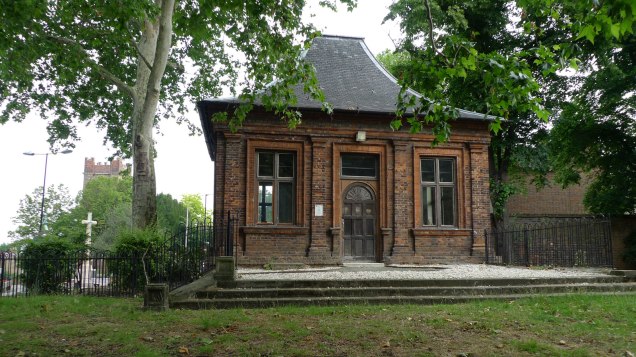
With its uniquely classical proportions, this 17th century Grade I protected gem of a building is part of the Charlton House Estate and hence in the care of the Royal Greenwich Heritage Trust, which has recently been carrying out much-needed repair and restoration work. The spectacular curvilinear roof is covered in fine, graded slate tiles, with lead flashing along its 4 curved ridges. After storms in January 2018 and tree damage to the roof, the existing and unsatisfactory asbestos felt flashing was replaced with conservation-standard lead.
However, it wasn’t long before this was torn from all four ridges by thieves in a single operation. It was all replaced in early September this year at a cost running into five figures – a sum vastly greater than the stolen lead. But then, at 2am a few days later, the thieves attacked again. No doubt expecting another easy haul, this time they didn’t reckon with an alarm that had by now been installed and they only got as far as partially lifting a short section of the flashing on a single roof ridge, which the Trust was able to repair by the following evening.
The damage done to the Assembly Rooms
Assembly Rooms
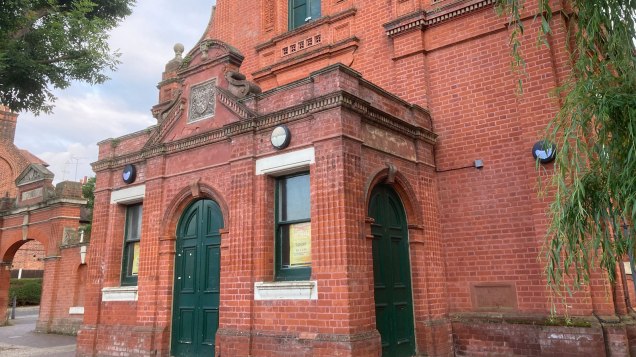
Completed in 1881 in red, handsomely decorative brick and terracotta, the Assembly Rooms were a gift to the local community from the Maryon Wilson family, the former owners and last occupants of Charlton House. Recently Grade II listed, and now the responsibility of the Royal Greenwich Heritage Trust, the Assembly Rooms remain a great community asset which might have been lost if that same community hadn’t saved them from demolition in the 1970s. A highly ambitious restoration project at the time, one of the key tasks was to replace the domed, multi-facetted roof cupola. This highly skilled work was undertaken at a local college by students specialising in the traditional materials and techniques required. The cupola’s dome is covered in lead, and this has now become the Village’s most recent target for attack by lead thieves.
As the picture shows, they managed to prise some of the lead away until they were either caught in the act or because it was more difficult to remove than anticipated. Once again, the value of the lead is minimal when compared to the cost of restoration and repair work, which also involves the base of the cupola structure, the fine tiled roof that the thieves scaled to reach their objective and serious rainwater damage to the parquet flooring inside the Rooms, which, like Charlton House, have been closed since the onset of Covid-19.
Edward Schofield, visitor and operations manager at the trust, says that the attack comes at a time when the charity is working towards ways of safely and reliably reopening the trust’s buildings to the community. “This criminal damage goes beyond the basic theft of materials – apart from the disruption, the overall repair and replacement costs, not least for the extensive scaffolding required, will be considerable.”
St Luke’s
Built in 1630 – a little before Christopher Wren’s Royal Observatory a couple of miles or so away on the same escarpment – historic St Luke’s is one of London’s most compelling and attractive parish churches. Not immediately visible to the eye from the outside, the roof has two ridges forming a valley and it is from here and the gulley at the side that thieves ripped out lead coverings, causing extensive damage in the process, including to the interior fabric of the building. Churchwarden Rick Newman confirms that the amount stolen was minimal but that the cost of repair will run into the tens of thousands of pounds, considerably more than the limits imposed on claims for what is being deemed as “metal theft”. St Luke’s has ambitious plans for the repair and upkeep of the building – important and essential work on the unique castellated tower has already been completed – but with other works required, this theft and vandalism is a major setback.
It has just been discovered that lead has now also been torn from above the main porch and side door to St Richard’s Church Centre at the corner of Swallowfield and Sundorne Roads. Rick Newman describes the crime as “a frustrating addendum to the current epidemic of lead thefts in Charlton”.
Charlton Toy Library are hosting an Easter Party fundraising event this Saturday, 6th April 2019, between 2-4 pm at Charlton Assembly Rooms. The Toy Library is a volunteer-run, independent organisation providing families with a place to come and meet other parents, play with their children or get advice, as well as running outreach services around the borough of Greenwich and some parts of Bexley. Tickets are £6 per child (£4.50 in advance), £2 per adult.
Part of the frontage of Charlton Assembly Rooms (photo: Neil Clasper)
The Assembly Rooms in Charlton Village have been given a Grade II listing by Historic England in recognition of the building’s special architectural and historic interest.
Opened in 1881 and funded by Sir Spencer Maryon-Wilson, whose family lived at Charlton House, the building continues to function as a community facility and is currently run by the Royal Greenwich Heritage Trust.
It was used by Siemens for war production before being handed over to St Luke’s Church in 1946. But by the early 1970s, the building was under threat of demolition. It was saved by the Save Charlton Assembly Rooms Project, which handed the building to Greenwich Council in 1983.
Historic England says:
The Charlton Assembly Rooms, a community hall of 1881, designed by J Rowland in the Jacobean Revival style, is listed at Grade II for the following principal reasons:
Architectural interest:
* a good example of a late-C19 Jacobean Revival style community hall, designed in an exuberant, thoughtful and richly decorated form;
* good quality materials are used to strong architectural effect, including red brick, terracotta and stone detailing;
* the exterior of the hall is little altered, and the interior retains its original plan and stage.
Historical interest:
* the assembly rooms illustrate the continued influence of Charlton House and the Church of St Luke with Holy Trinity on the community of Charlton during the late-C19 and C20;
* as an example of Victorian philanthropy, and the impact of a wealthy benefactor on community hall design.
Group value:
* with the Grade I Charlton House, through their shared Jacobean design characteristics and mutual benefactor;
* with the Grade II* Church of St Luke with Holy Trinity, with which it shares some classically inspired design characteristics, and through C20 use and ownership.
Royal Greenwich Heritage Trust – the body responsible for Charlton House and Charlton Assembly Room amongst other heritage assets across the borough – have launched a new Friends of Royal Greenwich Heritage Trust scheme. They say:
We want to start a conversation about our heritage and we want you to be a part of it. Through events, exhibitions and activities, our aim is to not only share our beautiful buildings and museum collections but play a more dynamic role in the lives of our local community.
As a Friend of Royal Greenwich Heritage Trust you can enjoy:
• exclusive Friends events
• 10% discount in Charlton Tea Rooms
• 10% discount in our Museum Shop
• subscription to a regular Trust newsletter
• advance information for Trust events and exhibitions
Your donation will support the work of the Trust and ensure we can make the absolute most of the assets we have. We want to share them with you and there’s no better way for you to get involved than to become a Friend.





 The Charlton Champion