Squeeze star Glenn Tilbrook asks fans to help foodbanks at Blackheath Halls show

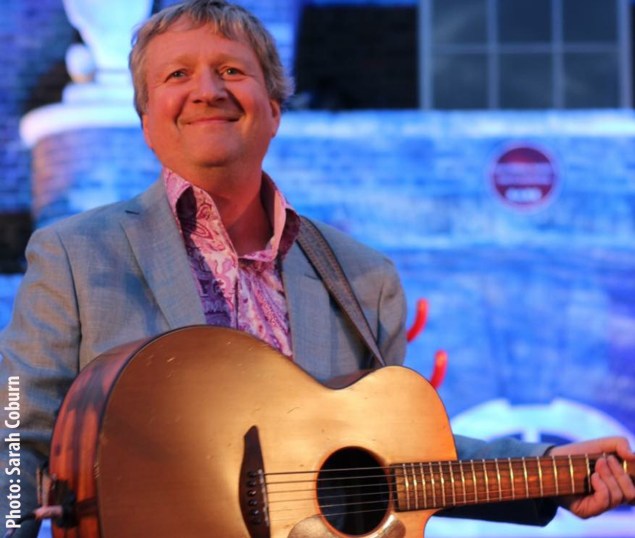
Glenn Tilbrook at the Tall Ships Festival - photo Sarah Coburn
Glenn Tilbrook’s show is part of a nationwide tour

Squeeze frontman Glenn Tilbrook is asking fans to bring food to his solo show at Blackheath Halls next month, which is part of a tour aimed at helping the Trussell Trust charity.

The Charlton-based singer is promoting awareness of the charity, which operates 420 foodbanks across the country, including the Greenwich and Lewisham foodbanks which serve Blackheath.

There will be food drop points and collection boxes at the show on Friday 14 December, while all Tilbrook’s profits from merchandise, which includes a four-track EP, will be donated to the trust.

Tilbrook says: “It is shameful that in the 21st century there are people that can’t afford to put food on the table. Anyone, from any walk of life, can fall upon dire times, and I hope that by doing this tour it will remind people that there is a very real need.

“Most of us can do something to help – be it giving some food or a little money – and I hope people coming to the shows are inspired to donate.”

Three years ago, Tilbrook changed the lyrics to the Squeeze song Cradle to the Grave during a live performance on BBC1’s Andrew Marr Show, on which David Cameron was a guest. “There are some here who are hellbent, on the destruction of the welfare state,” he sang.

Earlier this year, Tilbrook spoke out against developer Rockwell’s plans to build 770 homes close to his studio on the Charlton riverside, saying he feared noise from construction would make the site unusable. The scheme was rejected by Greenwich Council, but has now been called in by London mayor Sadiq Khan.

Tickets for the show are £25 (£23 concessions) and can be bought direct from Blackheath Halls, including in person at its box office. For more information on Greenwich Foodbank and what it needs right now, visit greenwich.foodbank.org.uk.


PLEASE SUPPORT THE CHARLTON CHAMPION

We tell the SE7 stories you won’t read elsewhere. We can’t do it without your help.
– Please tell us about your news and events
– Become a monthly supporter at patreon.com/charltonchampion
– Donate to our running costs at paypal.me/charltonchampion
– Buy Darryl a coffee at ko-fi.com

Listening to the community: Why Charlton’s C of E churches have launched an action plan

St. Luke's Church, Charlton
There has been a church dedicated to St Luke in Charlton since the 11th century

Charlton’s two C of E churches, St Luke’s and St Thomas’, are pledging to do more in the community over the next few years. REVD LIZ NEWMAN, the rector of the Benefice of Charlton, outlines its new action plan, which includes setting up a youth cafe and schemes to combat loneliness and social injustice.

What is mission? In the Church, one short answer to that question is that it’s “finding out what God is doing and then joining in!” But before we can join in, we need to listen to what’s happening.

At St Luke’s and St Thomas’ churches, we’ve been doing a lot of listening over the past year. Listening to our community, to ourselves and to God. As a result we’ve come to some conclusions about what we believe God is calling us to be and do. And we’ve decided on our priorities for the next three to five years.

So what is top of our list? Where are we going to put energy, time and love?

  • Engaging and nurturing children and young people
  • Sharing our faith confidently
  • Reaching isolated groups
  • Better community engagement

The recent United Nations report on poverty in this country highlighted shocking statistics about the impact on our poorest communities of living with little. Knife crime and gang culture is taking and ruining far too many young lives in our city. We live in challenging times of injustice, and that is a concern to people of all faiths and none.

Jesus was on the side of the poor and dispossessed, and following his example means we need to be as well. We are already part of Greenwich Winter Night Shelter, which houses 15 homeless people through the coldest months of the winter. And we have plans to start an open access Youth Café, to strengthen and extend our existing Schools Project, to run fun activities for children during school holidays, to develop a mental wellbeing project and a social justice project and to grow a project that will combat loneliness.

Charlton is a place that is set to grow hugely in the coming years. We need to be able to live together well, so that everyone can belong and flourish. St Thomas’, St Luke’s and St Richards Church Centre want to work with our local communities for the good of all.

We have plans to make connections with people and places in our local area that we haven’t had relationships with before, to develop our churches as community hubs and to continue to work with other local people and the council to ensure that Charlton Riverside becomes a true community where there is plenty of affordable and social housing.

Our faith motivates who we are and what we do. Because we believe in a God of love, in whose sight we are all precious, we want to meet people where they are and help them discover that good news for themselves. So we’re building our own confidence and aiming to grow new congregations at St Luke’s, St Thomas and St Richard’s. They won’t necessarily look like traditional church, because traditional church isn’t everyone’s cup of tea. But that’s fine, because if church listens and adapts, there is room for everyone. And of course, we’ll be aiming to grow traditional church as well!

The teachings of Christ underpin all that we do. We’re striving to be people who are joyful, live in loving relationship with God and our neighbours, are good listeners, forgive, work for justice and celebrate diversity. We have a lot of plans and we know we’re being ambitious! But we are trusting and living in hope. And on the way, we’re expecting to discover what we’re here on this earth for.

We believe Charlton is the place that God has given us to love and we look forward to doing just that over the years to come. If you want to know more, please visit our website at www.charlton.church. And, whoever and whatever you are, you will always be welcome at our churches and to join in the adventure that lies ahead.


PLEASE SUPPORT THE CHARLTON CHAMPION

We tell the SE7 stories you won’t read elsewhere. We can’t do it without your help.
– Please tell us about your news and events
– Become a monthly supporter at patreon.com/charltonchampion
– Donate to our running costs at paypal.me/charltonchampion

Greenwich Council deputy leader apologises to academy chain over Sherington letter

David Gardner
David Gardner on a recent visit to Charlton Manor School (photo: twitter.com/david_llew)

Charlton Champion exclusive: Greenwich Council deputy leader David Gardner has apologised to the academy chain hoping to run a Charlton primary school after criticising it in a letter issued to parents.

Sherington Primary School is in talks with Leigh Academies Trust about becoming joining its academy chain, which includes 18 schools across south-east London and Kent.

Earlier this month, parents at the highly-regarded school were handed letters from Gardner, which criticised the chain’s academic record. The letter was also published on The Charlton Champion.

But now Gardner, who is cabinet member for education, has backtracked on his criticism, with Greenwich Council saying “the words … could have been better chosen”.

In the letter, Gardner told parents that Greenwich had a strong record in running primary schools and there was “no pot of gold at the end of the academy rainbow”. He also criticised the high salaries paid to the chief executives and directors of academy chains, taken from a 5-10% “top slicing” of school budgets going towards their central funds, adding that Greenwich schools only paid 1% into central funds.

He also said: “Leigh Academy Trust does not have a good record. Its two secondary schools in Greenwich are among the worst performers and their primary record outside the borough does not match Greenwich’s performance.”

Leigh runs two Greenwich schools for which results are available – a third, Leigh Academy Blackheath, opened in Woolwich in September, and plans to eventually occupy the former Blackheath Bluecoat School site close to Sherington.

The first Leigh school, Stationers’ Crown Woods Academy in Eltham, has a Progress 8 – a measure of children’s progress between the ages of 11 and 16 – rating of “well below average”. But it has only run its second school, Halley Academy – the former Kidbrooke comprehensive school – since March 2018. Before that, it was known as Corelli College, and had also scored “well below average”.

Apologised to Leigh

Sherington Primary School
Sherington is a highly-regarded primary school

A Greenwich Council spokesperson told The Charlton Champion: “Cllr Gardner has played an active role supporting Sherington parents and staff wishing to remain as an outstanding community school. In this respect he has made some comments about comparative performance with an academy trust in Full Council and at a public meeting. He was asked to supply the thrust of his speech to parents which was then circulated.

“On reflection, Cllr Gardner realised the words used in the letter of what he said at the public meeting should have been better chosen and apologised himself to the Leigh MAT [multi -academy trust] accordingly. The main issue being that Leigh acquired The Halley Academy on 1 March 2018 (the former Corelli Academy). GCSE results for Corelli College in 2018 belong to the former Trust which operated the school and not Leigh.

“Further, the council recognise that Leigh has made a real effort to turn around Halley this year to improve the outcomes and life chances for our young people at that school. It also recognises the successful launch of Leigh Academy Blackheath which is already proving to be a popular local choice for parents.”

The council did not comment on whether Leigh Academies Trust had complained about Gardner’s statement. The trust itself has not responded to a request for comment from The Charlton Champion.

Strains inside Greenwich Council

While Greenwich Council’s Labour administration has sought to present a united front over academisation, Gardner’s apology highlights the strains between different factions within the Labour group over the issue.

Councillors and members on the left of the party are fiercely opposed to schools being taken out of local authority control and handed to academy chains that are directly funded by central government, and want the council to do more to oppose the likes of Sherington and John Roan schools becoming academies.

But the council’s leadership, which is on the right of the party, has attempted to build bridges with the chains while criticising the government’s policy of forcing “failing” schools to become academies.

Left-leaning members accuse the council of privately backing academies. A letter written by Gardner’s predecessor Miranda Williams to school governors in 2016 stated the council “has a pragmatic view on academies” and that schools “have benefited from the capacity created by school partnerships”. But last month, the council voed to “resist further academisation”.

Gardner, who fits in neither camp, has attempted to bridge the two positions in what is widely regarded as an extremely difficult role.

Campaigners against the potential academisation of Sherington primary school delivered a petition to the school governors on Monday

Parents at Sherington are fearing strikes as the row over possible academisation escalates. It was revealed in September that the school was talking to the Leigh and Compass academy trusts about joining them, and Rochester-based Leigh is now seen as the likely choice.

Teachers have already written to its governing body outlining their concerns at plans for the school to explore joining Leigh.

A mile away at John Roan secondary school in Blackheath, which faces becoming part of the University Schools Trust chain after a poor Ofsted rating, pupils have already lost two days of education because of industrial action, although plans for three more were called off last week.


PLEASE SUPPORT THE CHARLTON CHAMPION

We tell the SE7 stories you won’t read elsewhere. We can’t do it without your help.
– Please tell us about your news and events
– Become a monthly supporter at patreon.com/charltonchampion
– Donate to our running costs at paypal.me/charltonchampion
– Buy Darryl a coffee at ko-fi.com

Greetings from Charlton: Celebrate our neighbourhood with our new postcards


Charlton Champion Postcard

We were delighted to sell out our first print run of Charlton Champion postcards this week – thanks to everyone who called by the Corner At 96 to buy one, and to everyone who’s ordered one since. Proceeds from the sales all go to help keep this community website running. They’re now back in stock and available to order online here.

If you’d like to place a larger order, are interested in stocking them in your shop, cafe or business, or have an idea as to what we should produce next, then please get in touch – we’d love to hear from you!

MORE WAYS TO SUPPORT THE CHARLTON CHAMPION

The Charlton Champion provides news and information about issues and events in London SE7.
– Help us by telling us your stories
– Become a monthly patron at patreon.com/charltonchampion
– Donate directly to the site at paypal.me/charltonchampion

Greenwich firefighters remember Invicta school bombing

Invicta memorial
Firefighters and pupils at the Invicta memorial this morning (photo: Steve Hunnisett)

Last year, The Charlton Champion visited Invicta Primary School in Siebert Road to see a memorial plaque unveiled to commemorate the 15 people killed when it was bombed in 1940. This morning, firefighters returned to remember the dead. Local war historian STEVE HUNNISETT was there.

A simple and informal ceremony this morning saw the present day firefighters from Greenwich Fire Station honouring their Second World War counterparts, twelve of whom were killed at Invicta Primary School on the night of 14 November 1940 when the school was in use as Station 54X of the Auxiliary Fire Service.

Ironically, it was a quiet night in London, with the main focus of the Luftwaffe’s attacks being the city of Coventry. It was because of this lack of activity in the capital that the firemen based at Invicta Road were still at their station when the parachute mine that was to destroy the school drifted down. The explosion buried the men under tons of rubble and apart from the twelve firemen, three civilians, including the school caretaker, were killed.

This morning’s wreath laying was carried out by Richard Melrose, station manager at Greenwich Fire Station and the Watch Manager of White Watch and was the third such ceremony since the plaque was installed by the charity Firemen Remembered in March 2017.


SUPPORT THE CHARLTON CHAMPION

The Charlton Champion provides news and information about issues and events in London SE7.
– Help us by telling us your stories
– Become a monthly patron at patreon.com/charltonchampion
– Donate directly to the site at paypal.me/charltonchampion

The train arriving seven months late: Thameslink belatedly boosts weekday service at Charlton

Thameslink class 700 trains
A slightly less unusual sight from December – but don’t go banking on weekend trains

Charlton is due to get its full weekday train service back in December – seven months after the botched introduction of Thameslink services resulted in many trains to Kent being deleted from the timetable.

Changes to rail services in May saw the long-established Charing Cross to Gillingham trains operated by Southeastern replaced by two Thameslink trains per hour from Luton, St Pancras, Farringdon, Blackfriars and London Bridge to Rainham, one stop further down the line.

This followed the huge project to revamp London Bridge station to allow for extra services between north and south London.

While the service provided new links to north London and beyond, poor planning meant that many of the new trains did actually materialise. In July the service was cut back to to hourly to allow Thameslink to train drivers on the new routes – slashing the links to Dartford and beyond and leaving gaps in the timetable to central London.

Now the company, which operates a contract on behalf of Transport Secretary Chris Grayling, says the full weekday service will now be introduced in its winter timetable from 9 December – meaning Charlton should be up to its full complement of eight trains each hour once again.

Thameslink trains will run half-hourly to Rainham between 0604 and 2234, with two final trains at 2304 and 2334 terminating at Gillingham. Trains call at Westcombe Park two minutes earlier.

Heading to central London and beyond, Thameslink trains to London Bridge, Blackfriars, Farringdon, St Pancras and West Hampstead Thameslink will run half-hourly from 0540 to 2310, stopping at Westcombe Park two minutes later.

Most will run onto Luton – handy for the airport – although many will be skipping the useful north London stop at Kentish Town.

Weekend rail woe

However, the weekend trains remain at a miserly hourly frequency for the time being, mostly only running as far north as Kentish Town.

Thameslink says: “The weekend timetable will continue in its current format for now, with more services planned by May 2019.

“Our current simplified weekend timetable means engineering work alterations can be overlaid in a shorter than usual timeframe. There is every intention of returning to normal industry agreed timescales and both planning teams in Thameslink Railway and Network Rail continue to work to achieve this as quickly as possible.”

Full timetables – for Thameslink trains only – can be found at thameslinkrailway.com.


PLEASE SUPPORT THE CHARLTON CHAMPION

We tell the SE7 stories you won’t read elsewhere. We can’t do it without your help.
– Please tell us about your news and events
– Become a monthly supporter at patreon.com/charltonchampion
– Donate to our running costs at paypal.me/charltonchampion
– Buy Darryl a coffee at ko-fi.com

Remembering those who served in World War I: The stories behind the names on Charlton’s war memorials

Charlton War Memorial

This Sunday, 11 November, marks 100 years since the end of World War I. Our thanks to local historian BARBARA HOLLAND for this piece looking back at the lives of the local men who lost their lives in the “war to end all wars”.

Many of the names of those who died in World War I are recorded on public war memorials in towns and villages across the country. Charlton is home to three of these: the War Memorial in The Village and two in Charlton Cemetery, looked after by the Commonwealth War Graves Commission.

The men whose names are inscribed on the memorials lost their lives in many different countries and different services.   Not all died during fighting: accidents and illness took their toll as well. Not all were young men: older men wanted to enlist as well to serve their country and use their experience and skills. Some lied about their age in order to join up. Not all the Charlton war dead were recorded on the memorial: other names have been found on the Commonwealth War Graves Commission database.

Behind the death of each of these men is a story of family loss. I’ve picked out just a few names to tell you a little bit more about them, their families and their service.

Charlton Village War Memorial

Money for the cross came from hundreds of small donations given in memory of the hundreds of local men who had died in the War. It has a bronze sword of sacrifice on the front face, with a bronze plaque and the names of the men inscribed on seven-stone tablets on the bases.

A new bronze tablet was placed over the original one in May 1955, to commemorate those who had died in both world wars. A new Book of Remembrance, listing the names of 314 men and one woman, was later dedicated by the Bishop of Woolwich at a service in St.Luke’s Church and is now kept on display in the church in a glass case. (Thanks here to Mike Leach who did the original research on the names in the Book of Remembrance).

Their stories

For Britain, the First World War started on 4 August 1914 and the earliest deaths on the Village memorial recorded were on 22 September. This was the date when Navy Stoker 1st Class, Thomas Arthur Jobbins, aged 28, lost his life when his ship, HMS Aboukir was sunk by a German U-boat off the Dutch coast. The same U-boat also sank HMS Cressy and HMS Hogue with a total loss of life of 1,450 men on the same day.

Thomas was the son of Albert and Margaret Jobbins of 10 Ransom Road, Charlton, and left a widow Annie Agnes Jobbins. Albert and Margaret sadly were to lose a second son, on 13 April 1917. He was John Frederick Jobbins, a private in the 6th Battalion of the Royal West Kent Regiment.

Wilfred Arthur Hewlett also lost his life, aged 32, on the Aboukir leaving a sister living at 9 Sandtoft Road, and Alfred Frederick Holford died, aged 35, on the Cressy leaving a widow living at 62 Inverine Road.

Thomas Henry Woodmore, Guardsman in the 1stBattalion Welsh Guards, was one of nearly 11,000 casualties on 11 November 1918, the final day of the war. Thomas was born in Charlton in 1895 to Thomas Jacob and Edith Woodmore, followed in 1899 by his brother Harold Francis. They lived at 49 Sundorne Road. Harold also enlisted, joining the 3rd Royal West Kent Regiment in 1917. He was posted on 20 November 1918, only a few days after his brother’s death. He survived the war after being discharged in 1919 with anaemia and lived until 1968.

The Charlton Memorial has the names of a number of brothers who lost their lives.

The Tumber brothers – the Tumber family, living at 686 Woolwich Road, lost three sons in the space of just five months. The first to die was John Robert Tumber, aged 22, on 9 July 1917. He was serving on the ship HMS Vanguard in Scapa Flow when it was rocked by a series of explosions. The ship sunk instantly, killing 843 out of the 845 men aboard.

Edmund David Tumber enlisted for six years with the 20th London Regiment in March 1914 at the age of 17. He was posted to France with the Royal West Kent Regiment in 1915 and wounded twice before being killed in action on 26 October 1917 aged 20.

George Edmund Tumber enlisted with 1st/19th London Regiment and died on 2 December 1917 at the age of 25, leaving a widow, Charlotte.

The Friday brothers – Herbert John Friday and William George Friday were the sons of William and Mary Friday who lived at 9 Hopedale Road. They enlisted together in the 20th London Regiment and were both killed in action on the same day – 20 October 1915. Herbert was 23 and William 25. Less than 2 months after their deaths a third brother, Ernest Percival, enlisted. He survived the war.

The George brothers – John Edward George (not on the memorial) and Thomas Hamlet George enlisted in the 6th Battalion The Buffs (East Kent) on the same day – 3 September 1914 – and died on the same day – 13 October 1915. John was 39 and Thomas 35. A third brother, Charles Arthur, also enlisted but survived the war. Their parents, Josiah and Angelina lived at 17 North Street. Thomas left a widow, Louisa, who lived at 38 Derrick Gardens.

Another 10 pairs of brothers also lost their lives – Atwell, Brooks, Daly, Hankins, Hussey, Kerswell, Lind, Lomas, Shorter, and Sturgis.

Thomas Edwin Brooker was one of 8 men named on the Village War Memorial who died when they were 50 or more years old. He was born in 1865 and had served in the Army prior to the War from 1887 to 1903, and re-enlisted on 13 August 1914. Although by then he was 48 years old, he declared his age as 40 years and 242 days. He served in France until 1 April 1915 when he developed rheumatic fever and returned to England to be treated in hospital. He was declared fit again on 2 July 1915, but died at Aldershot only a few weeks later on 11 August of a cerebral haemorrhage. He left a widow, Elizabeth, living at 58 Eversley Road.

Many of the men named on the Memorial were only teenagers when they died: two were only boys of 17:

Reginald Edgar S Pinson was the son of William and Mary Pinson who lived at 7 Charlton Church Lane. He enlisted with 6th Battalion Royal West Kent Regiment and was shipped with the British Expeditionary Force to France on 1 June 1915. It was just over two months later when he was killed in action on 14 August 1915.

Harold William Allan was the son of William and Charlotte Allan living at 112 Charlton Lane. He was born in 1897, but had enlisted in the Royal West Kent Regiment on 16 July 1912 at the age of just 15, having declared his age to be 18 years and 3 months.   His battalion, the 1st, shipped to France on 15 August 1914. He was killed in action on 28 October 1914.

The last name I’ve picked out is A. Zeitz on the Royal Naval tablet on the Memorial. It is out of order so was added on at some point after the other names:

His full name is Arthur Alfred Alexander Zeitz, born in Berlin in January 1876 to Theodore and Helena Zeitz. He married his wife Christina Hanny in 1905 and they had one daughter Helena Margaret (Nellie) in 1908. By 1914, the family were living at 36 Atlas Gardens in Anchor and Hope Lane.

Arthur joined the Navy in 1897, where his place of birth is recorded as Marylebone and his occupation a carpenter. He served until 1906 when he bought himself out and joined the Royal Fleet Reserve. He then re-enrolled in July 1911 for 5 years, but served until demobbed on 14 February 1919. He died in August of that year and was buried on 20 August in Charlton Cemetery. His burial record shows his occupation as ‘crane erector’.

As to why his name is out of order, I don’t have an answer. His death may have been too late to be carved in alphabetical order, although the Memorial wasn’t unveiled until October 1920. Was there a question of whether his death wasn’t as a result of his war service?

Maybe, if he was German-born, anti-German feeling prevented his name being added?

Charlton Cemetery memorials

Charlton Cemetery has 59 graves containing burials from World War I which are maintained by the Commonwealth War Graves Commission.

A War Cross commemorates these men, and there is also a special memorial located near the entrance which bears the name of 2 soldiers and 2 sailors whose graves are not marked by headstones.

The four men whose names are inscribed here died in this country, in very different circumstances.

Arthur Victor Lomas died on 28 March 1916 aged only 18. He was an Ordinary Seaman serving on the ship HMS Conquest. He was on the ship’s boat returning from shore leave near Harwich when it was lost in a snow storm. The boat foundered and all 39 men on board drowned. He lived at 16 Lydenburg Street with his parents, Joseph and Louisa Lomas, the second of their sons to die in the war. Arthur’s brother, Albert Henry Lomas had died a year earlier on 13 March 1915 while serving with the 2nd Devonshire Regiment in France. (Both names are on the Village Memorial).

Arthur William Powell served as a Rifleman with the 16th Battalion London (Queen’s Westminster Rifles) Regiment. He died on 10 December 1914 aged 40 after being run over by a lorry on Woolwich Road. He was married to Fanny Powell living at 66 Westcombe Hill, Blackheath, and had 2 daughters, Audrey born in 1902 and Edith born in 1908.

Maurice Smith, a Canadian by birth, landed in France on 19 May 1915 and died on 24 February 1916 age 51. He died in St. Bartholomew’s Hospital of wounds received while fighting in Hooge with the 7th Battalion Rifle Brigade. He left a widow, Fanny, and lived at 23 Wyndcliff Road. (Also on the Village Memorial).

Robert Ernest Stead died on 13 March 1916 aged 32. He was a deckhand on HMS Victory and died of illness while at Royal Navy Barracks at Portsmouth. His sister, Mrs E Cockshott, lived at 14 Tuskar Street, Greenwich.


SUPPORT THE CHARLTON CHAMPION

The Charlton Champion provides news and information about issues and events in London SE7.
– Help us by telling us your stories
– Become a monthly patron at patreon.com/charltonchampion
– Donate directly to the site at paypal.me/charltonchampion