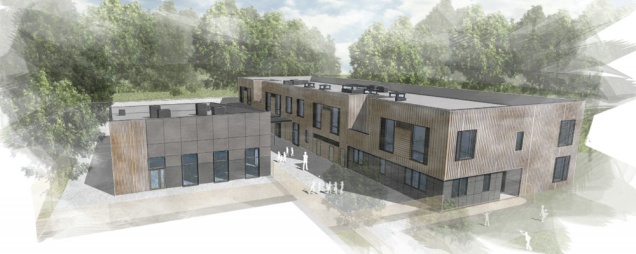
The scheme, passed unanimously by the nine councillors on the planning board, will see the Roman Catholic school move down the hill from its Charlton Road site to open space last used by the former St Austin’s comprehensive school and its successor, Christ The King sixth form college.
The school building was demolished when Christ the King moved to Lewisham in the early 1990s and was replaced with housing, but the playing field remained in church ownership and was left abandoned. The land and Highcombe itself have long been a blackspot for flytipping.
It will enable the school to double its intake to 420 pupils, at a time when primary school places are in high demand. Vehicles will enter via Highcombe – 18 staff parking spaces are being provided – with deliveries using Lime Kiln Close.
The new school could be open as early as September 2016 – a factor in councillors wanting to approve the application now instead of wanting to defer it to iron out issues with those who live near the site.
With a shortage of school places in Greenwich borough, planning chair Mark James said that as community open space can be used for education, “that is the overriding consideration” in the case. Councillors did call for a community garden to be included on the site.
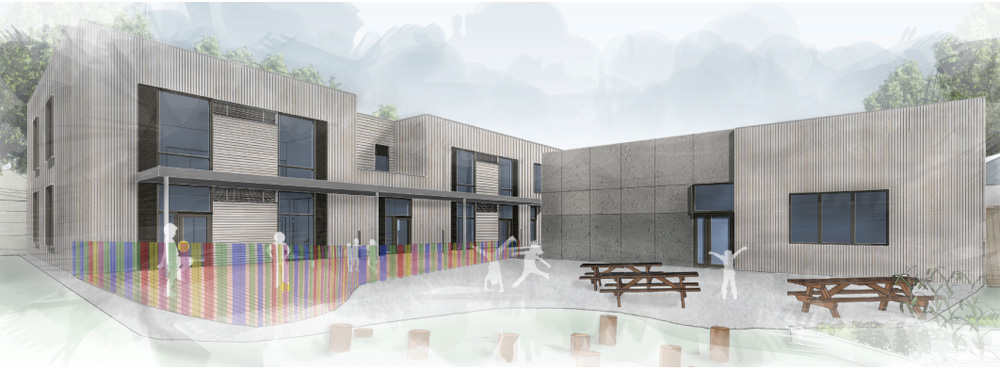
Neighbours are concerned about increased car traffic on adjacent side roads as well as the loss of open space – the 1992 planning agreement for Lime Kiln Drive stated the site was to remain for recreation – with some calling for the school to be rebuilt on its existing site or at the Blackheath Bluecoat site on Old Dover Road. There are also concerns about a “multi-use games area” alongside the school.
Charlton ward councillor Gary Parker led objectors, saying the development would add to the “significant” amount of traffic caused by parents and staff driving to schools in the immediate area. He asked for the application to be deferred.
Martina Keating of the Charlton Central Residents’ Association – whose area doesn’t cover Highcombe – complained the group had not been invited to consultation events. She was also concerned about effects from building the school, adding that piling work at the Sainsbury’s site could be heard from Charlton Village.
Keating said the application had a “rosy view” of car parking – adding that most current Our Lady of Grace staff and pupils came by car. She was also concerned about claims that Victoria Way was a “quiet road” that was suitable for pupils to use to cycle to school, particularly with an increase in traffic caused by new superstore development.
Caroline Love of Charlton Community Gardens pointed out that her group was formed through unsuccessful negotiations with Southwark Diocese to use the land, lamenting the loss of potential for a “community-managed local park”
Local resident Richard Lovegrove, who presented a 100-strong petition from immediate neighbours, said the area would struggle to cope with traffic and branded the scheme a “dangerous, flawed proposal”. Another resident referred to a 1914 covenant on the land which he said meant the owners “must not cause noise or nuisance to neighbours”.
But a father of a child at Our Lady of Grace school, Mark Adams, said there was a “silent majority” in favour of the scheme, claiming most parents there did not drive.
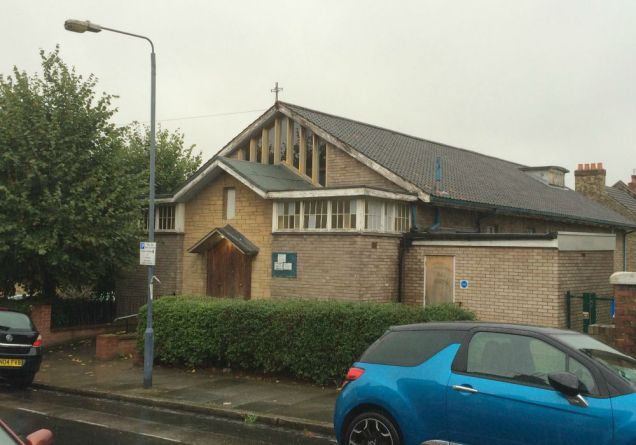
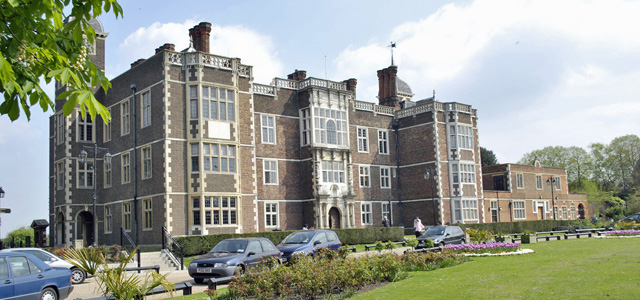
Representatives of the scheme said it was impossible to rebuild the school on its current site due to the listed buildings next to it, and in any case they didn’t own the land there. They added that a scheme to hire out the playing field at “reasonable” rates had failed.
The current site of Our Lady of Grace is not included in the planning application. A previous application covering both sites failed in 2014 because of worries about housing planned for the land where the school sits now.



 The Charlton Champion