IKEA’s plans for Bugsby’s Way: public exhibition, 9th November

IKEA's ad in the Greenwich Time
IKEA have taken out an advert in Greenwich Time (29th Oct) to publicise their plans.

Everyone’s favourite place for a weekend argument could be coming to our doorstep soon, as IKEA have designs on the plot left behind by Sainsbury’s once they move up the road to Charlton.

Local reaction at the Greenwich Phantom and Greenwich.co.uk is already quite polarised: while many of us are fans of Swedish meatballs and flat-pack Billy shelves, there are real concerns about whether our area can cope with the additional traffic that a massive furniture store might bring. IKEA’s page which deals with the proposal suggests that the new store would be “[their] most accessible store in the UK for customers visiting by public transport” but it’s worth considering whether your normal IKEA purchases could fit on the 486 to get them home.

IKEA have not yet submitted planning permission for the site, and say they’d like to hear the views of local residents before they do. Your chance to put your views forward – whether they be pro-furniture or anti-traffic – is Saturday 9 November 2013 12.00pm – 7.00pm at Sherard Hall, The Forum @ Greenwich, Trafalgar Road, SE10 9EQ. IKEA say that “representatives from the project team will be at the exhibition to explain the proposal and answer any questions.”

While the proposed store might lie just outside our patch, the traffic it attracts might not. If you’re concerned, this is a good chance to put your point of view across. What do you think? Let us know in the comments.

Signs of worry over Charlton House’s future

Charlton House sign

English Heritage have complained to Greenwich Council about new signs promoting Charlton House, which have been placed outside the Jacobean mansion.

The two signs, in the council’s house style, use stock photos to advertise the Grade I-listed venue’s availability for weddings, meetings, and other events.

Charlton Society chair David Gardner, which is also chair of the Greenwich & Woolwich Labour Party, said he was unaware that the signs would be installed but that the heritage body had complained to the council.

The revelation came at the Charlton Society’s annual general meeting on Saturday, where the council’s management of the house was repeatedly criticised.

Plans for Charlton House’s management to be taken over by a specific trust have been scrapped by council leader Chris Roberts, with it now to be run by a trust which looks after all of Greenwich borough’s community venues.

Charlton Society president Lord Gough – a descendant of the Maryon Wilson family which owned the house – voiced his regret at the collapse of the plans, while Gardner complained the council was “not talking to us” about the future of Charlton House.

The new signs point potential customers to the council’s website, despite the council having recently launched a new website for Charlton House. A previous website for Charlton House, which cost £3,500 to develop, lasted only two years.

The meeting also saw Charlton councillor Allan MacCarthy appeal for people to get in touch with council chief executive Mary Ney (mary.ney [at] royalgreenwich.gov.uk) if they wished to complain about the Run to the Beat event, while assembly member Len Duvall said Greenwich Council and organisers should either improve arrangements and information or axe the event.

The meeting was also addressed by Greenwich & Woolwich MP Nick Raynsford, who spoke about the opportunities – and dangers – presented by riverside developments. You can hear some of his speech below.

  • Charlton Champion contributors Darryl Chamberlain (that’s me) and Nikki Coates, along with Andrew Donkin from the Friends of Maryon and Maryon Wilson Parks, were elected to the Charlton Society committee on Saturday. We’ll be looking at ways to breathe some new life into the organisation and get more people involved – if you’ve got any ideas, get in touch.
  • Talk to rail bosses about Greenwich line changes

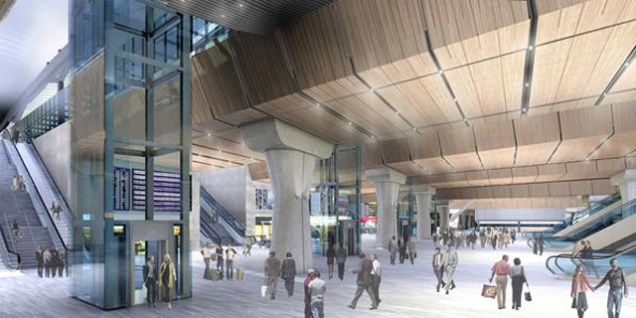
    London Bridge station, in the future
    Network Rail’s launching a publicity campaign to warn people of the big changes taking place to train services along the Greenwich line, which will involve most of Charlton’s trains being permanently routed away from Charing Cross and into Cannon Street instead.

    Staff will be at Charlton station during Thursday and Friday’s rush hours to talk about the changes, and will also be at other local stations in coming days.

    The changes are prompted by the rebuilding of London Bridge for the Thameslink programme, which will cut the connection to the Charing Cross tracks. It’ll also mean many trains won’t be able to call at London Bridge for three years from 2015.

    Here’s the press release…

    To raise passengers’ awareness a number of information events will take place at affected stations from next week including Maze Hill, Westcombe Park, Deptford, Charlton, Greenwich, St Johns and New Cross.

    Leaflets and information will be available to passengers outlining the changes which include:

    * For all passengers from January 2015, services to Waterloo East and Charing Cross will not stop at London Bridge for nearly 20 months.
    * For passengers using the Greenwich line from January 2015 onwards, Charing Cross services will be diverted to Cannon Street.
    * For passengers using New Cross and St Johns from January 2015 onwards, Waterloo East and Charing Cross services will not stop at New Cross and St Johns stations.
    * For all passengers from August 2016, no Cannon Street services will stop at London Bridge for nearly 16 months.

    Fiona Taylor, Network Rail’s route managing director for Kent, said: “Thameslink will transform the railway in London and the south east of England, providing greater capacity and better journey options for millions of passengers. To rebuild London Bridge station and carry out the complicated track work on the approach to the station, it is unavoidable that there will be a certain level of disruption.

    “We are working closely with all train companies which operate through London Bridge to keep this disruption to a minimum and are committed to providing passengers with as much information as early as possible. The end result of this investment will be a vastly improved service which will better meet the demands of passengers.”

    Southeastern managing director, Charles Horton, said: “Although Greenwich line passengers will eventually see a much improved station at London Bridge, we understand that these works will be disruptive and our customers will be inconvenienced.

    “We’re sorry about this and are working in partnership with Network Rail, Transport for London and other train operators to do what we can to minimise the inconvenience, advise on alternative travel options and keep passengers informed.”

    Full details of the public information events are:

    Maze Hill: 21-22 October, 7am – 10am and 4pm – 7pm
    Westcombe Park: 21 – 22 October, 7am – 10am and 4pm – 7pm
    Deptford: 24 – 25 October, 7am – 10am and 4pm – 7pm
    Charlton: 24 – 25 October, 7am – 10am and 4pm – 7pm
    Greenwich: 29 – 31 October, 7am – 10am and 4pm – 7pm
    St. Johns: 28 October, 7am – 10am
    New Cross: 29 – 31 October, 7am – 10am and 4pm – 7pm

    As part of the Thameslink Programme the layout of the tracks around London Bridge station are being changed. When the programme is complete, each service will have dedicated routes allowing more trains to run. The new layout means trains on the Greenwich line are unable to continue on to Waterloo East and Charing Cross. From January 2018, you’ll be able to travel to Waterloo East and Charing Cross by changing at London Bridge.

    Passengers can find out more about the Thameslink Programme by visiting www.thameslinkprogramme.co.uk where you can also sign up for email alerts or by following us on Twitter @TLProgramme.

    Pollution in SE7: Silvertown Tunnel public meeting tomorrow

    Silvertown Tunnel public meeting, 16 October
    You may have heard about London mayor Boris Johnson’s proposals to build a new Silvertown Tunnel – effectively a third Blackwall Tunnel – between Greenwich Peninsula and the Royal Docks. It’s likely this would attract more traffic to the area, making Charlton’s roads even more polluted.

    During the summer, a couple of the Charlton Champion’s contributors took part in an air pollution monitoring study. The results are worrying – with EU air quality limits being broken on both Woolwich Road and Charlton Road, and with levels at Fossdene School only just under the limit.

    There’s a public meeting tomorrow at 7pm at the Forum at Greenwich, Trafalgar Road, London SE10 9EQ. Speakers are transport consultant John Elliott, the Campaign for Better Transport’s Sian Berry, King’s College London air quality expert Dr Ian Mudway and Clean Air London’s Simon Birkett. If you can, please come along and find out why the tunnel’s a bad idea for drivers, and a bad idea for Charlton reisidents.

    There’s more about the study on the No to Silvertown Tunnel website, and extra details and opinion over at 853.

    Charlton history: The story of High Combe

    High Combe

    Ever wondered why there’s a blue plaque on the stately-looking house next to Our Lady of Grace School? Charlton Champion historian Peter Bone tells the tale of High Combe, which stands on Charlton Road…

    In the 19th century, Charlton Road, between the Village and the Standard was lined with grand houses, mansions and villas. Most were demolished in the late 19th century to make way for new streets, homes and a growing population. The names of some of these lost houses – Eastcombe House, Little Combe, Bramhope Lodge, Springfield and Mascalls – were used to name the new streets that replaced them.

    One of these grand houses, originally called High Combe, has survived. It’s now known as 145 Charlton Road, between church and school of Our Lady of Grace, and is now the church’s presbytery,

    High Combe was built around 1825 in the fashionable Regency style. It’s a Grade 2 listed building, thanks to the pairs of rounded bay windows at both front and back, the central Doric porch and the original double door with rounded panels and fanlight above. You can read the full details on English Heritage’s website.

    The house now looks a little overshadowed and cramped between the church and school, but a map from 1870 shows a grand sweeping drive in front of the house with entrances approximately where the church and school now stand.

    There are plans to rebuild the school over the next few years, so let’s hope that the new school will improve the setting of this fine historic house.

    The history of High Combe and the people who lived there reflect some of Britain’s economic and military history through the nineteenth century.

    One of High Combe’s first residents was General Sir William Congreve (1772 – 1828). Congreve succeeded his father (also called Sir William) as Comptroller of the Royal Military Laboratories at Woolwich where he was responsible for developing new weapons for the British army and navy.
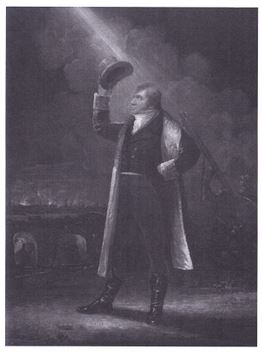
    William CongrieveIt was a period when Britain was a dominant military power and had acquired a large empire. As Congreve (pictured right) himself said “England is at war with one half of the world, and has the other half to defend”.

    He is best known for inventing the “Congreve Rocket”; rocket powered explosive shells. These were used by British: against the French in the Napoleonic wars, in suppressing a rebellion against British rule of India, and against the USA in the Anglo American war of 1812 – 1814. The line in the American national anthem “And the rockets’ red glare, bombs bursting in air” describes an attack onan American fort by the British navy using Congreve’s rockets.

    Congreve was also an MP for Plymouth, banker, entrepreneur, and prolific inventor of mechanical devices. He was a friend of the King George III (mad George) and equerry to the king’s son George, the Prince Regent (think of George in Blackadder III, but much more unpleasant).

    Things started to go badly wrong for Congreve in 1826, soon after he married and moved into High Combe. In a time when capitalism was rampant and unregulated, he was accused of fraud in management of one of the many investment companies he formed. Difficult meetings with shareholders and questions in parliament followed and Congreve’s health deteriorated. He died in 1828 in France. He may have been convalescing from his illness, but many claim he was fleeing from angry shareholders. Congreve’s wife re married in 1835 and subsequently lived in the City.

    It’s not clear who was at High Combe immediately after Congreve, but by 1851 General Sir George Whitmore (1775 – 1862) and his wife Cordelia were living there. Whitmore was born into an aristocratic family and joined the Army Royal Engineers at the age of 14. His postings over the next 30 years, to Gibraltar, Malta, Corfu and the Caribbean, reflect Britian’s military rivalry with France, Spain and America.

    In 1840 Whitmore was appointed Commandant of Royal Military Academy at Woolwich and the lived near the Academy at Woolwich Common. I think it’s likely that Whitmore moved to High Combe when he retired. Cordelia Whitmore died in Charlton in 1857 at the age of 70; George died in 1862 aged 84.

    An English Heritage blue plaque on the front of the High Combe commemorates its next resident, the eminent civil engineer William Henry Barlow (1812 – 1902). William Barlow was born in Woolwich. His father, Peter Barlow, was Professor of mathematics at the Royal Military Academy, and his older brother Peter Barlow junior (1809 – 1885) was also a civil engineer best known for developing tunnelling technology that was important in building London’s early Underground.
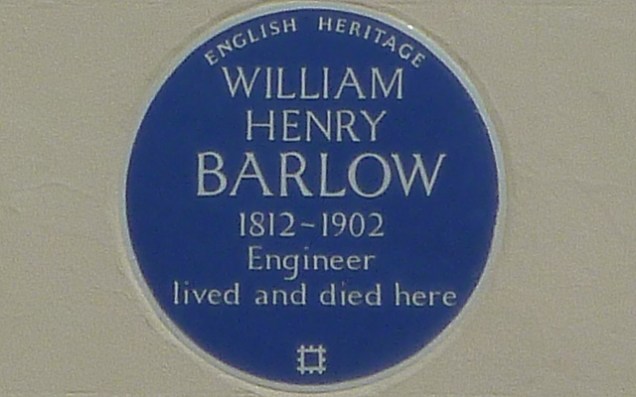
    WIlliam Barlow's blue plaque

    William Barlow was famous for the design and construction of railways, bridges and iron and steel structures during the golden age of railway building. From 1838 he worked on the Manchester and Birmingham Railway, and became Chief Engineer for the Midland Railway in 1844. He advised Joseph Paxton, designer of the Crystal Palace about the iron fame of the Palace. Between 1862 and 1869 he oversaw the building of the Midland railway from Bedford to London and designed the layout and construction of St Pancras Station (but not the ornate hotel in front of the station ). He served on the court of enquiry into the 1859 Tay Bridge Disaster, and designed the replacement bridge.

    William Barlow retired in 1896 but continued to live in some style at High Coombe. The 1901 census lists 7 house servants living there as well as a coachman and a groom living in at stables in the grounds. The histories of the dozens of servants who worked at High Combe would tell a less glorious story about Britain in the nineteenth century.

    William Barlow died at High Combe in November 1902 and his wife Selina Crawford Barlow died there a few months later. High Combe was purchased by a French Catholic Community of Sisters from Bordeaux: the Oblates of Assumption. A small chapel was established in the house, but the population of the area was growing rapidly and congregations grew.

    The building of Our Lady Grace church in the grounds of High Combe began in 1905 and was completed in 1911. The sisters started a school in the High Combe stables. Plans were made to build a new school, but these were delayed by World War I, and a new school building opened in 1927.

    Will Charlton road changes give you the hump?

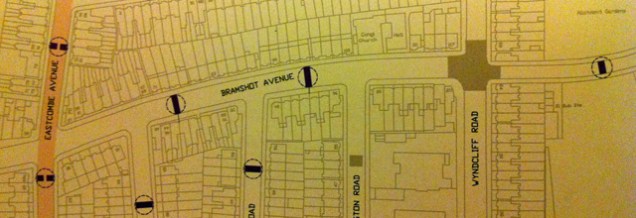
    Greenwich Council 20mph zone map

    Big changes are on their way to a big chunk of Charlton’s back streets – if they affect you, what do you think of them?

    Hundreds of homes were sent consultation packs last week about making the area between the A102, Charlton Road, Charlton Church Lane and Woolwich Road into a 20mph zone. If you got one and it came as a surprise, you weren’t the only one – it’s understood local councillors weren’t aware of the plans, either. (If you haven’t had one, call the council on 020 8921 3804.)

    “The Victoria Way area has been identified as a priority,” says the accompanying letter, citing 21 accidents in three years, one causing a serious injury.

    Furthermore, work is planned for the railway bridge on Victoria Way to protect the narrow, weak footway from vehicles mounting the pavement.

    The documentation is supposed to be on the council website, but – surprise, surprise – it’s not on there. I’ve asked when it’ll be uploaded and will link to it when it is.

    Here’s what’s planned for the Victoria Way 20mph Zone

    Speed humps on nearly all roads within the area (apart from the no-through roads and those that already have them).
    – Installing 20mph roundels at key points, and removing existing road hump warning signs since they won’t be needed.
    Repainting faded road markings.
    – Giving northbound traffic priority on the Victoria Way railway bridge, adding a new 7-foot width restriction south of the bridge, introducing a 3-tonne weight limit (it’s currently 6 tonnes) and installing guard rails and raised kerbs between the roadway and the pavement.

    20mph zones are slowly being adopted by London boroughs – indeed, streets around Charlton Lane, as well as in Blackheath and east Greenwich were made 20mph zones some years back. More recently, Greenwich Council has become keener on the idea and plans gradually to make all residential roads 20mph zones. The key reason’s safety – if you’re hit at 20mph, you’ve a better chance of surviving. But 20mph zones tend not to be actively enforced by police, who say the surrounding measures mean they tend to be “self-enforcing”.

    Another concern is the speed humps themselves. Humps with shallower rises are promised, providing a smoother ride for both motorists and cyclists. But with the humps also affecting streets on the 380 bus route, has Transport for London been consulted? (Existing humps on the bus route section of Victoria Way are more like raised tables.) And will residents have to put up with the scrape of speeding cars’ exhausts as they bash against the humps?

    On the other hand, is this just too weak a solution? You could dispense with speed humps and cut rat-running by closing off short sections of each road to all except pedestrians, buses and bicycles – something that’s been done successfully in the borough of Hackney.

    As for the works on the railway bridge – would a guard rail add to clutter?

    Lots of questions, and I suspect there’ll be a variety of answers. What do you think?