Greenwich Sainsbury’s store plans move to Charlton

Sainsbury’s Greenwich food store will move 400 metres to a new plot within the Charlton retail parks if plans are approved. This Sainsbury’s, its flagship store, was opened in September 1999 by Jamie Oliver.

Original mock-up for Greenwich store (photo from Annette Ridelle's Greenwich MM website)

It was billed as the supermarket for the new millennium. Last year it was visited by President Zuma of South Africa and was also winner of the an RIBA Sustainability Award in 2000.

Chief executive Dino Adriano proudly announced at the time of its opening: “This store represents a watershed in supermarket architecture. We will learn from the energy saving features of this remarkable store and consider where we can use them again.”

Sainsbury

A host of energy saving features were incorporated into its design such as solar panels, wind turbines, large windows for natural light, insulating earth banks and electric car charging points. Ironically one of its greatest technological advances is believed to be its downfall. A large underfloor radiator heats the store using waste heat from its own refrigerators. But this technology is said to have caused problems with flooding and has led to the store being closed on numerous occasions.

The land where the Sainsbury’s is currently located is now owned by retail developers LXB Properties. As well as owning the land for the proposed new site they are also behind the building of the new Travelodge which is due to be completed next year.

Plans to move the store to Charlton were released to the stock exchange in May and further details were given at a meeting with local residents last week.

The plot of land earmarked for Sainsbury’s (see picture below) is where Wickes and Dreams are currently situated. The former will be relocated at the old Lidl site and the latter will move further along the road into the Stone Lake Retail Park.

The new Sainsbury’s will be three times the size of the current store and will also be the centre of its online operations in the area, providing a base for home deliveries. It’s hoped the increased size will allow the store to develop and sell more of its non-food items. Planning approval is due to be sought from Greenwich Council later this year with an opening date pencilled in for 2013.
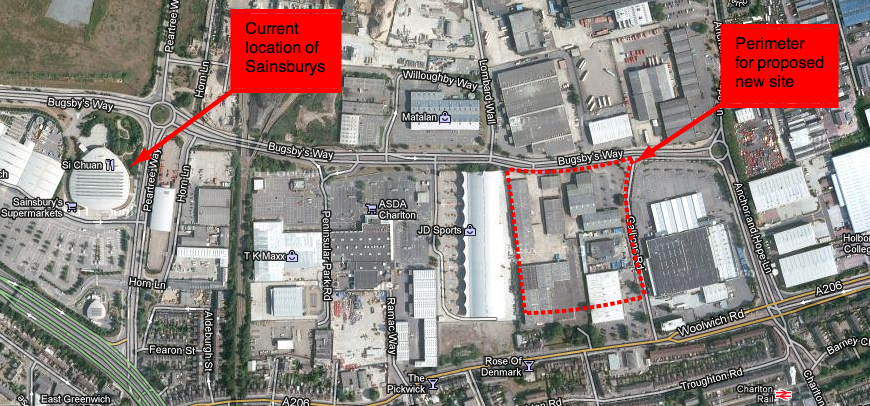

Sainsbury’s regional property development head Jamie Baker says the store will at least match the current outlet’s eco-friendly credentials:

“We believe this is a great opportunity to improve the Sainsbury’s offer to our customers in Greenwich and look forward to working with LXB to deliver what will be another flagship environmental store for us.”

Other plans include a creche for parents to use while shopping as well as a bus countdown screen at the store’s checkouts.
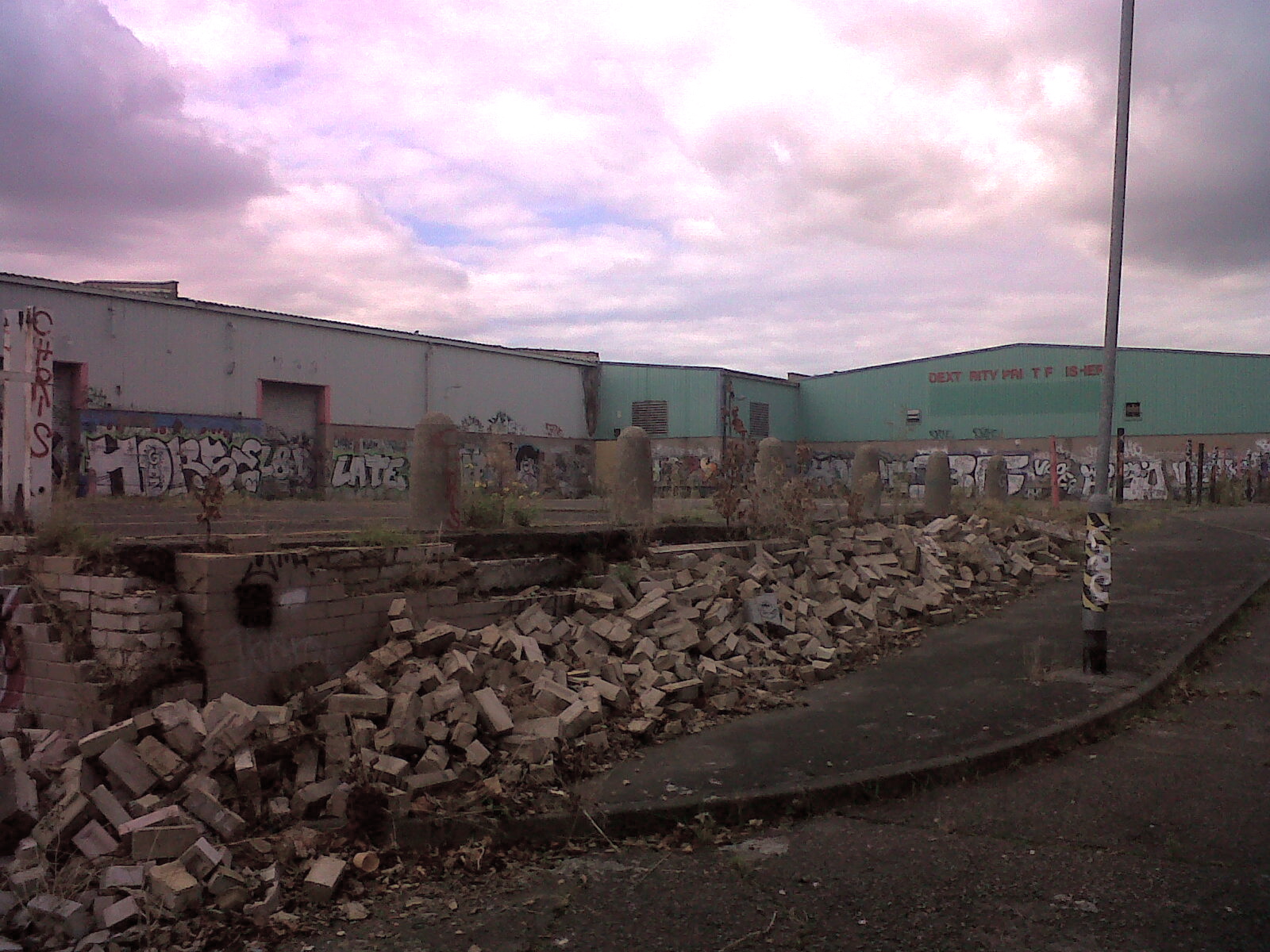
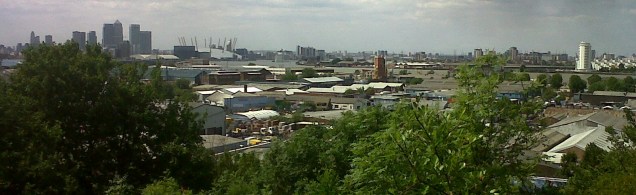
Vacant warehouses at proposed site

This announcement may leave some regular shoppers astonished at the move. However, the flooding at the current store and the increased footfall over at Charlton’s retail parks must be the two key reasons for the relocation.

Despite this there are numerous interesting questions this issue raises. What will the new Tesco in Woolwich make of this development? How will traffic alter in Bugsby’s Way and Woolwich Road over the coming years? How will public transport develop, with Charlton station now close to yet another large amenity? Will Sainsburys learn from the mistakes they have made with the peninsula site? What will happen with the plot of land south of this site linking it to Woolwich Road? What will happen to the small ecology park to the rear of its current site? What retailer would want to move into the empty peninsula building and how will they deal with the store’s capacity to flood?

No doubt all these issues will need to be addressed but one certainty is this development, if given planning permission, will have to take centre stage with the council’s long term plans for Charlton riverside.
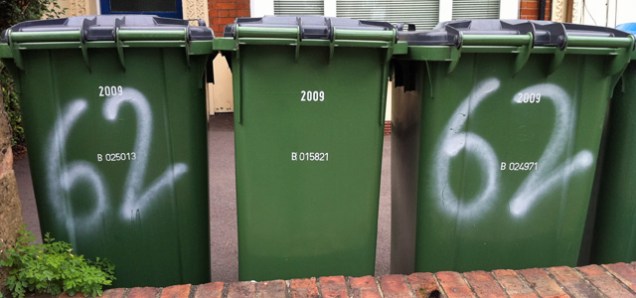
Dirty windows and smelly bins – who can help?

Brenda asks…

I have some questions on boring household stuff – I am looking for a window cleaner for the SE7 area. I’m also after a reliable wheely bin cleaner. Not like the one I used before who turned up the second time and collected the money in the secret place without doing the ruddy cleaning. I’ve asked a few to call me back but no joy. My bins are kicking up a stink!

Can anyone help?

Did Charlton have a flexi-disc factory?

A question from Darren

I was thinking about Flexi discs in the middle of last night – you know, those cheap acetate records that used to come in mags? Nobody – except a dodgy company in San Francisco make ’em anymore.

However, the company that made them in the UK was based in Charlton. Any idea who that was?

I remember flexi-discs, but have no idea where they were made. Can you help Darren?

Calling all residents: The Charlton Riverside Action Group is formed

After various discussions between local residents, it’s been decided that a group of people should form to meet regularly to discuss and act upon issues concerning the northern part of Charlton.

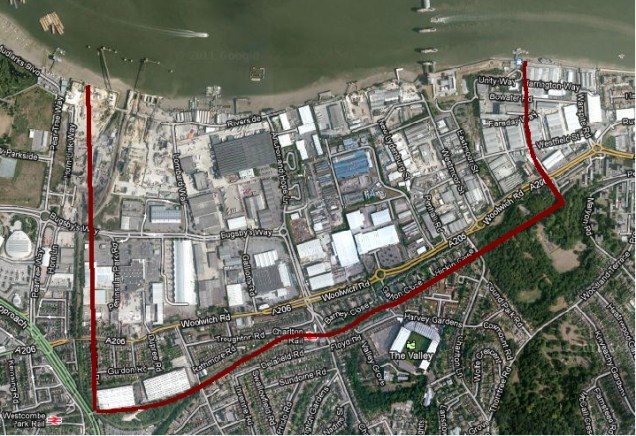
The map below outlines the area the Charlton Riverside Action Group will be dedicated to. As you can see this is the SE7 postcode north of the railway track.

This doesn’t mean that the group is only for residents living within these boundaries. Any resident who lives in any part of Charlton, Woolwich, Greenwich or beyond is more than welcome to attend.

The group will cover varying issues. No doubt people would like to talk about the recent incidents in the retail parks. We will also be looking at the Thames Barrier visitor centrenew developments such as the Travelodge hotel, the Thames path, litter, traffic concerns and long term plans for the area.

A local resident recently spoke to a developer who now owns much of the land where the retail parks are situated. He has made it clear that he would appreciate input from the local community regarding its upkeep and future developments. We will hopefully be welcoming him to one of our meetings at a later date and would also welcome support from other landlords and local councillors (not just those from the two wards that this area straddles).

This initial meeting will be in early/mid September and will be held at either the Charlton Liberal Club or the Cattleya (Chu & Cho) restaurant depending on initial uptake.

More details will be posted on this blog and leaflets will be given out. Feel free to comment below on whether you are interested in attending and to share ideas.

Charlton history: The man who took a bullet for the PM

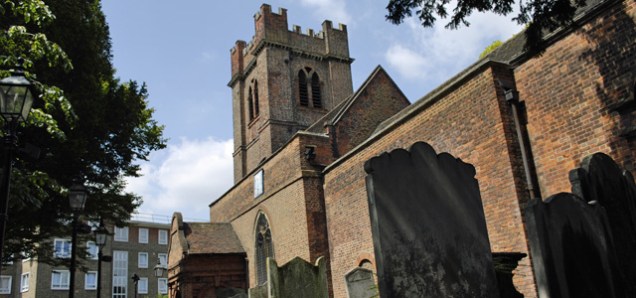
Inside St Luke’s Church, Charlton Village, lies the unintended victim of an assassination attempt on a British prime minister. Charlton Champion historian Boneyboy tells the story of Edward Drummond…

St Luke’s Church is the burial place of the only British prime minister to be assasinated, Spencer Perceval. But less well known is that the unlucky victim of a later attempt to assassinate a British prime minister died in Charlton, and is also buried and commemorated in St Luke’s. The subsequent trial of the culprit, and a parliamentary inquiry, established an important principle of British law which lasted for over 120 years.

In 1843, 31 years after Perceval’s death, Daniel McNaughton attempted to shoot the Prime Minister Robert Peel outside Peel’s home in Whitehall. In what seems to be a case of mistaken identity, McNaughton walked up to Peel’s personal secretary, Edward Drummond, and shot him in the back.

Drummond was treated by doctors, and his wounds were not thought to be life-threatening. But five days later Edward Drummond died at Charlton and was buried in the Drummond family vault in St Luke’s. It’s possible that his medical treatment – including blood-letting and leeches – contributed more to his death than the wound or his brief stay in Charlton.

Edward Drummond was a wealthy man from a family who owned Drummond’s Bank. He lived in Whitehall, so the reason that he died and is buried in Charlton wasn’t initially clear to me. However the 1841 census, records that the Rector of Charlton was the Reverend Arthur Drummond, and I think it’s likely that Arthur was Edward’s brother, and that after the shooting, Edward went to Charlton to convalesce.

Arthur Drummond was also a wealthy man. The 1841 census list nine servants living at the rectory labouring to support Arthur and six member of the Drummond family.

The man who shot Edward Drummond was immediately overpowered and arrested by constables. He was Daniel McNaughton ( also known as M’Naughten and various other spellings) a wood turner from Glasgow. McNaughton seems to have links with a number of radical political groups including the Chartists. In 1842, a year before the assassination, McNaughton sold his business in Glasgow and embarked on a tour of Europe.

When he returned to Glasgow in 1843, he developed an obsession that he was being persecuted by the Tory Party and that he was being followed by their spies.

At his trial, McNaughton admitted shooting Drummond but said that the Tories in his native city had compelled him to do it. The defence called witnesses about his delusions and doctors who testified that he wasn’t responsible for his actions due to his insanity. He was found not guilty but sentenced to spend the rest of his life in the State Criminal Lunatic Asylum at Bethlem Hospital (formerly Bedlam) and was later moved to Broadmoor where he died.

The trial and verdict caused an outcry in the press and parliament. A House of Lords inquiry led the development of the M’Naughten rule which defined in British law the principle of defence on grounds of insanity.

Charlton’s night of looting: Confessions of a curtain-twitcher

Living on Woolwich Road has its ups and downs. The constant traffic is unfortunate, but there are many positives. One positive is being able to see the realities of human life through the partially drawn curtains of my home. On Monday night this took a turn to the more extreme.

After watching disturbances in Lewisham on rolling news since I arrived home from work it was hard to rule out something happening in the retail parks opposite my house. I had popped out to Asda at 8.30 just as the sun was going down. Despite increasing numbers of police cars rushing along Woolwich Road it actually seemed fairly normal. I asked the Asda security guards whether they were about to close. They replied: “We’re staying open – for now.”

Back home it wasn’t long till the violence erupting in Woolwich was confirmed. Tied with footage on the news of the fire in Croydon, things definitely went from serious to disastrous. It reached 10 o’clock and I was still transfixed to the television when a friend alerted me to the looting commencing over the road. There it began.

I looked through the blinds and sure enough five men were pulling up scarves over their faces outside my very house. My eyes followed them towards the alleyway at the foot of Victoria Way where there was already people filing in and out of the retail park. I couldn’t believe what I was seeing.

Before long I started to see people coming the other way: Women with new clothes still on the hangers, men struggling with large boxes, teenagers fingering freshly looted trainers.
At the same time false rumours were being spread that Asda was now on fire. I looked into the sky and couldn’t see smoke. My girlfriend wouldn’t let me leave the house so I rushed into the garden to see if I could smell smoke. If Asda was on fire, then we would have certainly been evacuated.

I was in a state of shock at this point, I could hear shop sirens wailing in the distance. We had been on hold to the police for fifteen minutes before we spoke to someone. They kept on repeating the same question, “Is anything on fire?”. I had to be sure, my view of Asda from my house is restricted at best. Could I smell smoke? I couldn’t see anything in the sky, online reports of fire were severely outnumbering those saying there wasn’t any. “No”, I replied, three times over.

I really didn’t know what to do with myself, the next two hours were spent flitting from one room to the next. I peered through the upstairs curtains, cowered behind the downstairs curtains. I watched BBC News in the living room, Sky News in the bedroom. I would comfort concerned housemates, probably only making them worse.

I would rush out to the garden to smell the air, unravelling the hose pipe at the same time. I literally tripped over myself at numerous points, frantically trying to be everywhere at once. I managed to find a brass candlestick that I stared at in disbelief in the thought I might have to use it. There was a steady stream of looters by this point, some carrying weapons. Looters gushing out of the alleyway onto the road, sometimes causing traffic to swerve.

Hooded thieves were disappearing into the darkness of Wickes’ car park, jubilantly thrusting their arms into the air as they jumped over the two foot wall. Cars were parking in numerous laybys with masked men appearing from them. Police cars rushed towards us from Greenwich, only to fly straight past to the more serious riots in Woolwich.

At around 2am I tried to sleep. The looting had calmed down slightly. I was still uneasy about the threat of fire. Distant shop sirens were still haunting me, I had placed my candlestick beside my bed. It goes without saying that I couldn’t sleep. However, I was relieved to here the rotors of a helicopter over our house. A police helicopter, training its light over the retail park. They had arrived, they were here in force, it was going to be okay, after four hours of waiting.

The noise was deafening and it sounded like it was outside my bedroom window at points, but it was far better than shop sirens. After what seemed like ages I managed to drift off and get a few hours sleep before work.

Throughout the whole experience and the day after the incident thoughts revolved around my brain. Many entered my mind, but overriding them all was my disbelief that there are so many unlawful people in the world. I had no idea that amount of people would be willing to break the law in what was a night of opportunistic madness.

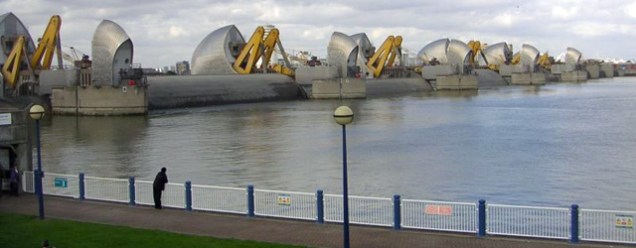
Is the Thames Barrier’s visitor centre good enough?

A London mayoral hopeful has voiced fears for the future of the Thames Barrier’s visitor centre after it was revealed visitor numbers have dropped sharply over the past three years.

Liberal Democrat Mike Tuffrey, who hopes to become the party’s candidate in next year’s election, said the fall in visitors was a “serious concern”.

The London Assembly member said: “At a time when awareness of flooding needs to be increased, I suggest that perhaps the centre could be doing more to engage with the public.”

Between April 2007 and March 2008, 15,191 people visited the centre, but this had fallen to 9,351 in the year to March 2011.

In a letter to the Environment Agency’s chairman, Lord Smith of Finsbury, he said many of the exhibits were “somewhat dated” and did not address the threat to the river from untreated sewage.

“I would be grateful if you could provide some assurances that the Environment Agency is committed to maintaining the centre and is planning improvements,” he continued.

“It is an important asset for London and a public showcase for the agency. An updated information centre, properly marketed, could attract far more visitors each year and would be hugely beneficial for your work and London.”

An Environment Agency spokesperson told the Mercury that the fall in numbers was down to fewer school parties visiting since its learning centre closed, but it had a target of 15,000 visitors for the current year.